(Trigger warning: There are photos in this post of me drinking alcohol--in the past--and describing the things I miss about it; if you're a recovering alcoholic, I just wanted to forewarn you in case that will be a trigger.)
Before I get into this post, I wanted to say that I know that using the word "sobriety" or "sober" is touchy for some people. On my last post about it, some people were offended by my use of the word because I hadn't gone through hell and hit other people's ideas of "rock bottom" to be able to quit drinking.
However, I think it's a very personal choice of language. Nobody knows exactly what my journey before, during or currently was/is like, what got me to the point of committing to not drinking for a year, or how difficult it was for me.
While I didn't have DUI's and arrests, or lose my family and friends, or wind up homeless due to alcohol; I choose to use the word "sober" because I had to work really fucking hard at it. It wasn't a joke, or a dumb challenge; it meant a lot to my lifestyle, which I will get into in this post.
So, I mean no offense to anyone by using the word "sober"--I know that SO many people have horror stories of what alcohol did to their lives, much worse than anything I've dealt with. But there are people with not-so-obvious stories, too, and I don't want to invalidate those. Everybody's story is unique and valid. This is a very vulnerable post for me. I hope that you'll respect that.
This is a great article that explains "sobriety", including the DSM-V criteria for recovery. I find it very interesting!
That said, let me get into this post, which will likely be long.
On January 1st, 2019, I declared that I was going to give up alcohol for one year. I had tried numerous times to give it up for 30 days or whatever, but toward the end of 2018, I knew I really needed to take it seriously. I didn't want to say it was forever, because I honestly didn't want to give it up forever. I liked drinking!
I was not physically dependent on alcohol, but I did abuse it in the sense that I used it for calming anxiety. Alcohol is the only thing that has ever worked to ease anxiety for me (I tried therapy, benzodiazepines, and even medicinal marijuana--nothing worked liked alcohol).
My anxiety started to get really high in 2014, and it was (stupidly) due to blog or social media comments. (I have since written a post about how I stopped feeling anxious over social media--and it's still mostly true. But I think social media will forever cause an anxiety pit in my stomach.) When I allowed anonymous comments on my blog, people would say hurtful things sometimes, and it got to the point where I would dread seeing that I got comments on my posts. I was worried about it ALL the time.
For years, I was able to have a small glass of wine in the evenings and be totally satisfied. When I was losing weight, I measured out 4-6 oz, and I was fine with that. Once my anxiety started going up, and I wasn't counting calories anymore, I would drink more to combat the anxiety. I always poured a glass of wine when starting a blog post, and then refilled as needed.
It was also a social anxiety reliever. I eventually got to the point where I would have a couple of drinks before people would come over (and then more when they were here) just to keep myself from being socially awkward and anxious. At get-togethers, I noticed I always drank more than others, which was starting to make me question my drinking, and whether it was a problem.
And then, as with any drug, my tolerance grew and I had to drink more to get that anxiety relief. At the end of 2018, I finally accepted that it was a problem and I was going to have to be drastic. I couldn't just do a 30-day challenge or something to "prove to myself" that I could go without it. I wanted to do it long enough to see positive changes so that I would WANT to stop drinking. (Because I certainly didn't want to stop! I felt that I needed to stop.)
Physically, I felt like crap all the time when I was drinking. I would wake up feeling bloated and puffy. The alcohol would usually make me eat more, both while drinking and then the next day because my stomach would feel sour. And I always felt dehydrated.
I don't care to go into all the personal details of "before", but I will just say that I knew alcohol was a problem for me. And I wanted to take care of it before it became a bigger problem. I didn't want to become someone who would drink and drive, or who got mean when drinking, or who would stumble around the house drunk. Nobody wants to get to that point! So I tried to think of what would help me to quit for long enough to see a change in my health (mental and physical).
The most drastic thing I could think of in order to make it through a whole year was to be extremely public about it.
I had read that it can take up to a year before you really start to see the benefits of quitting drinking, and since the new year was approaching, I decided to make it a top priority for 2019. Not just a typical goal, or a new year's resolution... but a true NEED for change. And I told myself that if, after a year, I didn't see any changes or if I just wanted to drink again, I could. But I was solidly committed to one full year.
I wrote the declaration on my blog, I wrote it on my Facebook page, and I even shared it on my personal Facebook wall for my friends to see. I wanted everyone to know so that if they saw me drinking, I would feel the shame of it. Hurt my pride. Have to explain that I just couldn't hack it.
Choosing to do it for a year was helpful when explaining to people why I wasn't drinking in a social situation (because people always ask). I just said that I was doing a personal challenge for a year, and that satisfied their curiosity. I was afraid if I got into the deeper reasons, they might feel judged themselves, and I wasn't judging anyone. Like I said, it's personal for everybody.
Almost immediately after making the announcement that I was giving up alcohol for a year, I regretted it. It had become such a habit for me to have wine at night, and I felt like I was crawling out of my skin with anxiety and simple boredom. I hated feeling so anxious and not having any relief from it. My psychiatrist prescribed anxiety meds, but they just didn't do the trick like alcohol did.
For weeks, I felt like giving up drinking was the stupidest idea I'd ever had. I wished I hadn't been public about it. If I hadn't been, I would have given up on the second day!
I had expected to feel something magical happen--like I would just wake up one day and feel a trillion times better and my anxiety would be gone. I wanted to feel like all those success stories from former drinkers who make it sound like sobriety is all sunshine and rainbows. (Seeing their stories on Instagram was very motivating to me, however; it was nice to see that there are young, fun people who choose to live a sober lifestyle).


In truth, I didn't experience those sunshine and rainbows. In retrospect, there were a couple of physical changes--I didn't feel puffy all the time when I woke up, and I wouldn't wake up in the night feeling hot and cold at the same time, or just restless while trying to fall back asleep. I loved waking up knowing that I hadn't said anything stupid while getting together with friends or sent texts when feeling uninhibited.
On the contrary, my anxiety was higher than ever and I had no relief. I did start to eat more (basically replacing alcohol with food) and I knew that wasn't a healthy replacement (although, I felt that junk food was the lesser of two evils).
I kept reminding myself that it can take a full year to feel the good effects of quitting alcohol, which is one of the reasons I kept going. And my pride. Let's not forget that. (I could have cheated without anyone knowing, but I was committed to MYSELF--not just others.)
About 4-5 months in, I started to find myself feeling bitter toward alcohol in general. I started thinking about how stupid it was that alcohol has to be involved in everything social, and how much I hated the "mommy wine culture" trend (seeing the memes about "mommy juice", a.k.a. wine, would make me feel sad rather than make me laugh).

I became pretty irritated about it all, and Jerry said I sounded judgmental. I didn't feel like I was judging people, but more so that I was just irritated that alcohol has to play such a huge part in everything. It's everywhere and it's so "normal" that I feel abnormal for not drinking it.
By six months in, I hated the idea of alcohol. I never, ever expected to feel that way when I started the year. At that point, I had a feeling that I would want to continue the sobriety beyond a year. Not that I didn't miss how much it relaxed me, or how it made me feel more social; but I just was weighing the pros and cons frequently, and it felt like there were more pros than cons.
Now just over twelve months in, I can't say that I've noticed a ton of positive changes since quitting. I haven't gotten to the "sunshine and rainbows" part. Perhaps that's because my life wasn't in shambles when I decided to quit. I imagine if I had been drinking all day long, driving while drunk, getting arrested for public intoxication, being mean or abusive to my family, losing my money, family, house, etc., I would probably notice some huge changes by quitting. But because I hadn't gotten even close to that point, the changes are very subtle.
Here are the things I enjoy about staying alcohol-free:
Waking up without worrying about stupid things I may have said or texted while my inhibitions were low the night before.
Going to bed knowing that I'm not going to feel any effects of a hangover the next morning.
Not having to worry about having a designated driver.
The feeling of being in control.
Setting a good example for my kids (letting them see that not EVERY adult drinks and that it's perfectly okay to choose not to).
More energy on a day-to-day basis.
The difficult parts:
Insomnia--I toss and turn all night long, and I had hoped that quitting drinking would help this. But I am forever an insomniac. My bipolar meds do help more than before I started taking them, but I still have sleep issues.
The obvious one: anxiety. I still have it and it's not going away. However, it's gotten better over the last six months or so as compared to the first six months of sobriety.
Feeling like a party pooper in social situations. I know it shouldn't matter what people think, and I honestly have no idea if people think that I'm boring because I don't drink; but I am extremely shy and inhibited without alcohol, so I'm definitely not much fun at parties.
And to be real, I just don't have as much fun as I used to. (For what it's worth, my friends are at the age where "partying" doesn't consist of doing shots and getting into a drunk stupor--usually at get-togethers, my friends will have 2-3 drinks tops, over a several hour period. What can I say? We're getting old.)
I miss being able to "let loose" and get a wine buzz with Jerry on a date night. We used to laugh so hard and have the best conversations when drinking wine together (there is something about a wine buzz that is different from other alcohol).

I've had a much harder time losing weight, because I use food for comfort now that I don't have the alcohol. I would really like to find a healthy replacement that works just as well! (Exercise is the obvious choice, but it doesn't work for me... perhaps because of my former "fat girl" mentality.)
Overall, I know that the positives outweigh the negatives, even if it doesn't always feel that way. The toughest situation for me over the past year has actually been flying/traveling sober. I have such a horrible fear of flying that I ALWAYS had to have two glasses of wine to get on a flight and 1-2 more during the flight. Flying sober, my stomach was in knots the entire time. However, when I got off the plane, I didn't feel loopy or tired, bloated, or even anxious. I felt great!
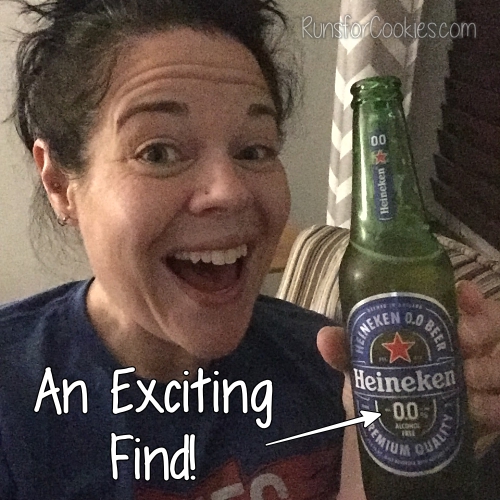
Social situations really aren't that hard anymore. I know that it's controversial in sober lifestyles, but I found Heineken 0.0% (alcohol-free beer) to be a lifesaver. Heineken was my favorite beer for years, and when I saw that they had a truly alcohol-free version, I hoped it would be similar. And honest-to-God, if I tasted the two side-by-side, I wouldn't know the difference. It's so good! I don't drink it on a regular basis, but it comes in handy when I really want a beer.

So, when I go somewhere for a get together or if we're having people here, I just drink that. Not simply to "fit in"--my friends don't pressure me to drink--but because I like the taste of it. (Actually, we had two couples over for New Year's Eve, and my friend Amanda had the thoughtfulness to ask me if it was going to be "dry" or if it was cool if they brought a couple of hard ciders. That was SO considerate of her to ask! But of course I don't expect people to stop drinking around me.)
Having people drink around me doesn't make it difficult for me, which was surprising to me. I think it helps that I can choose to have my non-alcoholic options. I definitely don't want to make other people feel like they can't drink around me or that I'm judging them. I'm not.
One thing I've noticed is that drinking just one of the Heineken 0.0% beers is satisfying. With regular beer, one was never enough! Now, I'll have 1-2 at a party (or 3 if I'm feeling really wild, haha) and I'm totally cool with that. Plus, they are only 69 calories each! (I know that non-alcoholic beer can be triggering for some people that live sober lifestyles, but I have found the opposite to be true for me.)
I've also found a non-alcoholic wine that I like. I always thought that sounded stupid--wouldn't non-alcoholic wine just be grape juice? But it actually tastes very much like the dry red wine that I like, not sweet at all. I don't drink it often, though--I usually just save it for when I am craving that romanticized idea of curling up on the couch with a warm blanket and reading a good book, or something like that.
Funnily enough, the one situation I can think of that I just don't want to be in is to go out for Mexican food and not have a margarita. I LOVE margaritas and there is a particular Mexican restaurant in Toledo that makes the best margaritas ever. I don't think I can go to that restaurant, at least not for now.
Margaritas with Caitlin at my favorite Mexican place:

So, for the million dollar question... what's next? Am I going to start drinking again now that my year is over?
No, I'm not. I am also not going to say that I'll never drink again, either. Right now, I know that if I was to drink, I wouldn't be able to do so in moderation or have total control over it. Maybe someday I will get back to that point, but I know that I can't do that right now.
Also, I'm pretty content with not drinking. There have been only a few times over the past few months that I felt a real craving (going to a party on the 28th was the hardest--I get nervous to go to things like that, and I normally would have had a couple glasses of wine before going.)
But with the Heineken 0.0% and the non-alcoholic wine (or even mocktails), I don't really feel like I "need" to drink. Sure, I want to sometimes--if not to relieve anxiety, then to at least let loose. But those moments pass, and I'm always glad that I didn't do it.
If anyone is thinking about going alcohol-free for a while, I highly suggest doing it for a bare minimum of nine months (if not a year). I don't feel like anything less than that will give you the full picture. If you go into it knowing that you're only going to do it for a 30-day challenge or even 90 days, then you're constantly focused on that finish line. And 30 days isn't a long time!
Going alcohol-free for a full year means going through your birthday, Christmas, multiple parties, weddings, New Year's Eve, the holiday season, and lots of other social situations. If we choose a particularly boring month to go alcohol-free, we don't get to truly experience the hardships of it, which keep the good parts from standing out and being noticed.
I don't say this in judgement, because there are plenty of people who have no problem moderating alcohol; but I encourage anyone who drinks to see what it's like to go for a year without it. It was life-changing for me. I hadn't realized just what a problem it was until going several months without.
I don't think of alcohol as "bad". I do think that it has the potential to be horrible, though. It destroys peoples lives every day. But for a lot of people, it's hard to realize that it's a problem until it's too late. I think that doing a one-year experiment helps to see if there is a problem, even if it's just something minor.
So, that is what I've learned in my year of being alcohol-free. I never, ever expected to continue beyond a year (actually, I doubted I would even last the year); but my head is much clearer and I've done a lot of introspection this past year. I've learned a lot about myself, and I'm grateful that I made the most of this "experiment". It also made me want to get healthier in 2020.
Again, I feel very vulnerable posting all of this, so please be kind if you choose to comment. I am not, in any way, judging those who drink or don't drink for any reason. This year of sobriety was about ME. I'm very glad I did it, and I plan to continue as long as I feel the need to--perhaps forever. I'm not making any declarations beyond right now, though. I feel I've learned enough to make the decision in a smart way, rather than an emotional one.

I'm not sure why, but "Carri" deleted these comments after I replied. I feel it's important to address her concerns, so I just thought I'd reply to them here:


If you read my post, I actually DID mention my kids when I write about the positives of choosing not to drink: "Setting a good example for my kids (letting them see that not EVERY adult drinks and that it's perfectly okay to choose not to)."
Also, I never said I was an alcoholic. Maybe some people would call me that based on this post, but according to criteria in the DSM-V, I do not fit the profile for an alcoholic. If I was an alcoholic, then about 90% of the people I know are, too. I decided to quit before it came to that point. My kids are happy and healthy, and always have been--I choose not to share much about their lives on here because of judgmental people on the internet. (I know it's shocking, but judgmental people on the internet exist! 😂)
When Carri implies that only alcoholics need designated drivers, I felt this was an important point to reply to--I think EVERYBODY should have a designated driver if there is alcohol involved (it doesn't matter how much or how little). In my opinion, choosing to have a designated driver doesn't make one an alcoholic. It's just the responsible thing to do when drinking alcohol.
So, Carri, I'm sorry that you felt the need to delete your comments. They are great questions!