Showing posts with label guest post. Show all posts

July 10, 2023

Reader Mail

I'm so excited to have reader mail to share today! Until 4:00 pm, I was 100% sure that today was Sunday. When I mentioned it to Jerry, he told me it was Monday. I'm STILL shocked. I am absolutely not ready to go up north in a couple of days.

Anyway, when I read this email from Valerie, I knew I had to share it. You all know that I'm a "cat person"--I completely adore Joey, of course, but I am a cat person, through and through. When I read this email, though, holy smokes--I couldn't believe how cute this dog is!

I asked Valerie if she minded that I share this, and she was happy to. I love a good heart-warming story!

When my son’s hamster passed away recently, he immediately wanted to replace him with another pet--a hamster or a bunny. I didn’t know anything about taking care of a bunny, and after researching the care required, I was not thrilled with the idea. It seemed like a lot of work and not much reward. 

A dog is a lot of work, but they love you unconditionally. I told my son he could get a dog, even though we already had two--Snickers and Twix. I started looking at the rescues to find a dog and was shocked to see adoption rates of $400, $500, $800! I understand needing to recoup expenses, but with shelters being so overcrowded, I would think it would be more reasonable. 

My son wanted a small dog, the size of a bunny, and fluffy. I also quickly learned there were no dogs like that in the shelters nearby. They are all big. The couple that were small came from a home where the owner had passed; those dogs were eight years old and blind. (Not a great option for a young boy.) 

I decided to go a different route--Craigslist. I ended up finding this cutie, a six-month old "Pomapoo", half-Poodle half-Pomeranian. Her family wanted to re-home her because she was a fourth dog and they were busy with jobs and teens who had school activities. They told me they wanted $200 for her. We picked her up the next evening.

I was nervous not knowing her personality... was she a little devil dog? But she is literally the sweetest dog ever! Her name is Dixie and she needs a candy bar name. My son loves baseball so I think Babe Ruth, and call her Babe or Baby. Or Kisses because she is full of kisses.


We have hypothetical names for other animals…if we ever get a cat it will be Kit Kat; if we ever get a cow (I love cows) it will be Milky Way. Our Pomapoo is six pounds and I’m told she’s full grown. We are taking her to get groomed on Wednesday. Her crazy hair is her trademark I feel like so I plan to have it put in a ponytail and we’re going to have her tail dyed hot pink. I’ll show you pictures after!


[Katie here now.] How stinkin' cute is this dog, seriously?!

I want to note a couple of things: For anyone who knows anything about me, it's obvious that I'm VERY much an advocate for: 1) having pets spayed or neutered; and 2) rescuing pets from shelters or organized rescues, or places that have pets who are unwanted and need a home. I am 100% against buying from a pet store or breeder (this was true long before I became vegan). 

If Valerie had bought her dog from a pet store, I wouldn't share it here (even though I adore Valerie--we've been in contact for years.) I just wanted to say that I love how she thought outside the box on this one. She *tried* a rescue and shelter. And she didn't give up-- she found a dog that was being re-homed because it was unwanted. And it was exactly what she was looking for. A great story.

That said, HOW COULD ANYONE NOT WANT THIS DOG?! ;)  That's how I feel about Joey. He was in the shelter for three months before we adopted him, and he's the best dog ever. Somebody really missed out, and I'm glad, because we had the privilege of adopting him into our family.

I am so happy for Valerie and her son for finding a great dog for their family. I love the candy bar theme for the pets! (We have hypothetical names for hypothetical pets as well--although we are running out of Friends characters, hahaha.)

Remember: If you ever have fun news to share, please email it to me! (With permission to use it, of course--just specify what/if is okay to share.) Whether it's getting married, buying a new home, getting a new pet, etc., let me share the news for you on my blog! katie (at) runsforcookies (dot) com.

June 13, 2023

Deep Thoughts With Jerry #18: Father's Day


Jerry asked me what he should write about today for his "deep thoughts" post, and I suggested that since Father's Day is coming up, he could write three things that he loves about being a dad. So here is Jerry...

Three things I love about being a dad:

1: Hanging out like a kid

When Katie used to be our family globetrotter, I would take the time off work to hang out with the kids. She would be gone for a weekend or even just a day or two once or maybe twice a year.

When the kids were really young we could make forts or a giant bed in the living room and watch movies and snack at night. During the day we would go play putt-putt golf, do the batting cages, and ride the go-carts. When it was time for bed they would fall asleep on my bed.

I have very fond memories of doing all these things, and it didn't seem like much at the time but it meant the world to me. Through the years, this has transformed into more individual things like fishing with Eli and disc golfing with Noah. When a new Star Wars or Marvel movie comes out we go to the theater opening weekend and watch it together. It's really become our thing. 


2: Giving advice, being supportive, helping them grow

I love sharing my life experiences with the kids. I almost feel like Jim's dad from 'American Pie'. I share everything with them that could help them in the future. It could be anything from relationship advice to what the workplace is really like, owning a home, to how to properly load a dishwasher. I like showing them things.

When they were little it was all about teaching them little things like chewing your food and how to catch and throw a baseball. Every little thing I did was teaching them something; they mimicked my every move.


Now that they've grown it's become less fun to show them things because it's none of the "fun" stuff. It's about being an adult. About paying taxes and getting real jobs and how to take care of a car and how to save money. However, it doesn't matter how old they are; I will always have something to show them, advice to give. I'm always here. 


3: Seeing them grow

My boys are the best. However, I always question if I should've done things differently with them. Always. They're at the point now where I just have to let them make their own decisions and hope that I did okay. From the time they were born I was in awe of watching them do the little things. And, it was amazing to see how their little personalities developed as they grew. 

NOAH: Noah had the squeakiest little voice and this laugh that reminded me of 'Bambi'. He was always so proud of his little achievements. As he got older he just seemed to take life in stride, he made things look easy and always seemed like he knows what he wants. He's thorough and tries to make informed decisions. He's truly a great kid. 


ELI: Eli has always been an individual. He had this super raspy voice when he was younger and this belly laugh that, still to this day, is incredibly infectious. He has always marched to the beat of his own drum and can be content to just be by himself with a fishing pole in the water. He has compassion and a heart of gold. 


Overall, I am so lucky to be their father. I've tried my best, maybe stumbled along the way. They are amazing young men. I couldn't be prouder of them and I'm excited to see what the future has in store for them.


September 27, 2022

Deep Thoughts With Jerry #6


I had another busy day today (Tuesdays are the busiest of the week for me) and Jerry saw how stressed out I was while getting stuff together for cross country and cooking dinner, so he volunteered to do a "deep thoughts" post. I gladly accepted! ;)

These posts of Jerry's are just fun questions and answers... enjoy!


Q. Crunchy peanut butter or smooth?

A. This seems like a bigger deal than what it is. I remember early in our relationship Katie and I would talk about this, have friendly debates or playful banter over it. I am a crunchy guy. Always have been. She's a creamy girl. (And that sounded so wrong as I was just typing it.)  I like crunchy as long as the crunchy comes from peanuts and not bread crumbs from double dipping. We at least agree on that.

I think the real question is: in what form do you prefer your peanut butter?


Q. Would you rather be invisible or be able to read minds?

A. Easy--invisible. The only time I would want to read someone's mind is right when I walk into a room. I'm always trying to gauge what people think of me. But just think of all the fun stuff you can do if people can't see you. Not creepy Hollowman stuff either... just fun, entertaining stuff like pranks.

See? This is me, sitting on the back of a rhinoceros...


Q. How do you like your eggs?

A. Fertilized, hatched, and walking around chirping at me. Before eating plant-based, I loved them scrambled and on buttery toast. So good.


Q. Would you rather be the funniest or smartest person in the room?

A. Could this question BE any easier to answer? Funniest. No one likes a know-it-all. And maybe it's just me, but the funniest ones get the girls. However, I bring a comfortable balance to the room, I can crack witty and quick jokes but I also have general trivia-type knowledge that makes talking to people easy. 


Q. Are you summer, fall, spring, or winter?

A. Another easy question for me... not even up for debate. I'm a fall guy. In Michigan, it's beautiful with the cooler temps in the 60's, the crisp cool air at night, and the changing colors... what a sight. However, enjoy it while it lasts because as soon as the colors change we usually get a big gust of wind that blows all the leaves off the trees and we're stuck looking at bare branches for the rest of the year.

Plus, as I get older fall doesn't seem as long as it used to be. Fall seems like nothing more than a two week transition from summer to winter. Sad. But, on the bright side, the fall welcomes in new seasons of my favorite TV shows, the baseball post-season, and football (GO BLUE!). 


Q. What fictional world or place would you like to visit?

A. Being a nerd I could go so many different ways with this. If I was basing my decision off of Star Wars, I would love to visit the peaceful world of Naboo or the industrious planet of Coruscant. Maybe I could visit Kings Landing, Winterfell, or Dragonstone on my tour of the Seven Kingdoms. Or, I could just go to Asgard and enjoy the finest meads, the most beautiful women, and hear latest tales of conquest and victory from Thor Odinson. It's a toss up.

[Katie here: I have absolutely NO IDEA what any of that means. I might as well be reading Japanese. So, unfortunately, I cannot find a picture for it.]


Q. What is your favorite sport or physical activity?

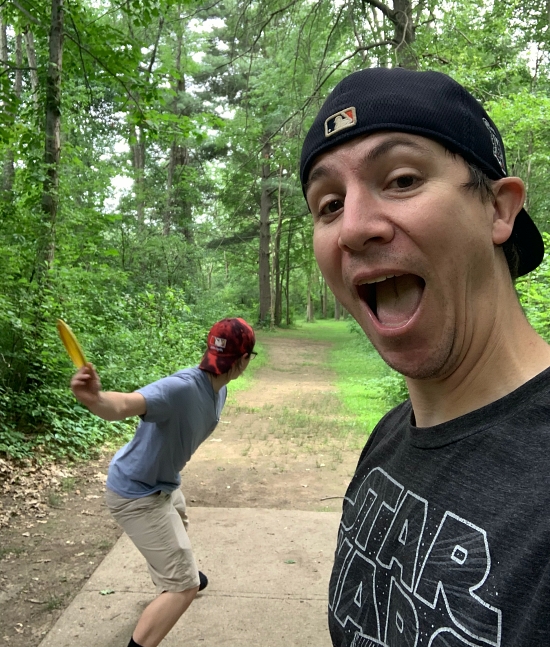
A. This answer depends on my mood. I love playing softball. Love it. However, over the years I just haven't been able to play because no one needs me! The softball community is tight knit, with people who have played with each other for years. Sadly, I'm not part of that group. Disc golf, even though I'm terrible at it, is relaxing and fun. It gets me outside and I can build relationships with whoever I'm playing with on a one-on-one basis.

See? So fun. Even when you're bad at it.


Q. Have you ever experienced a natural disaster like a hurricane or tornado?

A. Yes. We have had our fair share of near disasters here in Michigan. About 12 years ago we had a storm roll though here that caused some pretty heavy damage in the area with multiple tornadoes touching down. Nothing like you see in the center of the US, but for use we had trees down throughout the entire area to the point where we couldn't see our roads and were without power for 7 days.


But, the most memorable natural disaster I have been through was a tropical storm in Virginia Beach. In 2016, Katie and I decided to take a road trip to Virginia Beach with the kids. There was a half-marathon I was training for and planned on doing with my friend Rik.

We packed up the kids and headed off, deciding to stop in Hershey, Pennsylvania for the night. We visited the Hershey factory, took the tour, and made our own candy bars. In the evening, we started winding down at the hotel and were just relaxing when I decided to go to the hotel bar and grab a couple drinks for Katie and I. As I was waiting, I got a little chatty with some wonderful ladies at the bar when one of them said I looked familiar. After a couple minutes of trying to figure out where she knew me from she realized she recognized me from Katie's blog! Small world!

Anyways, I was explaining some of the details of the trip with them and where we were heading when she informed me that there was a hurricane starting to tear up the coast. I was completely unaware. Dads are usually all over this weather stuff and I totally dropped the ball. Katie and I had a decision to make... drive to Virginia Beach and see what happens or turn around and go home. Needless to say we made the trek to Virginia Beach, enjoyed the surge, survived the storm, and created memories that'll last a lifetime. [The post about the whole trip is here.]

July 26, 2022

Transformation Tuesday #80: An Update on Gilda


Happy Transformation Tuesday! Like I did a few weeks ago, I posted a single transformation of a cat adoption that didn't seem like it would work out, but it had a very happy ending. You can find that story here.

Today is going to be a similar post--more like a guest post than a typical Transformation Tuesday. This transformation is pretty long and I like to keep editing to a minimum when I can, so I chose to do this in a post by itself.

This is another heartwarming cat-adoption story, and it's actually a continuation from a previous Transformation Tuesday. So it's more of an update from the post on June 8, 2021. You can find that story here. This is about Gilda, the cat who was bounced from shelter to shelter and very clearly needed a permanent home. Runs for Cookies' reader Michelle adopted Gilda and worked hard with her to help her be a happy and healthy cat. This is the update on Gilda and how she's been doing in her new home. You can find more pictures there, too.

I'm going to turn it over to Michelle, who will continue Gilda's story...


A quick recap: The short summary is that it was difficult to find a cat to adopt during the pandemic, but after several months I found one that according to the shelter needed a bit of "work," which was kind of short-hand for a cat that had been sad, scared, angry, not good with change and needed some special attention. She was a bit over a year old when I adopted her, an owner-surrender with an unfortunate name she didn't respond to at all, so I named her Gilda.

Gilda and I spent lots of time getting to know each other, going at her pace. I can't believe it's been 14 months since I first got her, and my life is so much better with her in it.

Things about Gilda: She likes food--okay, LOVES food--especially kibble, but also a prescription wet food that can best be described as sticky-brown-smelly-sludgy-wallpaper-paste. (It's so gross but she loves it and it's a prescription she needs). Gilda gained nearly three pounds (almost 40% of her original body weight!) in the first six months I had her, before I got a handle on her ideal weight and how much I should be feeding her. She's back down to a healthy weight but would definitely be a very large (unhealthy) cat if I gave her unlimited access to food.

Gilda likes to sit near me, most often touching me, but she is not and may never be a lap cat. She loves to give me head-butts, and rub her cheeks on my glasses and my nose. When she's begging for dinner, she'll sit silently beside me with a thousand-yard stare, and then put one paw on my shoulder, very gently--it's so sweet. If I don't react to that, she bops my nose with her paw (yes I am a sucker.)

Gilda is *still* terrified of towels, but I've made progress with her fear of paper bags (I thought all cats loved paper bags!). I set up a giant paper bag meant for lawn waste in my living room, and cut a door/window in the end and she likes that well enough.

She ADORES something called Da Bird (which I highly recommend)-- basically a wand toy with feathers on the end that kind of "fly" when you use it-- it's pretty realistic. When she "catches" the bird in her mouth, she prances around proudly, dragging the wand behind her. (Katie here: I have to agree--my cats LOVE that toy! You can find it on Amazon here (affiliate link)). 

Gilda has a *wide* ranging vocabulary from little beeps to sweet soft squeaks when she's trying to butter me up so she can have more food. She makes a crazy yodeling noise when running around at night (or, um, during the day) and can project extremely loud obnoxious meows when I'm not getting her dinner ready fast enough.

Other things that have happened over the past year: Gilda and I navigated getting her to take anti-anxiety medicine so that I could put her in her carrier and take her to the vet for a checkup. The staff there *adored* her--she was well behaved (and acted kinda drunk)--and she was pronounced pretty healthy. She was also VERY happy to come back home with me. 


It was good that we had a successful first vet visit because we've had to return a few times--poor Gilda has some skin issues that were alarming. She'd scratch herself absolutely raw and cause large open wounds. I've learned that skin issues can be tricky to treat, but after about five months of a special diet/allergy challenge, we found out she's allergic to dairy and fish.

I learned that dairy and fish is in just about *everything* for pets, even things not fish-flavored and even some 100% freeze dried chicken, if it's been prepared on the same machinery as fish)...sigh. the good news is that I've found a mixture of prescription food plus one other chicken/turkey only brand that she LOVES and help about 80%. Of course, she also has some seasonal allergies that cause her to itch, so I have to keep a close eye on her, but I think we're at a place that we can both live with.


As for socialization, Gilda has come to really like my (elderly) mom and dad, who occasionally take care of her if I need to be out of town--I'm lucky they live close by. Gilda has also met my sister and niece and done well, and really adores another good friend of mine who we see regularly--but she still growls when she hears one of my neighbors opening their back door (I live in a small condo complex), etc.

Lastly, she's mastered "high five" when she wants a treat (the treat is just a piece of kibble, but she likes it as much as a treat), as well as "sit" and "up" which is when she gets on her hind legs.

I've been very inspired by a YouTube channel called Billi Speaks. During the early days of the pandemic, a veterinarian in Florida decided to teach her 12-year old cat to "speak" by using buttons--and BOY does Billi speak--her first word was MAD and if you're a pet person and watch it, you'll be impressed (and will laugh lots).

This kind of training has been done with dogs, and I'm a bit obsessed with the idea of it, but the buttons are a bit expensive--as is her prescription food--I think she eats better than I do! So I don't see myself tackling this project any time soon.

Please enjoy the before and after photos-- and I appreciate you hearing more than you probably want about Gilda.


Have I mentioned I adore her?? ;)

P.S. Thanks to Katie (and Duck), I make 100% sure that any string/yarn I have is well-secured in a closet Gilda can't get into, and if I need to do a project--such as repairing a sweater, etc.--I'm very very mindful of everything!


Katie here... I am SO SO happy to hear that Gilda is thriving! She seems like she's come such a long way since last year. I was thrilled that you chose to adopt her and that now she has a forever home with someone who adores her :)  I am absolutely sure that Gilda is grateful for your patience and she'll reward you with lots of love. Please give her a high-five from me! Thank you so much for sharing the update <3

July 24, 2022

Deep Thoughts With Jerry


Let me start by saying that "Deep Thoughts" is not meant to be taken seriously--because this post is by Jerry! (Although I have to take credit for the brilliant photo I chose above.) I had a post all planned today; I went thrift shopping yesterday and I had a ton of luck finding things. I was going to do a post about what I bought, but I haven't had time to take the pictures. So I'm going to work on that and hopefully post it tomorrow.

So, lucky us, we get to read an interview with Jerry. These are just silly ice breaker questions that I got from this website. The video of his worst haircut is a must-watch!

Q. What “old person” things do you do?

Jerry: Geez! The older I get the more I realize there are a lot of things I do that seem old, especially when the kids point them out. Dad jokes--they're hilarious to me and I crack myself up. Everyone else, not so much. I find myself saying or doing things that my dad used to do when I was young. For example, 'Are you going to drive the fucking car or park it!' when someone is driving too slow. Or, 'When I don't need it I'm tripping over the thing!' whenever I'm looking for anything and I can't find it within one minute. LOL.

I also talk a lot about the weather. When I hear there's a storm possibly coming in I tell Katie right away and I walk outside to view the conditions for myself. 


Q. Who is your favorite cartoon character?

Jerry: There are so many! I grew up a Looney Tunes kid. Screw the PC of it all, those were damn good cartoons and I still watch them from time to time to this day. From Wile E. Coyote and Foghorn Leghorn to Marvin the Martian and Bugs Bunny. I reference them all the time and they make up so many cool conversational drops. For example, when I get on a walkie talkie I can't help but say, 'Earth to Bugs Bunny. Come in Bugs Bunny.' 

Q. What is your guilty pleasure?

Jerry: I don't know if it's a guilty pleasure but I sooo love Cheddar and Sour Cream Ruffles. I can eat about a million and a half of those. 


Q. What are your favorite songs from your teenage years that you still rock out to when nobody else is listening?

Jerry: I'm a total 90's guy butI also enjoy a lot of the 80's... essentially I'm all over the place with my music loves. When the mood strikes I turn up some Hall and Oates 'Maneater', Spanau Ballet 'True', Reel Big Fish 'Beer', Counting Crows 'Mr. Jones', or Korn 'A.D.I.D.A.S.' just to name a few. 


Q. What did you get into the most trouble for with your parents as a kid?

Jerry: Katie and I came home early from my family reunion and we decided to paint my room at my parents house a "unique" pea-green color. We loved it so much we also decided to paint my parents living room the same color. Needless to say, they hated it. With a passion. 


Q. What dance move are you secretly awesome at?

Jerry: There is nothing better than seeing the surprise on people's faces when I bust out 'The Worm' at a wedding. I do it at all the weddings and it's a hit. 


Q. What commercial jingle gets stuck in your head all the time?

Jerry: Again, so many of these, too! I get the 'Limu Emu...and Doug' from the Liberty Mutual commercials. Or the 'We are Farmers, bum ba dum bum bum bum bum.' from Farmers Insurance. And 'Nationwide is on your side.' from Nationwide Insurance. Now that I think of it... all the insurance jingles get stuck in my head! 


Q. What’s the worst haircut you ever had?

Jerry: This is easy... it's the two times I failed miserably at cutting my own hair. I used a #8 on the clippers and went all over my head. After I put everything away, I noticed I had some strays so I busted out the clippers again and cut the strays out... and completely forgot the blade guard until after I swiped a spot on my head.


Q. If you had to change your name, what would your new name be, and why would you choose that name?

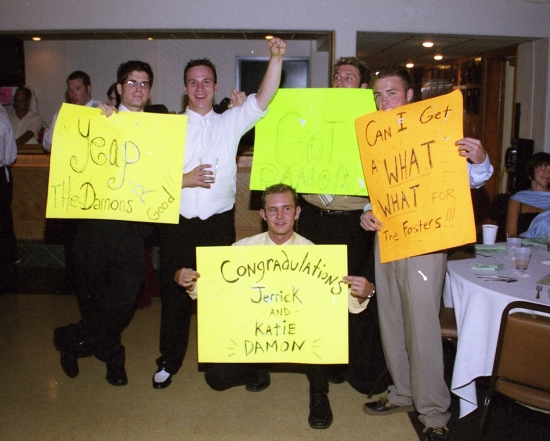
Jerry: Jerrick Damon. I've had the name picked out since I was a teen, and completely randomly, Katie and I went to the courthouse to legally change it. It was $500, though, so that was a no-go. I had created a wrestler on a video game and gave him the name Jerrick Damon. All my friends started referring to me as Jerrick Damon and they still do to this day. They even held signs up at our wedding referencing JD.


Q. If you had to delete all but 3 apps from your smartphone, which ones would you keep?

Jerry: I would have to keep my MLB app and my Facebook app of course. It would be It would be a hard choice for the third. But I will have to say it's my Accuweather.


Q. What two things do you consider yourself to be very good at?

Jerry: I'm very good with movie trivia... I used to play 'Six Degrees of Kevin Bacon' at work all the time with co-workers and I nailed it almost every time. I even won tickets for a show from a radio station when I played it with them and stumped them. I even remember the name I gave them--Richard Belzer. 

I also consider myself very good at talking to new people. I never really thought about it before but I see new employees at work all the time and I can ease the awkwardness in the room with a simple wise crack or joke. 


Q. What is something you hate doing? Why?

Jerry: One word--DietBet.


Q. What is something you love doing? Why?

Jerry: I love playing disc golf because it gets me outside and I can have low-key conversations with people. It's stress-free and a million times cheaper than regular golf.

I can clear the water hole now; this was in 2009


I've recently started teaching Noah how to play; Eli's not really interested in it


Katie here. Hopefully you enjoyed Jerry's "deep thoughts" ;) He loves getting to take over the blog once in a while!

July 05, 2022

Transformation Tuesday #78

Happy Transformation Tuesday! Today's post is going to be a little different; a reader named Kristi sent me this transformation and while it's a long read (what isn't on my blog?!), I'd really like to share it because it's such a heart-warming story. So, this is kind of going to read like a guest post with lots of photos. I was going to try to edit it down in order to do my usual Transformation Tuesday post, but I gave up because the story just isn't the same without the details! So I hope you enjoy this transformation as much as I did :)


This is kind of a double transformation! I moved to Philadelphia in the fall of 2018 with no family nearby. I had always been a cat lover but hadn't lived with a pet since I moved out of my parents' house for college. I really wanted a companion but I wasn't planning to stay in Philly for more than a couple years and didn't think adopting would be a smart choice. So in the spring of 2019, I began fostering cats through a local rescue (phillypaws.org). I fostered a few cats: 

Corrine - fat and feisty, loved to bite ankles


Alice the Truck Stop Waitress - the sweetest cat ever with very misleading RBF ("resting bitch face")


Draco - loved to sleep on my stomach at night, could jump from the floor to the top of the fridge


Guy - poor kitty had serious separation anxiety and was returned to me after being adopted once because he would cry all day while the owner was gone. He was adopted again by someone with another cat and is much happier with a companion. He would ride around the house on my shoulders and I wanted to adopt him so badly!


And, finally, Wacko! (Please excuse my laundry)


I picked up Wacko in May of 2020. He had just been returned to the shelter because he was peeing outside the litter box and because his medical complications were more extensive than the family could deal with. He had a cone because he had been fixed a few weeks prior but got a small infection in the incision.

His biggest complication was in his back legs. He had pretty severe arthritis that had led to the legs deteriorating. He was pretty skinny overall, but his back legs had almost no muscle mass. I gave him oral medicine for his infection and weekly gave him pain shots in his back legs. We also did some physical therapy exercises together to strengthen his legs which included lots of standing and jumping for treats.

After several weeks, we went to the vet and they said he was doing very well and just keep up the playing! He loves to run and jump and play now--almost too much to keep up with! His legs are almost completely normal but he has some quirks.

He had to learn how to jump with his front legs when his back legs were weak and he still uses them to jump then pull himself up into objects. He also lacks the typical cat ability to always land on his feet. He's very adventurous, so he often falls. And when he wants to scratch his ear, he doesn't know how to make his foot move to scratch. He will just stick his leg straight out, put his ear to it, and move his head up and down. He's very adventurous despite his limitations and really lives up to his name.


In the fall of 2020 I got engaged! My fiancé and I made plans to move in together and that life-change, along with the pandemic and a job offer, meant I was staying in Philly for a little while longer. I decided I was interested in adopting Wacko--how could I give him to someone else after what we'd been through?!

The complicating factor was that my fiancé had a dog. Leila is a pitbull and lab mix and is the sweetest dog ever! But she had no good experiences with cats and had been aggressive with other dogs in the past when she felt her food was threatened.


I told the shelter I was interested in adopting but asked if they could give me time to see if it was possible for Leila and Wacko to live together. We tried a couple initial meetings, through a closed door and then a baby gate. The meetings did not go very well. Leila was super excited and very alert to the small creature on the other side. Wacko was scared and not afraid to fight.

I agonized over what the right decision was for a couple weeks. I really didn't want to put either of them in a position where they weren't able to live their best life. Finally, I decided to make the leap and adopt--but I was still really unsure how it would turn out.

We moved in at the beginning of December 2020 but, due to some pandemic complications, Wacko had to stay with my former housemates until almost the end of the month. When we finally moved him in, Wacko got his own room.

We started slowly introducing them again. We started with the door closed. My fiancé and I would play with each of them and feed them on either side of the door so they got used to each other's presence. Then we used a baby gate and opened the door just a crack and slowly wider and wider over several days. Leila would still get really excited and sometimes frustrated that she was being held back.

Wacko eventually got more and more curious and would stick his arm through the holes to play and swat at her. Eventually we would let Wacko roam for a few minutes while Leila was sitting on the couch with us. That way she was in a relaxed position but we could easily hold her back if she wanted to lunge.

At some point we got stuck for a while with no progress. Life got busy and we slacked off on their training. Eventually, my fiancé said "we may have to accept that this isn't going to work, we should consider whether it's better for Wacko to go to another family." That hurt to hear, but he was right. Wacko was spending too much time closed off in one room for such an active, energetic kitty.

That reality check woke me up and I doubled down on the training, determined not to have to return him.

We all spent time together every day, getting just a little more exposure each time. I would sit in a doorway with each of them loose on either side of me and give them treats and love. We slowly taught Leila not to get fixated on him and to come to us for pets and cuddles instead. Eventually we were able to let them roam free with supervision. Then one day we went for a quick run to the store and left them alone together. I was so nervous for that 20 minutes but they were perfect angels! 

Mid-training, some of their first treats together without a barrier:


Leila and Wacko are now best friends! They've (mostly) learned each other's boundaries. Leila gets extra protective and grumpy at night so we don't leave them alone together after dark. And Leila is still possessive about food so we have to keep a watchful eye if we eat dinner on the couch.

But she's not too protective about her own food--Wacko loves to sneak bites of her kibble. Sometimes she'll shoo him away but most of the time she doesn't care. We moved to a new house a month ago and had some regression for a couple days as they adjusted to the new space, but now they're even closer than they were before. They nap together all day on the bed across from my now-husband's office. (We got married in April!)


Wacko is a bit of a bully sometimes but Leila just turns her head or nudges him away. He tries to get her to chase him by sprinting up to her, rubbing on her, then sprinting away.

My heart is so happy every time I see them lying next to each other or being really sweet to each other. There were several times I thought it may not work out but I'm so glad it did! This transformation is one of the things I'm most proud of in my life right now.

- Kristi


Kristi, I absolutely LOVE this story! Jerry and I nearly died laughing when I read that Wacko doesn't know how to scratch his ears with his hind legs, so he rubs his head against his foot. That's so sad and cute at the same time! I am so happy that you were a foster mom to cats who needed you and that Wacko has found so much happiness in his new home. You guys are such great and patient pet-parents! Thank you for taking such good care of him <3  -Katie

May 19, 2022

When Your Husband Goes to Rehab (a guest post)

I have a very special (very vulnerable) guest post to share today by none other than my sister, Jeanie! About a month ago, I wrote about how proud I was that a loved one (I was being vague on purpose for anonymity) had made the choice to go to rehab for alcoholism. With his blessing, I am able to share his name and Jeanie's side of the story. (Shawn would like to as well, but he would prefer an interview-style, so I will do that at another time.)

So, in that post, I shared that someone I cared about had chosen to enter rehab for alcoholism. I'd known about his drinking for a while, but as most loved ones of alcoholics know, telling someone to get help doesn't work. They have to want it for themselves. And I was thrilled when Shawn made this decision!

He VERY BRAVELY shared this with my family; it was not an easy thing to admit. It feels shameful, which is why I believe a lot of people don't seek help. I was so proud of him for doing that, and the rest of my family was just as supportive.

This guest post is written by my sister (Shawn's wife of almost 22 years) and her experience as Shawn went through rehab. Before getting into it, I want to stress that this is HER account. Shawn's issues with alcohol are his own; they may be similar to others, but everybody deals with them in their own way. Jeanie's thoughts may be completely different than another partners' wives who are in the same situation. I just want to stress this because she is not writing this to be "preachy" or tell it like it is. This is just her experience.

(That said, while I don't usually delete negative comments, if there are degrading or hurtful comments regarding my sister or family, I will not publish them. She--and others in this situation--should receive support.)

Okay, I'll get on with it... please enjoy this very heartfelt, vulnerable post by my sister...


On April 4, 2022, Katie wrote a blog post about a “loved one” who decided to enter treatment for alcoholism. That loved one was my husband, Shawn (Katie’s brother-in-law). I have decided to share my part of the story because I am not alone and I hope my experience will in turn help someone else. I write this entirely with Shawn's blessing.

I will not go into the personal details of exactly what led up to Shawn entering treatment, but I can summarize that Shawn felt alcohol was negatively affecting his life and that he felt he no longer had control of his drinking.

I give an extraordinary amount of respect to Shawn for getting help BEFORE he hit rock bottom. He still had his job, his driver’s license, his wife, his house etc. Shawn showed that you don’t have to wait to lose all of those things or to hit "rock bottom" before getting treatment.

Shawn may decide to share his story with you, but I will summarize how he sought help (and I most certainly hope this gives someone else the courage to seek help as well). Shawn pursued help through his Employee Assistance Representative (EAP rep) at work. The EAP rep, "C", was phenomenal.

After hearing Shawn’s story, "C" helped determine what treatment program would be best for him and he met with both Shawn and me the next day to finalize a plan. We had a choice of three inpatient treatment facilities: one in our city in Illinois, one in Utah, and one in California. We ultimately decided on the one in California for a couple of reasons:

1) We felt strongly that Shawn should receive treatment away from our area. This would allow him to focus 100% on his recovery and there was no chance he would be in treatment with someone he knew from work (which was a concern if he went locally).  

2) Shawn's stepfather lives only 40 minutes from the rehab center and initially, I thought I would be able to attend in-person counseling with Shawn while staying with my father-in-law. (Unfortunately, we later learned that due to COVID restrictions, there was no in-person visitation.)

Regardless, once the decision was made for inpatient treatment (this means that patient stays at the facility and does not go home in the evenings) things moved very quickly. If he went locally, he would have been admitted the very next day. Unfortunately, he had a nine-day wait for a bed to open up at the center in California.  

In that time, we received a letter from the admissions coordinator containing a list of approved items Shawn would need during his stay: for example, you are not allowed aerosol items; all grooming items are not allowed to have alcohol (like mouthwash); which clothes to pack etc.  

We got everything together for his stay and when the day arrived, Shawn and I both flew out to California that morning.  The staff at the center was waiting for him at the airport. I tearfully said goodbye to him at baggage claim and then I literally ate lunch and had a manicure, then and got back on a plane back to Chicago just five hours later. It was very important to me that Shawn felt supported and there was no way I was going to have him fly out there by himself, so even the short trip was worth it.

The original timeline for his treatment was supposed to be 30 days inpatient. Shawn ended up being gone 45 days  (about 28 days inpatient, then switched to partial hospitalization which is still in the same building, but smaller groups for the remainder of the time). 

In this post, my goal has been to share what the experience was like for ME. I would like to share what was helpful TO ME.  Everyone who has battled an addiction or has a loved one who has or is currently battling addiction has a different story. This is just MY STORY. If you are in this situation, please take what you like from what I have to say and leave the rest. Maybe something I say will resonate with others as well.

I am very grateful Shawn chose to share his story with our family and a few close friends before he left. We did not have to lie and make up a story of why he was gone for six weeks. Being truthful allowed BOTH of us to receive support while he was gone. And let me tell you, we have some of the most supportive friends and family EVER! I received a ton of messages from family/friends justing checking in on me. A simple message like “Hey, just checking in. You ok?”  just let me know someone was thinking of me.

Shawn also received letters, emails and packages from friends and family. Here are some of the fun items we sent to add a little comic relief to a serious situation. As a side note, there are a lot of tears at rehab, but there is also a lot of laughter. Both are important. These gifts were not a mockery of the seriousness of addiction. It was to bring a smile to Shawn. 


Katie sent him these socks and Shawn's roommate loved them so much that I sent a pair to him as well.


I wanted Shawn to feel loved and supported while he made one of the most difficult and bravest decisions of his life. I asked friends and family if they wanted to participate in the 30-day Support Shawn challenge and share what they were going to do for 30 days with Shawn. For example, one relative gave up evening beer, one choose to climb the stairs 30x a day, I choose an extra 30 minutes of exercise a day, one chose reading a self-help book for 30 minutes, etc. Shawn loved this!

Before Shawn left, I bought a digital photo frame and downloaded 300 images of family/friends. He said this was his favorite thing and he would look through the pictures every evening.

There was a problem with Shawn accessing his email due to two-step verification and he did not have access to his phone. Katie quickly resolved that by setting up a new email account for him so he could receive/send mail. Shawn had limited access to email and phones during his stay but it allowed us to talk almost daily. There was a 72-hour “blackout” period when he first arrived where he could not use the phone/email, but after that, he was able to spend limited time on the computer and/or phone.

So that was stuff for him.  But I wanted to also address my needs while he was gone as well as increase my knowledge on addiction.

One of the steps to healing starts with an "impact letter"--a letter that a partner or loved one writes that goes through all of the ways they were hurt by their loved one's drinking. I started my impact letter shortly after he left for California.  This allowed me to reflect and revise my letter before I had a chance to read it to him in a zoom session with his counselor. This was a very important part of the healing process for me. I could write a whole post on that alone, but that zoom call will remain a highlight in my life. It ended with forgiveness and hope. 

I changed my own mental health therapist to someone who specializes in addiction/recovery. I am very lucky because my counselor "J" is very animated and just tells it like it is. He is has been amazingly helpful. I was hearing how much Shawn was learning and growing when I talked to him on the phone, and I felt so “behind” in the process.

Shawn knew what his end goal was and he was being taught a roadmap of how to get there.  I knew what my goals were but didn’t have a map. "J" is helping me with that map. During my first session with him, he asked why I was there. I said, “I need to learn to let go of things”; “I need to learn to stay in my lane in the role of spouse”; “I need to not obsess with the what if’s?”. 

"J" immediately told me that my goals were doable because I didn’t come in saying, “How to do I make sure my husband doesn’t relapse?” or something like that. I was there FOR ME. He is helping me learn I was doing just fine and I didn’t need to take on the world at that moment. 

I tried to take care of me. Although I was working my job as an occupational therapist, I walked three times a day for 30 minutes each time. I often listened to podcasts geared toward family/friends who have someone in recovery and there were several “breakthrough” moments listening to others' stories who were similar to mine and how they got through some challenging times.  . 

I got enough sleep and tried not to take on “huge projects” that would overwhelm me.

I made a “spring cleaning” list and worked on a little bit each day to keep me mentally/physically active.

My mom came to town and we did a bunch of shopping and made a ton of “freezer meals” for up north this summer.

Katie has been a huge support to not only me but to Shawn, also. I called her frequently and found her insight incredibly helpful.

I ASKED friends when I needed help. A very simple example is that I went to get my oil changed and they wanted to upsell me an air filter. I had no idea if I was being scammed so I called a friend and he was able to help me decide if I should buy it (I did).  I also had a house problem and a friend came right over and helped me though it.  These are things I didn’t share with Shawn when he was gone because there was NOTHING he could do about it while there so there was no sense worrying him about it.

I did join a facebook group for wives of recovering alcoholics. This page is great and very helpful. I also joined an al-anon group but left it but it just wasn't for me. (It didn't focus on helpful problem-solving or support, which is what I was looking for.)

I was surprised to learn that it is not always helpful to share detailed information with friends who cannot relate to my situation. Their intentions are usually excellent but some of the “feedback” they had for me was not very helpful. 

For example, a friend might ask, “How is Shawn?” and I would say, “Oh, he is doing great and learning so much!". Rather than replying with a positive response, they would respond with, “Well, you know he is in a controlled environment and when he gets out in the real world it will be different”.

Of course this has occurred to me! I fee like it would for anyone. However, I felt like they were saying, "Well, don’t be too happy because the other shoe is going to drop when he gets home". I spent some time processing this with "J" (my counselor) and Shawn gave me some great advice he learned at rehab: Worrying about the what if’s is something I don’t want to do anymore. It creates a ton of anxiety and the situation I am worrying about may never even happen.

I am choosing to be happy right now, right in this moment, and I will take things one day at a time. So, in sharing more detailed information, I will save that for “like-minded friends and family” who have been in my shoes and can truly relate.  

I also watched several videos that the rehab center sent to me (videos about addiction, codependancy, etc). At their request, I ordered and watched “Pleasure Unwoven”, which is a 70-minute video produced by a doctor who was treated for alcoholism. He makes the concept of understanding that addiction is a disease very clear.  I actually watched it 3 times over a week to deepen my understanding. This is available on Amazon for $30 or you can watch it in pieces on YouTube.

These last 45 days have been an amazing process of growth, greater understanding of addiction, and learning that I am able to forgive. I have learned there is no benefit to hanging onto resentment and anger. 

Reuniting with Shawn when I picked him up at the rehab center two days ago was amazing. I am so proud of him and his decision to make positive changes for his life and for us.

May 15, 2022

A Guest Post From Jerry

HI! This is Jerry. I will be writing a post for Katie today because she's laid up with the 'Vid and she's in no shape to be writing today. Over the last couple days she's been feeling some symptoms of being sick but none of her symptoms seemed related to COVID. Today was the worst she's felt so far and she's completely miserable. So, she asked me write a post for her. 

When Katie asked me if I wanted to write a post for her I had no idea what to write about. Finally she came up with the idea to answer some random 'Icebreaker Questions' that are just supposed to be lighthearted. So, here we go:

Q: What is the weirdest food you've ever eaten?

A: As a family we went to a museum and science center in Jeanie's city (Jeanie is Katie's sister). During some presentation a guide had nacho flavored meal worms and asked for volunteers to try them. I obliged and they weren't that bad. They tasted like a tiny, overcooked Cheetos.


Q: What is your favorite theme park? 

A: Cedar Point in Sandusky, Ohio is my favorite park. It's America's roller coaster capital and is a blast. I have very fond memories of the park from when I was a kid and a pretty funny story as an adult. My employer had given us tickets to Cedar Point one year.

As a family trip Katie and I had taken the kids down to experience the greatest roller coasters on earth. Well, that day Cedar Point weathered a huge downpour. A massive storm rolled through the area flooding out the island. We took shelter under an awning and watched as people ran through the park in the rain and decided that our day was over. We planned on running through the rain with everyone else to get to our car and return to the hotel.

The water flooding the park was deep, well past our ankles. The rain was so heavy that we could barely see anything in front of us. We held our shoulders up as we ran to avoid getting wet (because you know you do that too), but nothing was stopping us from getting soaked.

Katie and the kids each had a towel to wrap themselves in so they didn't get the seats all wet, but I did not. In my infinite wisdom I had thought that I could seek some sort of shelter under the hatch of our car and quickly get changed into dry clothes while being hidden but the curtain of rain. I stripped off my soaked clothes and just as I was completely naked the rain stopped. It was instant. And I was sporting my birthday suit in the middle of an amusement park parking lot. Of course, the family got a huge laugh. I don't think anyone saw me but a pretty funny story nonetheless.


Q: Are you a cat person or a dog person?

A: Totally a cat person. I love Joey but cats will always be my favorite. Just watching cats being cats can be entertaining as hell. This is the best picture of Phoebe. So funny.


Q: What is your favorite sport or physical activity?

A: I love playing softball. However, after COVID and working the night shift it's very hard to find a team. I miss it a lot. Our team was co-ed and our name was Chix & Stix. Katie used to love watching me play. Now, if I can make time, I like to get out and disc golf. It's totally relaxing to play and just get out on a course for a couple hours.


Q: What is your favorite movie?

A: Surprising answer... Top Gun. 


Q: Who is your hero and why?

A: Easy. My dad. My dad served in the Air Force for 30 years. He retired years ago and after retiring from active duty he worked to keep our family fed, clothed, and sheltered as best as he possibly could. He would give you the shirt off his back and help you with whatever you needed. He was incredibly selfless when I was growing up. He gave me a template on how to be a good dad, husband, and employee. I'll be lucky to be a fraction of the man he is. Totally my hero. He just retired recently so I hope that he is able to take some well deserved time to himself.


I tried to keep this short and sweet, I need to get back to trying to take care of my wife. Before this post goes live I'm sure Katie will correct all my speeling misteaks. If anyone ever has any questions for me I'll be more than happy to answer. Just flood Katie's inbox--she's always telling me she's a rockstar at keeping up with her email.


Katie here now. I legit haven't felt this sick in a as long as I can remember, so I asked Jerry to write my blog post today. My only request was that he be politically correct so that I don't have to deal with the repercussions, hahaha. I didn't edit his answers or anything. He was thrilled to write this, so if you ever have questions for him, feel free to email them to me. He just asked if he could have a regular spot on my blog ;)

Hopefully I'm on the mend and will have a "real" post soon. I thought I was getting away easy with "mild" COVID symptoms. If I feel this miserable, I feel awful for the people who wound up hospitalized because of this!

Have a great week :)

December 29, 2021

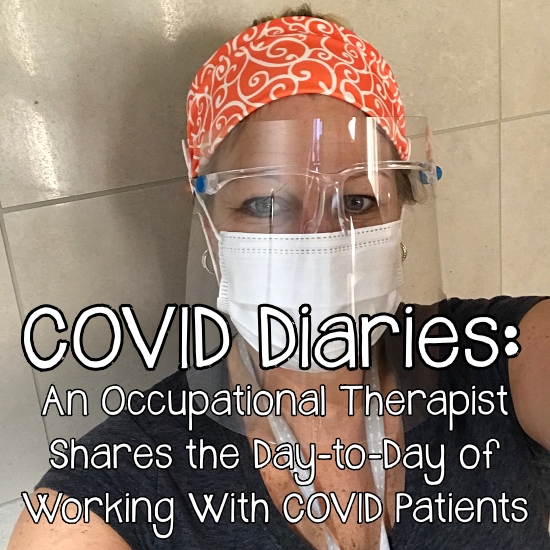
COVID Diaries - An Occupational Therapist Shares the Day-to-Day of Working With COVID-19 Patients (a guest post by my sister!)


(Note: This is one of the longest posts on my blog, but I promise you it is worth reading the entire thing through. I didn't want to edit it down at all because I find it fascinating. So wait to read it until you have 15 minutes or so.)

I am SO excited to share this guest post today! For the last year and a half, COVID has obviously been the most talked about topic pretty much everywhere. We have all heard of the numbers--how many have tested positive that day or which country is being hit the hardest, or what the death toll is. I feel very fortunate that nobody very close to me has had to be hospitalized due to COVID.

Something I've realized, though, is that because I don't see the effects with my own eyes, it's hard to truly understand the devastation it has caused--not just in the people who have survived COVID, but in the families who have lost people, the people who will have long-term complications, and especially the mental health of the front-line workers.

I haven't been inside of a hospital since before the pandemic so I have no idea just what it looks like and how it's changed. When I started this COVID Diaries series, I really hoped I'd be able to hear from someone that works closely with COVID patients. I wanted to hear the "realness" of what is happening and not just see the numbers on the news. I wanted to be able to know what it actually involves and what the full process is.

Interestingly, the guest post that answers a lot of my questions is written by none other than my very own sister! She lives in Illinois, so I don't see her nearly as often as I'd like, but I was thrilled when she said she'd like to write this post.

There are a couple of things I want to point out before I turn it over to her:

1) This is not a political post and I do not want to bring politics into it at all. Nor do I want to turn this into a debate about whether to vaccinate or not. Normally, I publish every comment that is written on my blog (minus the spam) but I won't be publishing political comments here. This is just a post of my sister's experience of what she sees and deals with every workday and I'm grateful to her for sharing her thoughts.

2) This is written following all HIPAA laws--my sister doesn't use any identifying information or photos. She takes that very seriously. (The photos that show the different types of oxygen masks can be found online; I've linked to the sources. They are not my sister's photos).

Okay, enough from me. Introducing my sister, Jeanie...


My name Jeanie and I am Katie’s sister. I work as an occupational therapist at a level 1 trauma hospital. I am writing this guest post in the hope of giving insight as to what it is like to work in a hospital during the COVID-19 pandemic. As a disclaimer, nothing I am writing has anything to do with politics or my own personal beliefs. Everything I will include in this post is what I see with my own eyes in this occupation.

I am confident in saying that many healthcare workers are completely fed-up with reading inaccurate information on social media from people who have no affiliation with the medical or science field but continue to re-post this misleading information. (I could make that into a whole post by itself, but I will stop there).

If you are not familiar with an occupational therapist, an OT can work in several different settings: homes, schools, outpatient clinics, mental health centers, hospitals, etc). Personally, I think the word ‘occupational’ should be changed to ‘functional’. We should be called Functional Therapists because our goal is to help patients return to their daily lives: dressing and feeding themselves, writing their names, dialing a phone, opening medication bottles, managing their oxygen cords while walking, etc.

As an OT in the hospital, the job details can change drastically depending on which unit I am working. Occupational therapists and physical therapists work together with patients in a lot of situations. If I am in the intensive care unit (ICU) and the patient is on a ventilator, we (the PT and I) may just be working with a patient on balance/tolerance to sit upright—the eventual goal being that the patient will be able to sit up and wash their face, for example.

Or if I am working on the orthopedic floor, then I may be teaching someone how to use long-handled tools so they can dress themselves without bending over after having a hip replacement.  

A big part of my job at the hospital is to help determine where the patient should go once they are ready to the leave the hospital. Are they safe to go home? Do they need home care? Do they need intensive rehab at a facility? Do they need long term care? The rest of the medical team relies on the therapists for the appropriate recommendations. (This causes a lot of stress because you want to make the correct decisions.)

For COVID-19 patients there is a spectrum of care:

The most critical is the ICU (intensive care unit). From there, it goes down to step-down ICU (SDICU). Then there is the cardiac floor or general floor (depending on the severity of the illness).  

General Floor

From what I have seen, patients on the general floor may or may not have been vaccinated for COVID-19 (most are unvaccinated; some are vaccinated but are overdue for a booster shot). The patients on the general floor are on a low amount of supplemental oxygen, usually no more than 6L (liters).

These patients can typically tolerate some daily activities. (As a frame of reference, people on oxygen at home are usually on 2-4L.) When I work with these patients, I usually teach them energy conservation strategies (moving slowly, pacing oneself, pursed-lip breathing techniques) and how to incorporate those into daily tasks.

For example, I may educate the patient on how to take a shower without becoming completing exhausted: using a shower chair; keeping the bathroom door open and overhead fan on to circulate air; keep the oxygen flowing during the shower; cross legs to wash feet or use a long handled sponge to avoid bending forward; and other things like that.

Once the patient is educated, I will have them complete the task while I monitor their incorporation of what was taught. I also keep an eye on their vital signs before and after the shower and monitor them for any signs of inability to tolerate the activity. Many patients are VERY happy to finally take a shower but also are grateful for strategies that will help them at home.   

Cardiac floor

Covid patients on the cardiac floor are typically more ill and have increased oxygen needs due to COVID pneumonia (this is where sacs in the lungs fill with fluid, limiting the ability to take in oxygen).

Many of these patients also develop additional medical issues. It is not uncommon for COVID patients to develop blood clots or pulmonary embolisms (PE) or even to have a stroke. So these patients present with COVID and now also have a PE; or have COVID and now have a new stroke. 

The therapy for these patients varies greatly. Some can only tolerate seated exercises in a chair; some work on energy conservation techniques with daily activities; some learn to manage an oxygen cord while walking with a walker (these patients will likely be able to go home now with oxygen).

It is more challenging to treat patients who have COVID and subsequently had a stroke. The amount of personal protective equipment the staff wears in the room becomes very warm, very quickly. Physically assisting patients to sit up on the edge of the bed or transfer to a chair will leave the therapist(s) sweating. A lot of times, these patients are on a blood thinner medication and want the thermostat all the way up, making it even warmer in the room.

Step-Down Intensive Care Unit (SDICU)

Most of our patients on step-down intensive care unit (SDICU) have severe COVID pneumonia and are on heated high flow oxygen (HHF) or on a BiPap machine to help them breathe.

While the patients on the general floor are on 6L or less of oxygen, the patients on SDICU are on typically anywhere from 8L to 40-60L of oxygen, depending on the oxygen levels in their blood. The oxygen meter hooked up to the wall (like you see in a doctors office) goes up to 15L.

If the patient requires more oxygen than that, they go on the HHF or BiPap. These machines allow a higher liter-per-minute delivery rate as well as the ability to change the percentage of oxygen delivered. I will try and keep this simple but the lowest level to highest level of oxygen looks like this: (Note: these are not photos of my sister's patients; I've linked the sources to the photos below them)

1. Room air (no oxygen required)

2. On a regular nasal cannula hooked up to the wall (up to 15L). This is just the tube that you see people at home with—where it delivers oxygen into your nostrils.
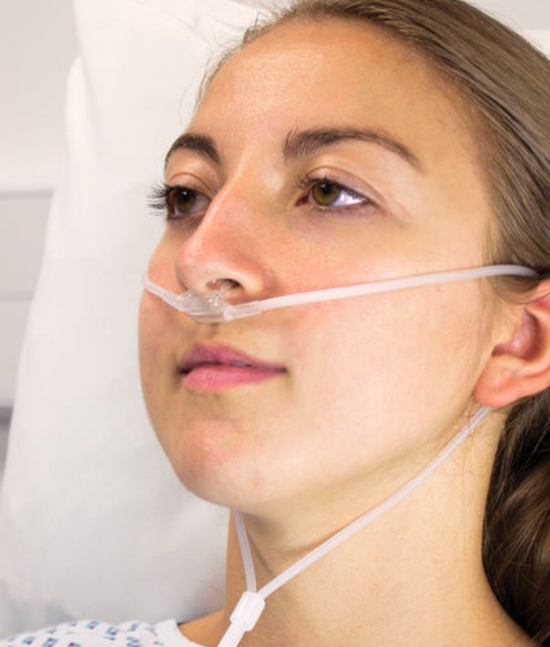
Photo of a nasal cannula - source


3. On heated high flow (up to 60L, 100% oxygen) given through a special high-flow machine and special nasal cannula that can deliver that amount of oxygen. These patients are in the SDICU.

Photo of a heated high-flow oxygen machine - photo source

4. BiPap. This is a mask that has velcro straps that tightens the mask over the nose and mouth and uses high pressure to force the air into the lungs. Patients find it to be very uncomfortable because the amount of pressure needed feels extreme. These patients are in the SDICU.
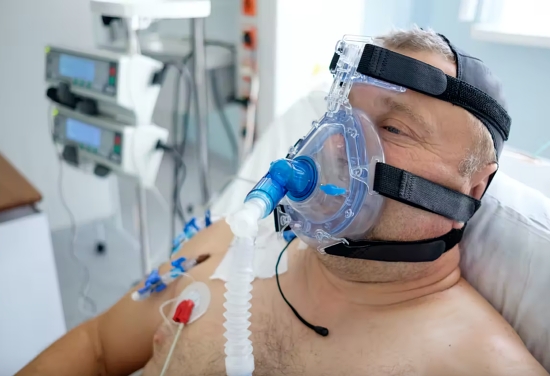
Photo of a BiPap machine - source


5. If the patient can’t keep the oxygen levels up with BiPap, the only step left is to be on a ventilator. This is a machine that does the breathing for the patient. These patients are in the ICU where the main goal is survival.
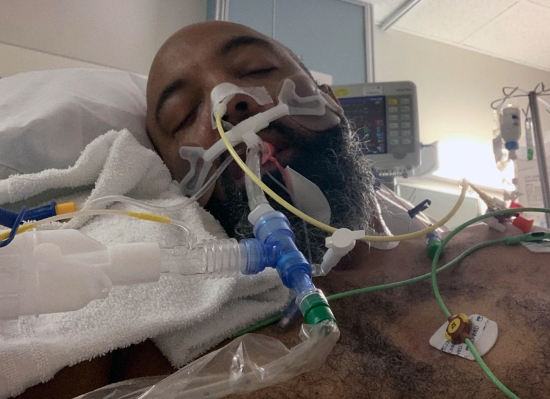
Ventilator - photo source (this is a great article to read!)


Tracheostomy (a surgical hole in the throat) for a ventilator; used for long-term vents

Treating patients in the SDICU is extremely tricky. The main goal is to keep their blood oxygen levels up. (For reference, a healthy oxygen is about 95-100%.) These patients’ oxygen levels tend to drop very quickly with any movement.

It is not uncommon to go into a room and the patient has oxygen levels of 92% when they are on their stomach. Lying on their belly (called ‘proning’) is encouraged because it has been shown to help improve oxygen levels. But if they roll over, stand up, or get onto the commode, etc. their oxygen may drop into the 70s (or even 60s) very quickly. This is scary because it tends to take a long time for COVID patients’ oxygen levels to come back up.

This is why we encourage patients to use pursed-lip breathing (breathe in through the nose and blow out the mouth), move very slowly, and take rest breaks instead of rushing though the activity (which may just be getting up from the chair). If the patients’ oxygen levels do not come back up into the high 80s or low 90s, then we usually have to give the patient more oxygen to help with that.  

I treated a woman who was in the SDICU and was on 8L of oxygen. Her oxygen levels were 94% in bed. She needed to use the toilet, and just by getting up to the commode, her oxygen levels dropped to the 70s. Over the course of 13 minutes, I gradually increased her oxygen to 15L. Her oxygen level was still only in the mid 80s. At this point, she had to go back on the heated high flow machine or prone in bed to get the numbers back up. (This patient laid face-down and the numbers did come back up).  

These patients are usually (and understandably) anxious—some say they feel like they are drowning, or that they can’t get a good breath. They either want to see the monitor so they can see what their numbers are, or some ask that the monitor be turned away and alarms turned off because knowing the numbers increases their anxiety.

As a therapist, we are trying to prevent the patient’s body from becoming de-conditioned during long-term hospitalization (when your body is lying in a bed for so long, it becomes difficult to move and function as you did previously); prevent bed sores by having them change positions; improve digestion and prevent constipation by having them sit up for meals; and help improve circulation to prevent blood clots.

However, we also know these patients have a hard time maintaining good oxygen saturations (like I said, it can change very quickly) and we don’t want to “push” the patient because if their numbers stay low, they may have to change from nasal cannula to high-flow or high-flow to BiPap. We use extreme caution when a patient is on BiPap because the only step left is intubation if the oxygen levels don’t stay up.

These patients cannot tolerate much activity and even if the patient is physically able to walk in the room, the machines (HHF and BiPap) have limited cords/tubing; this prevents us from helping the patient walk any distance. They can usually walk a few feet forward/back within the range of tubing.

As the OT, I may work on simple arm/leg exercises; or bathing/grooming in attempts to get the patient to improve their endurance by participating in simple tasks.

Intensive Care Unit

When worse comes to worst, if patients are not able to maintain their oxygen levels on BiPap, then the only step left is being put on a ventilator. Some patients (or family members who have power of attorney) choose to refuse the ventilator, even though they know the outcome will be death.

This is a horrible horrible situation for families and is a strong reason why people should have a discussion with loved ones about what their wishes are if they are ever in this situation (not just with COVID, but with any situation that may arise).

It is not uncommon for many of the vented patients to end up needing a feeding tube and a tracheostomy (a hole in the throat) which is then hooked up to the ventilator. Many vented patients go into multiple organ failure and may require continuous dialysis at the bedside. 

Once a COVID patient is in ICU on a ventilator, I don’t see them for therapy. They are usually prone for up to 18 hours a day and the goals of care are focused on patient survival.

Occasionally, I will help the medical team “prone someone”. This usually requires 4-5 staff members at once—one needs to be the respiratory therapist, who manages the ventilator tubing coming from the patient’s mouth, and rest of the team forms a type of “cocoon” around the patient with two bedsheets.  On a specific count, everyone works in synchrony to roll the patient onto or off of their belly.

It sounds simple, but remember… you are managing multiple IVs, a central line, a foley catheter, vent tubing etc. Also, some of the patients are very heavy, which further complicates the process.  

If the patient continues to decline once they are on the ventilator, the palliative team will usually talk to the family to give them insight into what the prognosis is and what the options are moving forward (tracheostomy for ventilation, feeding tube, dialysis).

Many families chose to withdraw care from their loved one when they realize survival is unlikely and it will cause undo suffering if they continue aggressive care. Withdrawal of care is common if a patient is on BiPap but still unable to keep the oxygen levels up and has noticeable labored breathing, agitation, etc., and it has been determined through the patient and/or family that they do not want intubation.

At my hospital, families are allowed to visit for end of life (some are allowed in the room and some are not, depending on various factors). The nurse explains to the family what to expect when they withdraw care, and when the family is ready, the nurse will administer medications to help keep the patient comfortable before withdrawing the BiPap (or ventilator). At that point, most COVID patients pass away very quickly because their body has been fighting shutting down for some time.  

I had a patient who did not want to be intubated but was agreeable to BiPap (this is not uncommon). The patient “fought” for his life and I remember hearing him beg his nurse “please don’t let me die”. The nurse responded, “I am going to do everything I can to help you survive”.

Days later, the patient was in obvious respiratory distress and the family came up to the hospital. I brought them chairs so they could sit outside of his room (which had a glass wall) to see him before the nurse withdrew care (per family request). He passed away within 10 minutes.

My heart was broken for the patient and his family, but also broken for the nurses who do this day-in and day-out. For an ICU nurse, withdrawing care is not unheard of; however, I am sure they never expected to have to withdraw care on so many patients in such a short period of time.

When a patient is able to maintain a good oxygen level, and they are able to come off of the ventilator, then therapy will start again. These patients are extremely weak and usually require 2-3 people just to sit up on the edge of the bed.

They typically now go in reverse order for oxygen (they were on the vent, then move to BiPap, then to HHF, then nasal cannula). The physical therapist and occupational therapist work together with these patients as treatment is directed by what the patient can handle without overdoing it.

These patients usually will not go directly home from the hospital, but will go to a long-term care facility that works on lowering their oxygen needs (patients are not discharged home when they are on BiPap or heated high flow). If the patient improves at long-term care and has lower oxygen needs, they may then go to a different facility where the focus is more on getting stronger.  

All of this is a very long process. It is not uncommon to have patients in SDICU and/or ICU for 4-8 weeks.  

A few other things… All patients entering the emergency room have a rapid COVID test done and then have a PCR test (which is more accurate but takes longer) performed as well. If the rapid test is negative, then the patient is not put into COVID isolation, unless COVID is still suspected based on patients’ symptoms. If the rapid test is positive, then the patient is put in COVID isolation. Occasionally, we have someone who has a negative rapid test only to find out the PCR test is positive. PCR tests take about 24 hours to get back (much better than the 10-11 day wait time when COVID first started).  

COVID isolation requires staff to wear a gown, gloves, an N95 respirator (or CAPR) with a surgical mask over it, and a face shield.
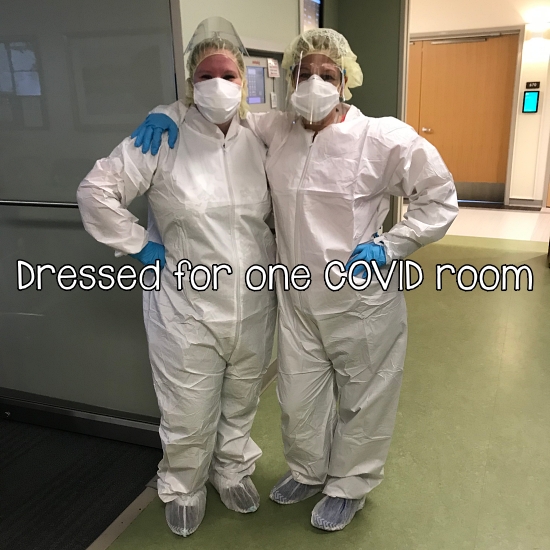
Kelly (the physical therapist) and Jeanie dressed to help a COVID patient sit up

One significant challenge is that patients cannot hear you through the masks, especially if the patient is elderly and/or relies on reading lips.  If a non-COVID patient is hard of hearing, I typically bring my phone into the room and use “voice to text” in my phone’s note pad to allow easy/fast communication without having to write everything down. So I can say into my phone “My name is Jeanie and I am from therapy. I am here to help you get stronger. Would you like to get up to the chair this morning?” 

Then the patient can read it and we can get moving.  However, I can’t bring my phone into a COVID patient’s room, so communication is huge barrier, especially if the patient does not speak English. We have a speaker phone in the room to allow access to an interpreter. But the interpreter also has difficulty understanding us through the masks and the whole process is a shit show. (Just FYI, I NEVER use my phone for ANY personal medical information about a patient; it is just for general directions and communication).

Another big challenge is making sure you bring everything you are going to need for your treatment in the COVID room the first time you enter. I usually put on my N95, surgical mask and face shield, then I crack the door and ask the patient if there is anything they need (water, Kleenex, etc) before I come in. If the patient can hear me, I gather whatever they request.

Once I am in the room, it is quite the ordeal if I forgot something. I can either press the call light and wait for someone to bring me what I need or I can take all of my personal protective equipment off, go get the supplies, put all the PPE on again and then finish my treatment.

The easiest way is obviously to use the call light; but many of the staff members who answer call lights are also in isolation rooms. (We had 14 COVID patients out of 26 in one unit last Sunday). And some patients “add on” what they want once I get into the room. I had to have a nurse aide come to the room I was in three times on Sunday because the patient asked for water, which was brought to the room. Once it was there, they decided they did not want ice water but plain water. Then they wanted extra Kleenex. And then they wanted a brush, not a comb.  

Now, I do understand these are all normal requests. In a non-isolation room this is no big deal. In a COVID room, all of this takes time.  

I bring up time because this is also a factor I wish more people understood. It is not uncommon to go into a room and someone is talking on their phone. To me, the appropriate response from the patient should be to tell their caller “A staff member just came in, let me call you back shortly”.

It’s extremely frustrating to the staff just how many patients (not just COVID patients) continue their conversation as if you never walked in the room. The younger generation likes to FaceTime and some will stay on FaceTime even while you are trying to talk to them. Some patients will answer the phone in the middle of the session and begin a long-winded conversation with someone.

This is taking up a staff member’s time that could be spent with another patient. Yes, we can take off all the PPE, leave the room, go see someone else and come back (and we do at times). But this is a general waste of time and PPE. (I do understand there are occasional important calls; I am not referring to those).

Some of these patients who were on their phones then complain that it took “…20 minutes to get some water” or “I waited a long time for someone to answer my call light” don’t see the irony that they are a contributing factor as to why there is a delay in “instant” service. 

A big issue that came along with the COVID pandemic is bed availability. Working at a level 1 trauma hospital means that we treat acute strokes, multiple traumas from accidents, spinal cord injuries, brain injuries, victims of violent crime, open-heart surgery patients, etc. I say this because most of these patients need an ICU bed.

However, many of ICU beds are occupied by COVID patients on ventilators, which means the turn-over time for a bed can be weeks.  It can be difficult to find a long-term care facility to take a COVID patient once they are medically stable for discharge because the long-term care facilities are also full of “long COVID” patients (whose symptoms last for months after acute COVID) and do not have bed availability.  

Patients become frustrated that they have to wait in the “overflow” area of the emergency room for a few days waiting for a room upstairs. (Just to clarify, the patient is NOT in the waiting room of the ER; they have a regular hospital bed, but they are just not on the medical floor).

Well, the reason for the slow bed turnover is because long-term care facilities are likely full; and rehab facilities, if they aren’t full already, want a patient to wait 10-14 days after a positive test before transferring. There are also family members who do not want to or cannot provide increased care for their loved one after discharge so those patients are also waiting on placement.

Medical insurance is another frustrating component—many insurances do not approve rehab when it is needed and this can take days and days to resolve. So at any given time, there are multiple patients ready for discharge but there is no where to send them and this creates a back up.

The Mental and Emotional Toll

I have seen more than I have ever cared to in the past two years.

I have seen multiple family members hospitalized at once…all with COVID.

I have met patients who performed CPR on their spouse (unsuccessfully) while they were both sick at home with COVID.

I have met families who buried both their mom and dad within days of each other.

I have met new moms who had their baby delivered in ICU while they were intubated due to COVID.

I have met patients who “just went to a small family get together” and got COVID from their grandchild. One grandparent survived, one did not.

I have met spouses that were both hospitalized—one survived, one did not.  

I have met a patient who continued to say “COVID is not real” despite the fact that he was on BiPap due to COVID. He did not survive. 

I have met patients who came to the hospital for help but declined the medications being offered (which they have a right to do). They did not survive. 

I have met a patient who was unvaccinated and both she and her spouse were hospitalized. The first thing she asked me was, “When can I get vaccinated?” She told me her spouse was “down the hall” and they “both had COVID”. Her spouse declined overnight and was not down the hall, but in SDICU. He did not survive. They had been enjoying retirement while traveling south in the winter, north in the summer. She is alone now. 

The crazy thing is that so many of these patients were not anywhere near dying when they got COVID. They were working, productive members of society. Or they were enjoying retirement with their spouse and their grandchildren. They may been otherwise healthy, or they may have had some minor medical issues (like everyone does when they get older—but certainly not something that put that patient near death before getting sick.).  

I treated a younger lady who lost her spouse to COVID after she herself was hospitalized with COVID. This woman was so put together—she wore nice nail polish and had a very friendly demeanor (she reminded me of my cousin). I remember getting her up to the chair and she wanted her picture taken to send to her children. She gave a thumbs up and I snapped a photo with her camera. She immediately sent it to her children.

Her health declined rapidly. And when it came to it, she declined intubation. I often think of her and her spouse together again in eternity; her children left parentless over just a few days.

Those are cases you just can’t forget.    

Being unvaccinated definitely puts someone in a higher risk category (I can say with confidence that probably 90% of our SDICU and ICU patients are unvaccinated). Also, obesity puts people at a higher risk.

Not all of these patients die. Some go on to long-term care. Some eventually make it to a rehab facility. I also work at a rehab facility a few days a month, and I see these COVID patients months after their original hospitalization. These are patients who are in the “survived” COVID category, but most people never realize the road that patient has traveled to get to that point in rehab, or that they may never go back to their pre-COVID life due to the long-term side effects from COVID.

But that is a whole different post… “long covid”. I had a patient who was hospitalized in the spring 2021 for 7 weeks with COVID. She made it to a long-term care facility and got off the vent. I saw her back at our hospital in the fall for complications. She has been back and forth from LTC to the hospital for seven months; she has still not been home and requires assistance for every daily task.

It’s not just about the death numbers in reference to COVID—there is a huge area in between the “recovered or died” categories that nobody talks about.

Like most healthcare workers, I am grateful for the opportunity to help these patients. But to say we are tired is an understatement. Pray for your medical team—not only for their physical health but for the mental strain they are under. Be kind. Be patient if you go to the hospital. They are doing their best.  

I will leave you with a personal thought that I have often shared with patients (even before COVID). At some point, patients are responsible for their own health. You cannot rely on the doctors and hospital staff to “fix” things if you are not doing your part.

For example, if you have diabetes and have been educated on eating habits, exercise habits, checking your blood sugar daily, and taking your insulin as prescribed but you still choose to not do these things, that is on you. Yes, the doctors can help you out of a critical situation, but you also have a responsibility to take care of yourself. 

It’s similar with being overweight. Or with smoking. Or using drugs. Et cetera. We all have some control over our health. There are factors we can’t control (our age, sex, genetics) but there are factors we CAN control. I encourage everyone to do what they can to take control of their own health!

(This is a guest post as part of my COVID Diaries series. You can read more about that and what I'm looking for here. If COVID has affected your life/job in a huge way, I'd love to hear from you!)

Featured Posts

Blog Archive