Showing posts with label heart rate. Show all posts

July 03, 2023

Reader Question: Will MAF ever make me faster?!

Despite the fact that I no longer "train" (or run regularly, for that matter!) I still get asked a particular question pretty frequently. As a running coach, it makes sense that I get questions about running ;)  And running is one of my favorite things to talk/write about!

This question has to do with heart rate training--specifically, MAF training. In short: 'MAF' is a heart rate training method that was developed by Dr. Phil Maffetone; and coincidentally, his method involves a heart rate called Maximum Aerobic Function (i.e. MAF heart rate). From here on out, when I write MAF, I'm referring to the Maximum Aerobic Function heart rate. Heart rate is given in bpm (beats per minute).

(If you want the full, more-information version, here is a post I wrote about the MAF method of training and my thoughts on it.)

Please don't take this as gospel, because it's been a while since I read the MAF book, but the gist is this: a typical person's MAF heart rate is a simple number that is calculated by subtracting their age from 180. (Let's say you are 40 years old--your MAF heart rate would be 140, because 180 bpm - 40 (age)=140 bpm.) 

To train using the MAF method, you do all of your running at or under your MAF heart rate. In the example above, the 40-year old woman goes for a four-mile run several days a week--and each time she runs, she must keep her heart rate at or below 140 beats per minute. Always. No matter the situation.

Let me tell you, it feels VERY SLOW. But we'll get to that in a minute.


According to Dr. Maffetone, if you always run at that MAF heart rate, you will naturally get faster while maintaining the same heart rate. Your muscles and cardiovascular system are getting more efficient each time you run at your MAF rate, and therefore, it takes less effort to do the same amount of work (your running pace).

So, here is the big question/problem that people ask me about frequently: Running at the MAF heart rate is SO SLOW--I have to walk a lot of the time, especially when going uphill, and it feels like I'll never get faster. Does it really work? Will I get faster if I only ever run at my MAF heart rate?

First, let me be clear that I have not done the MAF method 100% for more than a couple of weeks. (I use the MAF formula frequently, but I'll get to that later.) I hadn't really studied the method until a friend told me about it, and the whole idea made so much sense to me. I loved it!

Until I tried to run at MAF pace and was soooo slow that I was very embarrassed. (Wisdom I wish I knew then: Don't ever be embarrassed at what pace you run. Seriously, that's dumb.)

I didn't do MAF training for long because I just didn't have the patience to see it through. I wanted to run FAST, dammit! So I ignored it for a few years. I read a book called Hansons Marathon Method in 2013 to train for the Chicago Marathon. It involved a LOT of running, but it really stressed that most of the running should be SLOW and easy. I didn't even know the meaning of "easy"--all of the runs I thought I was doing at an easy pace were not, in fact, easy. They were pretty much "garbage miles"--too slow for speed work, too fast for cardio efficiency.

(I hope I'm writing this in order--but this is the end result, regardless...) I wanted to train with the Hansons Marathon Method, and decided to use my MAF heart rate as the rate I would use for my easy runs. And finally, I read a book called '80/20 Running' by Matt Fitzgerald--he says to spend 80% of the TIME spent running per week at an easy pace, and 20% of the TIME can be spent doing work that raises your heart rate into a particular zone. (It's key to note that it's *time* and not *distance*.)

I sort of combined the methods to train for Chicago: the training plan in the Hansons Marathon Method Book (you can find my review of the whole method here); the 80/20 rule; and using my MAF heart rate to be the heart rate I spent 80% of my time running.

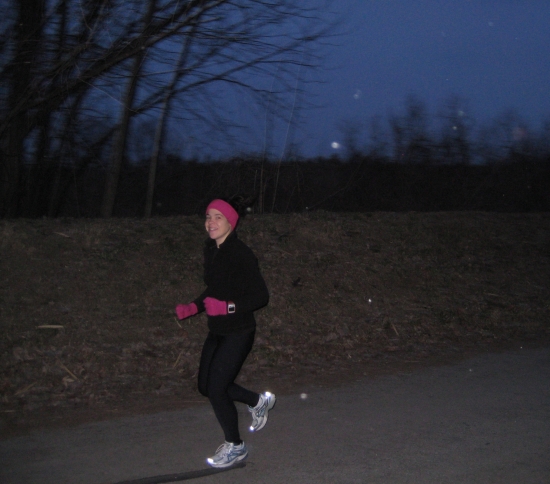
I took this picture after the hardest training run I've ever done: 3 x 2 miles at race pace (for me, that was 7:55/mile at the time). 


Training for a marathon is more of an extreme example for this particular question about MAF training. I used the method mostly during my training for a 10K (spending 80% of my time at MAF heart rate and 20% of the time doing HARD speed work).

I came in second female overall at a 5K that I decided to use as speed work.

I had results. Really good results, in fact.

I wish I could answer the question that I'm asked so frequently--about whether following MAF exactly as it should be will yield the best results--but I can say that the MAF training heart rate number was perfect for my own training.

The pace I had to run at that number felt way too slow (and yes, I had to walk quite a bit to lower it) in the beginning. At that time, I'd been trying to follow the MAF program as written; however, I got impatient and decided to combine it with the 80/20 Method. Then I could get my "fix" of fast running once in a while.

Using the combination of the MAF easy runs (80% of the time) and very hard speed work (which I'll describe), took my 10K pace from about 11:00/mile to 7:55/mile in about six months. I trained SO HARD and definitely got the results I wanted. (Unfortunately, I was burnt out after going after such a lofty goal.) I hit my 10K goal, which was thrilling.

I absolutely think that the MAF method on it's own probably works--thousands of people rave about it. And actually, if you want to read a book about a famous runner who followed this sort of heart rate training and felt SO SLOW at first, check out Rich Roll's memoir called 'Finding Ultra' (the link is to my favorite running books, so you can find it there). 

So, for the official answer to my question...

Yes, I believe that the MAF method works if you do it like you are supposed to. I didn't do it for long (only a couple of weeks) but I could understand how it starts to feel easier at the same heart rate.

Also, when I first started training with MAF heart rate, I felt super slow. But I forced myself to trust the process (I think my pace was 13-something a mile--when I was used to calling my "easy" runs 9- or 10- something per mile, haha!). I remember my MAF heart rate being 146 bpm, and I always kept my pace below that number when I was doing "easy runs".

Per my own permission, I spent 20% of my running time each week doing speed work--intervals and/or tempo runs. And I went hog wild with them, making each of those workouts really count. Seriously, I gave them my ALL. I think that was important--what's the point of half-assed speed work?

I think the combination of the two methods is a great way to train, regardless of the distance. I wrote out several places that use the method; you can check out my free training plans on this page. The plans can even be used for walking--I've discovered I have to walk VERY fast to get my heart rate up to MAF; and holy smokes, it's a tough workout. 

You could actually use this method for any sort of cardio exercise you like to do, now that I think about it. The whole point is to make your body more efficient at the workload you give it; and it does this by being trained, over and over, at that particular exertion (your MAF heart rate). Eventually, you'll have to work really hard to get it up there!

(If I remember correctly, I think my "easy runs", using MAF heart rate during 10K training, went from 13:00 minutes+ per mile to just under 10:00 per mile. At the same heart rate of 146 bpm! I wish I could tell whether it was the MAF method, the 80/20 Method, or a combination of the two that did it, but I'll never know for sure.)


After all is said and done, it wouldn't hurt to TRY doing the MAF Method exactly as intended--see what happens. (And definitely email me and let me know.) If you really don't see good results after the time that Dr. Maffetone suggests, you can always decide to try a different method (or try adding speed work, like I did). But there certainly isn't anything wrong with giving it a try.

I think the hardest part about it is all mental--making yourself run/walk/bike/etc. much slower than you want or that you're used to is mentally challenging! I'm sure that once you start to see results, it will be encouraging, though. 

(Oh, this is a random question that deserves a spot here as well: Dr. Maffetone says that you don't have to change your MAF heart rate every year on your birthday. He says that as long as it's working for you and your health hasn't changed, you don't need to change it. I found 146 bpm worked so well for me when 10K training that I used that number for a couple of years.)

This post isn't nearly as clear as I hoped it would be, but I wanted to try to write this info in one place for anyone who may be wondering the same question. Give MAF a try, and let us know how it works out for you! Or, make it your own and work the MAF method into your own training like I did.


June 06, 2022

Summer Heart Rate Training: Week 0

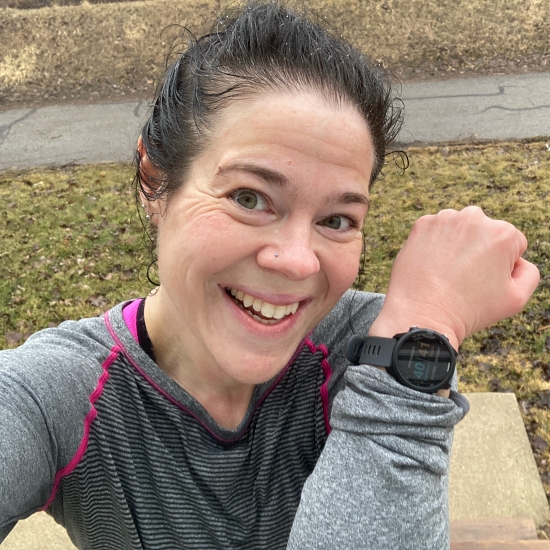
That picture is from March; I just didn't have a new picture for this post.


Well, it's been two months since I took a break from running to (hopefully) heal whatever was going on with my knee. The knee issue is so hard to describe and it only happens sometimes--completely randomly--so I think it's just something I'm going to have to live with.

I feel like it has something to do with the way I sit. I love to sit in the corner of the sectional with my legs crossed, and when I stand up afterward, I may feel pain in my knee until I walk around for a minute. Sometimes, though, it won't go away, or it locks up and feels super stiff.

Anyway, I don't feel like it's a big issue right now. I won't know if running aggravates it until I start running regularly again. And I'm looking forward to getting back to a regular running schedule!

After finishing the 10K plan I was following, I had planned to start a 10K plan by Matt Fitzgerald from the '80/20 Running' book. I knew I wanted to try out heart rate training that is different from the MAF training. Since '80/20 Running' is structured around running in different zones, I figured it would be a good plan to start with.

A lot of the plan (80% of it) is made up of "foundation" runs, which are done in Zones 1-2. This is basically very slow running and even walking in order to make sure it's a nice, easy workout.

On Tuesdays and Fridays, there are speed work runs: fartlek, hills, short intervals, long intervals, fast finish, and mixed interval. I like the variety; I think it'll help me from being bored with all of the Foundation runs.

This past week, I did Fast Finish Run 1. Each run on the plan has a number next to it--the lower numbered ones are easier, and they get harder from there. So, Fast Finish Run 2 is a little harder than Fast Finish Run 1, and so on. When I set up this run on my Garmin, I couldn't get it to sync to my Garmin for the life of me.

I was SO frustrated; I could have gone for my run, showered, and ate lunch in the amount of time it took for me to mess with the Garmin issue. I'm still trying to get used to a Garmin without a touch screen; I have a hard time finding the screens I'm looking for. That day, I wasn't able to sync the Garmin and I got too frustrated to keep trying. I just did manual laps (pushing a button when switching zones) and that wasn't ideal--I was looking at my watch too much and even then, I overshot and did the zones too long.

Eventually, I noticed the Garmin needed a software update and that's probably why it wasn't syncing. It took nearly two hours to download the update! I was able to set up Foundation Run 2. I even used a Garmin watch app that shows which 80/20 zone I'm running in. The 80/20 zones can't really be set up correctly using the default Garmin calculation.

I'm getting way off track here, so I'll spare all the details. It turned out that when I set everything up, I still managed to mess up the zones. Gah! It felt SO EASY when I was running--and I use that term very lightly, because it was a very slow jog/walk in order to stay in the foundation run zone. On the difficulty scale of 1-10, it was a 1.

I'm actually kind of relieved that I was mistaken, because I don't think I could do this plan if the runs were that slow. A fast walk didn't get my heart rate up high enough but a slow jog made it too high; so I was doing a constant jog/walk that required too much paying attention. I just wanted to listen to a podcast while going for an easy run. 

Which brings me to now. Now that I realized my mistake with the heart rate zones, I think it should be much better. I already posted this before, but these are the zones based on my heart rate reserve:


My Garmin has 5 zones, so for this purpose, Zone 2 is actually a combination of the Garmin's Zones 1 and 2.

Technology totally complicates things sometimes ;)  Running is the simplest sport there is! Just put on a pair of shoes (or not) and run. But with running watches and apps and smart phones, a super simple sport turns complicated. I wish I was willing to run without the technology, but I'm used it now.

Today marks the start of Week 1 of the 80/20 Beginner 10K Plan. I'm going to try this through the summer--it's 12 weeks long--and just see how I like it. I've actually never trained using heart rate this way (I've always used MAF) so I like that it's something new to me. Some of the workouts on this plan will be fun! Take this one for example:


That will absolutely require setting up the workout in my Garmin--there is no way I could remember that!

Wow, this post is all over the place. I had planned to write about the runs I did last week, but after discovering my issues with heart rate zones being off, I'm just going to call this Week 0 and the official start of the plan will be today (Mondays are rest days, so tomorrow will actually be the first run). I'll probably do my weekly recaps on Sundays.

Now that I'm not in pain when I get up in the mornings, I would really like to try to get in the habit of running right when I get up. I used to do that and it was so nice to have run and showered before 8:00 in the morning!

March 31, 2022

Return to Running Recap : Week 44


I don't have much to recap on this post because I didn't do much running last week! Jerry and I both agreed to take the second half of the week off and then start it all over this week.

We were working on Week 6 of our training plan, but we each had problems with it--mine being my left knee. It doesn't really feel like a "real" injury, but it bothers me the day after each run for some reason. It doesn't hurt while I'm running, but the following day it hurts. And it's not terrible pain, but more of a nagging pain. It almost feels like the top of my tibia is bruised (I know that's very specific, haha).

Anyway, I had been skipping one run per week due to my knee anyway, but when Jerry suggested taking a few days off and then repeating Week 6, I thought it was a good idea. I hoped that the extra few days would help my knee to quit bugging me.

And thankfully, it seems to have worked! I'm going to continue to run just three days a week instead of four, at least until after the race. I really don't want to risk having knee issues come race time. So, I'm going to skip the Thursday runs. (I wrote in the plan that if you have to skip a day, the Thursday run is the best one to skip.)

That means I only have one run to write about today, and unfortunately (or fortunately, I guess), it's not very eventful!

Tuesday - Tempo Run

Tuesday's run was a tempo run; since I'm repeating Week 6, this is the same run I did a week prior:

Run 5 minutes easy; Run 15 minutes at tempo pace; Run 5 minutes easy.

I liked that this was only 25 minutes total! ;)  I looked at what I did the previous Tuesday so that I could run at the same speed (or possibly a little faster) this time. I read my book while I ran, but the run felt hard--which was good, because a tempo run isn't supposed to feel easy. 

Summary: 5 minutes at 10:58/mile, 15 minutes at 9:02/mile, 5 minutes at 10:48/mile. Total of 2.59 miles in 25:08.

Since I got the new Garmin and spent some time messing around with it, I decided to try something a little different. I changed the heart rate zones to the default (percentage of heart rate reserve) rather than using the MAF heart rate formula. I'm not heart rate training right now, but I am curious to see where my heart rate falls under the default settings.

Percentage of heart rate reserve (HRR) is more accurate than using a percentage of maximum heart rate (MHR) because it takes your resting heart rate into account as well as your maximum. Lately, my resting heart rate has been about 70 bpm. 

I don't know my *actual* maximum heart rate, but using the well-known formula of 220 minus my age (40 years), I get 180. This method has been shown to be pretty inaccurate and gets less accurate as you get older.

There is another method called the Gulati formula that is just for women and it's apparently much more accurate. Your maximum heart rate is calculated like this: [206 - (0.88 x age)]. That would make my maximum heart rate 170.8 (we'll round up to 171 bpm). That seems a lot more likely than 180 for me--even when I run my very hardest, it's hard to get to the high 160s. 

So, I'm just going to go ahead and set my maximum heart rate at 171 bpm. So here is what my heart rate zones would look like when using the heart rate reserve method:


It took me forever to find a good chart for the descriptions of the zones using heart rate reserve, but here is a great one from RunBundle. You can put your own numbers in and it will calculate everything for you, but here is the description of the zones themselves:

This only lists four zones, so Zone 1 on the Garmin would basically be "Zone 0"--useless as far as this training goes. I marked the chart with red to reflect the zones on my Garmin. So I would basically run in Zone 2-3 for easy runs, Zone 4 for tempo, Zone 5 for intervals.

Like I said, I'm not training by heart rate right now (although my runs lately seem to fall into those zones) but after the race, it might be fun to try training with these zones for a change. I always like trying something new to keep things from getting boring!

I had no intention of turning this into such a long post about heart rate stuff (in fact, I think I said I *wasn't* going to write about heart rate stuff during this training period, haha!). Since I only had one run to cover on this post, I figured it was a good time to mention it, though.

Let's hope my knee holds up okay this week. Four miles tomorrow and then five on Sunday!

October 17, 2021

TRAINING PLAN: My 'MAF80' Running Plan (for beginners to heart rate training)


This post is a copy of what I've attached to the (printable) running plan as well, so it may sound a bit formal. But I've put SO much work into this plan and I hope that it works out well!

Here you can download and/or print the plan (which includes all of what is written below).

I want to start by stating that this is a trial plan—it hasn’t been tested and I wrote it based on my own knowledge as an RRCA-certified running coach as well as personal experience and reading various training methods. I’ve combined a couple of principles from two main sources to create this plan: Dr. Phil Maffetone’s MAF (maximum aerobic function) heart rate training method and Matt Fitzgerald’s 80/20 Running method. This is why I’ve (so cleverly) named this self-combined method “MAF80”.

This MAF80 training method means that you will be running and/or walking at a particular heart rate zone (called your MAF zone, which I will explain later) 80% of the time. The other 20% of the time will be spent running at a heart rate higher than that zone. I wanted this plan to be something that is do-able for beginners to heart rate training as well as for people who don’t want to do a high-mileage plan. This is not for training for a specific goal; if you are a seasoned runner and want to get faster for a 5K or 10K time goal, I would suggest my other plans called “Your Best 5K” and “Your Best 10K”. My running plans can be found here: https://www.runsforcookies.com/p/training-plans.html

First, MAF stands for Maximum Aerobic Function. The MAF heart rate is the highest heart rate you have before transitioning to an anaerobic state (a state that does not help build your endurance); ideally, you want to have a very fit aerobic system, and the best way to strengthen it is to exercise aerobically.

Note: The MAF heart rate formula was based on research done by Dr. Maffetone. The number isn’t 100% carved in stone for all people; but based on his findings, that formula works for the overwhelming majority.

When you exercise at a heart rate higher than the maximum *aerobic* function (MAF), you’re working your anaerobic system. This is also beneficial—for different reasons—but a little goes a long way. Doing too much can have the opposite effect and actually be harmful. Also, without a fit aerobic system, doing anaerobic work is pretty much pointless.

As a running coach (and runner myself), I find that the hardest thing for runners to do is SLOW DOWN during their training. “Easy runs” are the most important runs in a training plan! And most runners do them too fast, which isn’t giving them the benefits that the workouts are designed for (which is to develop endurance).

I created this MAF80 plan to force the runner to do the easy runs at a truly easy (aerobic) effort 80% of the time. The other 20% is beneficial physically, of course, but also mentally; as runners, we like to let loose and go fast sometimes! It also keeps the running from getting too boring.

(Note: Dr. Maffetone’s MAF training recommends that you do 100% of your training at a MAF level. I would suggest reading his ideas before choosing what is best for you. I believe in the 80/20 rule, which is why I combined the two.)

The end goal of running at a MAF heart rate is to be able to increase your performance while maintaining the same effort level. For example, if you run in your MAF heart rate zone (let’s say it’s 130-140 beats per minute) and your average pace is 11:00/mile when you start training, after several weeks or months of MAF heart rate training, you ideally will be able to run at the same heart rate but at a faster pace (let’s say 9:30 per mile). Running at a 9:30 pace will feel the same as running at an 11:00 pace did before.

When running at a MAF heart rate, your EFFORT always remains the same; your performance/pace varies. The fitter you get, the faster you can run at the same heart rate. (I will explain more about MAF heart rate later.)

It’s important to note that this plan is designed for heart rate training, which obviously requires a heart rate monitor. There is a huge variety online. I like to use my old Garmin Forerunner 620, but feel free to use whatever heart rate monitor you’d like.

I designed this plan with a few things in mind:

1) Variety. I didn’t want it to be monotonous.

2) Sticking with the 80/20 principle (per the principles in the book ’80/20 Running’ by Matt Fitzgerald)

3) Running for time instead of mileage. This makes it easier for runners to slow down because whether you run fast or run slow, you’re still running for the same amount of time. Might as well slow down and enjoy it! Also, the 80/20 principle is based on time spent running per week—80% at an easy effort and 20% at a harder effort. “Easy” and “Hard” are relative to the individual, so mileage doesn’t work in this case.

4) I took into account the fact that your heart rate is lowest at the start of your run and highest at the end of your run. So the order of running easy/hard may seem backwards, but I designed it this way on purpose. Your runs will start out at the MAF zone, saving the harder running for later when your heart rate is likely to be higher anyway.

5) Four workouts per week, 40 minutes each. You can add more MAF running if you’d like. There are two runs that are solely for MAF running; one day for faster intervals; and another day for longer, not-as-hard intervals (called Tempo).

6) Simplicity. There are only three effort levels: MAF (easy), Hard, and Tempo:

    1. MAF (a.k.a. “easy”). Run in your MAF zone. At first, you may feel like you’re having to check your heart rate frequently, but eventually you will get a feel for it. If you don’t want to keep checking, just run as slowly as possible! You should barely get winded and should be able to hold conversation at that effort level.

    2. Hard. Run at what feels like a hard effort—about a 8-9 on a scale of 1-10. Don’t put too much thought into it, though! You don’t need to worry about your heart rate during these runs; just run at a pace that makes you wish it was over already, haha. 

    3. Tempo. Run at a moderately hard effort—about a 6-7 on a scale of 1-10. It should feel kind of uncomfortable, where you will want to slow down, but you could hold that pace for much longer if needed.

There is also Walk, which is self-explanatory. I wrote the Walk portions in the spots where I felt it was most beneficial to get your heart rate back down to your MAF zone quickly. I always walk the recovery portion of interval training and I find I get the best results that way. Walking helps you to recover so you can push hard in the next segment.

A lot of beginners discover that running, even at the slowest pace possible, puts their heart rate over the MAF threshold. This is super common! In this case, you should run/walk (or even just walk) in order to keep your heart rate in the MAF zone. It can be frustrating (I’ve been there!) but eventually, you will notice that you’re able to run for longer periods of time before having to walk again. And one day, you’ll be able to run the entire time at a MAF heart rate. On the days where you can do speed work, run to your heart’s content!

If you want to speed up your progress, you can feel free to add more workouts or extend your workouts—at a MAF effort. You don’t ever want to do more than 20% of the time per week spent running at a hard effort (meaning higher than your MAF heart rate).

Because this plan is just a trial (I basically created it as an experiment for myself), I’ve only written 6 weeks. I will see how it goes and adjust as necessary, and if it is working out well, I’ll add to it. (Feel free to give me progress reports!) But if you want to extend it as is, you can just repeat weeks. To see significant progress (which depends entirely on the individual) I’m almost certain it’ll take at least a few months.

Finally, to calculate your MAF heart rate:

Just subtract your age from 180, and that is your MAF number! That number is the maximum of the range; the minimum number is 10 beats per minute below that. For example, I’m 39 years old, so my MAF heart rate is: 180-39=141 bpm. My MAF range would be 131-141 bpm.

Note: When you first start each run, your heart rate will likely be far below the MAF range. You don’t have to rush to get it into the MAF range. It will probably reach that range within a few minutes, so again—don’t overthink it.

I could write MUCH more on the hows and whys I’ve chosen to design this plan the way it is, but for now, I just want to test it out and see how it goes. I’m sharing it in case you are interested in trying it, too!

Again, I recommend the following reading:

- The MAF 180 Formula by Dr. Phil Maffetone (https://philmaffetone.com/180-formula/). There is MUCH more to his 180 Formula and MAF training than I could even begin to cover here. The only part of his method that I used is the 180-number. (His formula actually includes a few more steps.)

- ’80/20 Running’, a book by Matt Fitzgerald, explaining the hows and whys training at 80% easy and 20% hard is ideal. (This is an Amazon affiliate link, which just means that I may get a small commission for recommending it: https://amzn.to/3n09Hip )

Finally, make sure you read the post on my blog called “The Importance of the Easy Run”—it explains more in-depth why runners should be doing easier runs: https://www.runsforcookies.com/2016/04/the-importance-of-easy-run.html

Okay, as far as the plan goes:

- There are 4 runs per week, 40 minutes each.

- You can swap runs for others that have the same number of “HARD” minutes (for the sake of simplicity, the “Hard” runs and “Tempo” runs are both considered “Hard” when calculating the 20% rule because they both are done at a heart rate higher than your MAF zone. Each week, your Hard running (which includes Tempo) should add up to no more than 32 minutes (as the plan is written, each week has 30 minutes of hard running and 130 minutes of easy MAF running).

- You may add MAF running wherever/whenever you’d like.

I think that sums it up in a nutshell. Please feel free to give me feedback or ask any questions. I plan to make changes to this training plan as needed, based on feedback (as well as my own experience—I’m going to be doing it as well).

Happy Running! xo

Here is where you can get the free training plan and all of the explanation above

October 11, 2021

A Simple Explanation of MAF Heart Rate Training (and why I love it!)


I just got back from an evening run, and I just have to write this down so I remember it: the circumstances in THIS RUN are exactly the reason I fell in love with MAF training back in 2015.

I'm going to back up and bit and just explain what MAF is and its significance to me (as well as to my running coach style). If you've been reading my blog for a long time, then you can skip over all this...

MAF stands for "maximum aerobic function" (don't worry, I'm not going to get technical about all this, even though I am a total nerd for it; I'm going to keep it very simple here). It was developed by Dr. Phil Maffetone ('MAF' and 'Maffetone' are purely coincidental). Here is how his logic works:

Everybody has a MAF heart rate. There is a formula on his website which takes into several factors, but for the general population--as well as the way I use it--you subtract your age from 180 to get your MAF heart rate. I'm 39 years old, so my MAF rate is 180-39=141. The "golden rule" of MAF training is that you don't exceed your MAF heart rate while exercising.

(Note: Your MAF rate is a single number, but since it's nearly impossible to consistently train at that solid number, Dr. Maffetone says to create a range of 10 beats per minute below your MAF rate, with your MAF rate being at the top of the range. Since my MAF rate is 141, my MAF range would be 131-141 beats per minute. )

For almost everyone, this means exercising considerably easier/slower. For runners, it can feel painfully slow and ridiculous. There is a reason for training at this pace, though, otherwise people wouldn't do it.

To keep things simple and easy to understand, I won't get into the physiology of it, but according to Dr. Maffetone, when you exercise at your MAF heart rate, your body gets more efficient and when you eventually add more stress (running faster, cycling harder, whatever your exercise is), your heart won't have to work harder to keep up. You will be putting in the same amount of EFFORT (as evidenced by your heart rate), but you will improve your fitness level.

I'll use running as an example, since it's my "thing": Let's say I run a 5K race at 10:00 minutes per mile (running as hard as I can for that race). Then I start MAF training: I do ALL of my training runs at or a little below my MAF heart rate--in this case, 141 beats per minute. While it feels like I'm not working hard, I am actually making my body more efficient.

Over a period of several months (more or less--it varies greatly), I might need to start running a little bit faster in order to get my heart rate up to 141 bpm. It will still feel just as easy--I'm still stressing my heart the same as before--but I'll be able to do more/work harder in order to get my heart rate to that number.

Then, because my body has become much more efficient over, say, six months, I might run another 5K race at the same effort as the first one (pretty much as fast as I can) and my pace might be 8:00 minutes per mile.

To put it super simply, when MAF training, you're not working HARDER in order to become more fit; your body is just becoming more efficient at the same effort.

I will use myself as a testament that it really works:

In 2015, my pace had gotten much slower than I used to run. My 10K pace was about 11:00 minutes per mile (just two years prior, I had run just under an 8:00/mile pace in the 10K). My training had never involved my heart rate--I used my pace to gauge my fitness and my training. I did my "easy" runs at a heart rate of about 20 beats per minute OVER my MAF rate!

After getting over a stress fracture, I finally decided to try something I'd never done before: running at a truly EASY pace, by the very definition.

I read a book called '80/20 Running' by Matt Fitzgerald (Amazon affiliate link) that had a huge impact on my training. I combined what I'd read about MAF training with 80/20 running (and my knowledge as a running coach) to produce my own training plan. The biggest change in my training was that I began running MUCH slower than I was used to. I did at least 80% of my training at my MAF heart rate--and that translated to a pace of 11:00-12:00/mile.

Per the 80/20 method, I also did a small amount of speed work (no more than 20% of my TIME spent running per week was done at a heart rate higher than my MAF rate). Here is an explanation I wrote about how I combined the two methods to train.

I found that I was getting faster on the days that I did my speed work and that I was able to run slightly faster while maintaining my MAF heart rate during training. There wasn't a huge difference in the training pace, but I could see progress.

I was training for a goal 10K in April 2016--which was about five months after I started running at my MAF pace. I ended up running my goal 10K in 49:03 (a 7:54 per mile pace!).


Running my easy runs EASY was the best change I could have made in my training. I have no doubt that my combination training (I really should name it something--I made the training method by combining 80/20 and MAF in my own way.)

Anyway, why am I writing about all this again now? (Because you're hypomanic, Katie!) (Just kidding.) (But not really.)

Because my run this evening brought back all the good feels from my MAF training and it makes me want to do it again.

When I first ran at a truly easy pace (my MAF heart rate), I just let go of any and all expectations of my pace (that's very hard to do as a runner--we always want to go faster.) To be successful at this training, and to actually enjoy this training, you have to set your pride aside and trust the process. Someone is giving you ORDERS to go slowly, so enjoy it!

Today, I decided to run at my MAF heart rate range (131-141 bpm) and just see where my pace was when I ran at that heart rate. At first, my thoughts were focused on how slow I was and it's going to appear to others that I am losing fitness and all those thoughts that we need to get over in order to train properly. Once I embraced the slower pace, a big change came over me. I felt wonderful!

I didn't feel out of breath and I stopped focusing on how much longer until the run is over; I started to think that maybe I'd run farther than planned. I had planned to go just two miles and I procrastinated all day long because I didn't want to do it. Once my mindset switched over to that MAF feeling, I felt like I could run for hours (which is how you SHOULD feel when you are running at a truly easy pace). I tacked on an extra mile. When I stopped my Garmin in front of my house, I didn't have to catch my breath. I felt like I'd just gone for an easy walk. I actually felt really excited!

And maybe it's just because I'm hypomanic, but I started thinking that I want to train at my MAF rate again. Not only that, I want to write a new training plan--a lower mileage plan for beginners to MAF training. I am not interested in building up mileage--I only want to run enough to stay fit, at least for the near future--so I want to keep my mileage relatively low. I want to do my own method of combining 80/20 running with MAF.

I have written a couple of plans (that you can find here--named "Your Best 5K" and "Your Best 10K") for 5K and 10K training in this way--those plans were the most challenging plans I've ever written because I had to make all of the math work! However, even the 5K plan has more mileage than I want to run.

I don't want to train for a race or to hit a particular goal. I just want to use the training method because I enjoy it. So, I'm going to work on writing up a training plan for that purpose. (Let's hope it's not just my hypomania talking--this is a textbook example of something like that!)

Since I usually write about my running on Thursdays, I will try to write more about it then. Hopefully I can get the plan done this week!

Note: Something that people always ask about when I write about MAF training is that they can't run and stay under their MAF heart rate. The only way they can stay at that heart rate is to walk (or at least take walking breaks). Dr. Maffetone would say to do whatever it takes to stay in your zone. This really sucks for people who want to run! (And this is the reason that I wasn't doing MAF training as I got back into running--I just wanted to run for the feel of running.)

The training will work if you follow it as Dr. Maffetone states, if you're willing. You will eventually be able to run and maintain your MAF heart rate; it just takes patience. I think one of the biggest factors as to how fast that works is just how much training you're doing.

To a certain extent, the more you are training at your MAF rate, the faster you're going to see progress. Doing 30 minutes 3 times a week is likely to take a lot longer than 60 minutes 5 days a week. (Keep in mind that the training is EASY, so doing a 60 minute run/walk/other exercise at MAF heart rate isn't going to exhaust or overtrain you.)

If there is only one post you read about proper training, let it be this one: The Importance of the Easy Run!

To read all of the details about the MAF method (it goes into WAY more than just the heart rate training) you can find it on his website.

September 30, 2021

Return to Running Recap : Week 18 (and giveaway winners)

I totally forgot to take a post-run selfie after my runs this week, so this picture of Joey will have to do ;)  This is the look he was giving me as I was getting ready for the treadmill. I really should start running outside more (and of course, he gets to come with me).


Well, there is no beating around the bush... like I said yesterday, this week was just kind of crappy in all aspects. Including running.

I'm being very careful not to make excuses. I gained weight this week because of my food choices--regardless of why I made them. I do have a reason why my running was "off" this week, too--but I am sure I could have adjusted better.

Last week, I said that my plan was to start running every other day. I even ended my post with: "Okay, so I am stating here that I am committing to run on Friday, Sunday, and Tuesday for Week 18!"

That didn't happen. In fact, I only ran twice this week!

My first run wasn't until Saturday morning. I had planned to run Friday evening but I was super full from dinner (see? Bad food choices fall over into the running category as well) so I decided to put it off to Saturday morning.

Well, I had to babysit Luke and Riley early Saturday morning and I had to leave no later than 6:00 AM. Since running 3 miles now takes 36 minutes, I knew I was going to have to get up super early so I could run, shower, and get together the stuff I'd need for crafts with the kids. I haven't been getting any sleep at all lately, despite getting in bed early and doing all the "right" things to sleep. My body just doesn't let me!

Anyway, I got out of bed at 4:45 AM and slugged onto the treadmill. I had been planning to try to run at a faster pace and count it as speed work (which would also help me to get done faster and give me a little more time in the morning) but it was hard just to run the usual 5.0 mph. I thought for sure my heart rate was going to be sky high, but surprisingly, it wasn't bad at all.


After that, I intended to run Monday and Wednesday to continue with the every-other-day plan.

While at Luke and Riley's, I found myself going up and down the stairs a LOT. I don't have stairs in my house, so this has never been an issue. And normally, if I go up or down stairs, it's only a flight or two. Well, I was going up and down over and over again at Luke and Riley's (their bedrooms and toy room are upstairs).

My knee has been making some serious noises lately and it's actually been getting pretty stiff. It usually happens out of nowhere. But I found that each time I went up or down the stairs at Luke and Riley's, my knee was getting stiffer and it was making a terribly loud clicking and/or crunching sound. (This is the knee that I injured when I accidentally knelt on a screwdriver early this year.)

Luke asked me, "What's that noise?" And I was all, "Hey kids, want to see a party trick?" Haha. They were pretty fascinated.

After a few hours, I was trying not to bend that leg while going up or down the stairs and started relying on the hand railing to use as a sort of crutch while I hopped. Still, by the time I left, my knee was swollen and I couldn't straighten it at all. It felt like it was going to collapse under me.

I took Sunday off, which was my original plan. By Monday, my knee seemed back to normal but I was scared of testing it. The last thing I want is an injury to prevent me from running at all. So I decided I'd run on Tuesday instead. This is where I have no excuse to have skipped it. I just didn't want to do it, and that's the truth. So I skipped Tuesday as well.

Yesterday, I felt the same. I was totally dreading it for some reason. I think that it's because it takes so long (and I know that 36 minutes is NOT long out of a 24 hour day, but it feels like it at the time). I got a new tool in the garage that I've been playing with and I wanted to do that much more than I wanted to run.

I started thinking about switching things up to doing 2 miles at a time more frequently--say, 5 days a week. I would much rather choose 2 miles at a time, 5 days a week, than 3 miles, 3 days a week. I know that sounds odd, but running 2 miles feels so simple now. If it doesn't work out, I can always go back to doing 3 miles, 3 days a week since that worked for so long.

Anyway, yesterday I decided to do 2 miles at a 5.5 mph pace (so like a tempo run). I felt really good for the first mile but during the second, I started to get pretty winded. I kept going and I knew I could finish, but it just didn't feel as easy as the first mile.

I was sure my heart rate was going to be on the low side, considering how easy the first mile felt, but that wasn't the case.


My anxiety has been really bad lately (usually a change in routine will kick it up a few notches) so I've been trying to deal with that. I'm just hoping for a better week! I've been doing great so far, and I hope I can keep at it.

I want to make this week extra-great to boost my mood!

Oh! I forgot to announce the book giveaway winners. I am notorious for forgetting these things--please remind me if I haven't posted them in a timely manner!

The winner of the paperback copy is: Brie R.
The winner of the Kindle copy is: Rachel M.

I've emailed you about it, so make sure you look for that. Thanks for playing! I hope you enjoy the book as much as I did. Have a whole box of tissues handy as you read it ;)

Just a reminder, the book is called 'The Running Dream' by Wendelin Van Draanen (Amazon affiliate link). Here is a link to my review

July 26, 2021

Couch to 5K : Week 9 Recap (the final week!)


It's over! I finally completed the Couch to 5K plan. (I'm referring to the really old school plan from way back in 2005-ish.) I've attempted it several times, but this was my first time actually finishing. I'll save a "final thoughts" post for later this week, but I just wanted to write a recap of my Week 9.

For Week 9, all three workouts are the same: Run 3 miles. Simple! But definitely not easy.

Week 9, Day 1: Run 3 miles

I went up north on Monday. I packed clothes to do two runs while up north. As it turned out, I only ended up doing one. It was really hard to push myself to go do it, but I'm happy that I at least did one while I was up there. And I chose to do it outside, despite the fact that my sister has a treadmill at her cabin.

Her road is all dirt/gravel--and the gravel is pretty big. It's the kind that will cause you to roll your ankle if you're not careful, so I threw away any sort of ideas of what my pace might be. I even changed my Garmin to show only my distance, time, and heart rate so I wouldn't know what my pace was.

The gravel is 2/3 of a mile, and then there is asphalt. It's extremely rural, so I was only hoping not to encounter a bear. I ran straight on that road (no other options) until my Garmin showed 1.5 miles, and then I turned around. I just kept hoping to get to the dirt road, so I knew I only had 2/3 of a mile left. The last quarter mile or so was really hard. I just wanted to be done!

Overall, though, I felt pretty good. I knew I was probably going at a slower pace, but I was worried if I picked up speed, I wouldn't finish. It worked out well.

My pace ended up being much slower than on the treadmill (or on the streets by my house)--12:33 per mile. I was really happy with my heart rate, though--an average of 149, 150, 154 per mile, respectively. I was simply focusing on running easy--if it felt too hard, I went slower. Most of the run was in Zone 3, and what was in Zone 4 was on the low side.


Week 9, Day 2: Run 3 miles

I didn't do my second run until Saturday. I chose to do this one on the treadmill; it's been super humid here.

I don't know what it was about that day, but my run was horrible. One of the worst runs I've ever had! My heart rate was really high and I felt like I was going to die when I was done. I made it through the run, at the usual 5.0 mph, but the second I stopped the treadmill, I was gasping for air. I could barely gulp down water because I was trying to catch my breath. Jerry said, "Man, you must have been flying!" But I went the same speed as always, and it just felt so much different. I was even still trying to catch my breath after I took a shower.

My heart rate for each mile was 147, 155, 158 respectively. I was so sure it would be higher, based on how hard it felt.


After that, I had bad anxiety about running again. I was so nervous it was going to feel horrible. I planned to get it done yesterday, but like I wrote in yesterday's post, I was extremely tired. I'd even put on my running clothes early in the day, but I couldn't get the energy to do it. So, I put it off to today--knowing that today was my last shot.

Week 9, Day 3: Run 3 miles

I chose the treadmill again. Running in the humidity makes my heart skyrocket, and I really like passing the time on the treadmill with whatever book I'm currently reading. During the morning, I felt very "off". I did manage to sleep a little last night, thanks to my anxiety medication (I rarely take it because it makes me super tired, but sometimes it comes in handy).

Despite sleeping, I still felt lethargic (which was probably the medication still in my system). I knew I had to get my run done today, though, so I got dressed and onto the treadmill. I had a bad feeling about it, but I still just wanted to get it done. A mile in, I knew I wasn't going to be able to finish. I dragged on as long as I could, but I called it quits 1.3 miles in. My legs just felt super wobbly and weak.

I was so mad at myself! I knew I wasn't just being a baby about it--I really didn't feel right today. I laid on the couch, still in my sweaty running clothes, just staring at the ceiling. Two hours later, I woke up to the sound of Joey barking (someone was delivering a package). I had actually fallen asleep! That never happens.

After that, I started thinking about how I should just get back on the treadmill and finish out 1.7 more miles to hit my total of 3 miles. I didn't care if it was "cheating" by not doing it all at once. I wanted to do it--it was my very last day of Couch to 5K!

I was feeling much better than a few hours prior, so before I could talk myself out of it, I hopped back on the treadmill. The treadmill had cleared the data from the previous run, but my Garmin was still showing 15:00-something for the minutes I'd already run, so I was able to just continue on that. Since I was running at 5.0 mph, I knew if I ran until the minutes read 36:00, I would have gotten in 3 miles (the distance on the Garmin isn't correct when running on the treadmill).

The time actually went by pretty quickly--I was so relieved when I saw the 36:00 approaching on my watch! But I still felt like I was cheating somehow. I knew I wouldn't feel like I'd really done it. I wondered if I could keep running until I ran three miles straight. I would only have to run another 1.3 miles.

And I decided to keep going! It was SUCH a hard decision, considering how I felt earlier, but as I got closer to 3 miles, I knew I'd made the right decision. I was thrilled when I finally did it!

In total, I ran 4.41 miles--1.31 of it was at 11:00 AM, and then 3.00 was at 1:30 PM. I think that because the earlier one was so hard, I was probably still feeling the effects of the medication I took last night. A few hours later, I felt better (not good, but definitely better!).

Interestingly, my heart rate was still really high for the second run (in all, my average heart rate per mile was 150, 152, 162, 165). Look how much of it was in Zone 5! Usually, if I hit Zone 5 at all, it's only for a few seconds. Today, I spent 21 minutes in Zone 5. It's weird how the same exact run can feel so different.


I feel like I'm kind of going backwards in the heart rate training--I have been hoping to run at the same pace and eventually my heart rate will get lower (less effort). The logical solution is MAF training, but I don't want to do that (that would mean a lot of walking and I am just now getting back into running). I miss running; it just makes me feel good in a way that no other exercise ever has.

Anyway, now that I've completed the Couch to 5K, my plan is to continue running 3 miles, 3 days a week. I'm going to stick with the 5.0 mph speed on the treadmill and hope to see my heart rate improve over time. I'd like to start noting things like my hydration, amount of sleep, whether I've eaten, and things like that affect how I feel during my runs.

Overall, Week 9 was successful in the sense that I did it, but it was (by far) the hardest week of the plan! I'll write my final thoughts about the entirety of Couch to 5K later this week.

July 19, 2021

Couch to 5K : Week 8 Recap


I made it through Week 8! That means I have just one week to go and I'll have finished the Couch to 5K plan.

This week's workouts were all the same: Run 2.75 miles (no walk breaks)

I did all three of them on the treadmill, mainly because it's been hot/humid outside. I ran all of them at the same speed I've been doing each week (5.0 mph). I'm going to stick with that speed until my heart rate can stay in Zones 2-3 for the entire run. Like I keep repeating, my end goal is to be able to run three miles and have it feel easy again. I don't remember how long that took for me when I first started running.

Anyway, here are the details from my runs in Week 8...

Week 8, Day 1 : Run 2.75 miles. (treadmill)

I was really nervous about this run. Even though I'd run 2.5 miles in Week 7, I still worried I wouldn't be able to do it. But I really wanted to focus on keeping my heart rate down--trying to run easy and focus on my breathing.

I was reading a book that I really wanted to finish (it was exciting) and when my Kindle said I had about 45 minutes left in the book, I figured I'd better get on the treadmill so I would have something to read while I ran. I actually felt really good! It didn't start to feel very hard until after I got about two miles in. Still, though, I didn't struggle to finish, which was encouraging.

I was happy with my heart rate, too! I spent more time in Zone 3 than in Zone 4. My average heart rate was 152, so I was borderline between Zones 3 and 4.


Week 8, Day 2 : Run 2.75 miles. (treadmill)

I had a feeling that this was going to be a bad run because I just didn't feel good even before I started. I felt weak, tired, and my heart rate was already fast (my resting heart rate is usually 55-60 bpm, but it was at 90-ish--I have no idea why). I hoped I'd feel better once I started running.

That definitely didn't happen. First, I forgot to turn on the floor fan that I put right behind the treadmill. I was SO HOT. I didn't want to stop running to turn it on, but after about a mile, I couldn't take it anymore and I hopped off the treadmill to turn it on.

My legs felt so heavy and weak. No matter how carefully I tried to run, and no matter how much I concentrated my 3:2 breaths, I just didn't feel good. And my heart rate showed it when I was done. It took everything I had just to finish. As soon as I stopped running, I was gasping for breath. Even when I was showering 10 minutes later, I was still trying to catch my breath.

My average heart rate overall was 154--but the second mile was 156 and third mile was 159 (compared to 150 and 152 respectively during the previous run).


Week 8, Day 3 : Run 2.75 miles. (treadmill)

I was dreading this run because of how hard the last one was. I really didn't want to feel like that again! My anxiety about it didn't help, because it made my heart speed up before I even started running. I texted Caitlin (who is doing Couch to 5K with me) and she said that when she ran Week 8, Day 2, she felt terrible and it was super hard to finish--same as me. She said her third run was much better, which gave me hope that mine would feel better.

It seemed so much longer because the book I'm reading is pretty slow-paced. I found myself looking at the treadmill display way too often to check my distance. I didn't feel terrible, however! I actually felt much better than the previous run. I have no idea why that is--it's so weird how two of the same runs can feel so different just a day apart. After this run, I was slightly out of breath, but not bad at all. Nothing like the run before!

My heart rate didn't show that the effort was any easier, though, which was kind of odd. My average for the run was 153 bpm--it was more consistent though, at 154, 153, and 154 for each split.

Overall, I'm proud that I was able to finish all three runs, especially the second one. I'm disappointed that my heart rate didn't improve, though. I was really encouraged after the first run went so smoothly. I'm going to start paying attention to what I eat/drink and maybe how much sleep I get and see if there is a correlation with how my runs feel and whether my heart rate is high.

Week 9 is going to be interesting... my first two runs will be while I'm at my sister's property in the upper peninsula of Michigan. I know she has a treadmill there, so I may do that if it's super hot outside. But it would be nice to do the runs outside if I can. It will be my first time running three miles in a long time, though, so running on asphalt in sun and heat would make it so much harder. I'll just have to wait and see!

July 12, 2021

Couch to 5K : Week 7 Recap

Seven weeks down!

First, I just want to update on the email subscription situation. I'm so sorry to keep writing about this, but I'm trying to get it all figured out. The switch from Feedburner to follow.it has been a total nightmare and I had a complete meltdown this morning (literally sobbing and catastrophizing everything).

I discovered this morning that the email notification for my blog went to my spam folder. I asked Jerry and my mom, and the same thing happened with them. So, if you usually get notifications and you didn't get one today, please check your spam folder. I notified customer service at follow .it and I'm still waiting for help. I'm praying that it will be delivered to my inbox tomorrow morning.

Okay, enough of that (for now). I finished Week 7 of Couch to 5K!

This was the first week without any intervals. All three workouts were the same: Run 2.5 miles. Seven weeks ago, that felt impossible. Logically, I knew I could do it (in 2009, I couldn't even run down my street, and three years later I ran a full marathon). Running just felt so hard seven weeks ago. The intervals were only one minute each, but I struggled through them!

My main focus this week was to "run easy". It sounds like an oxymoron, I know, but at some point running starts to feel easier. And eventually, if I keep training, an easy run will be just that--like going for a walk. I use my heart rate to determine what is genuinely an easy run.

To me, an easy run would be in my MAF zone. Since I'm 39, my MAF rate is 180-39=141 bpm. To figure the zone, you just start 10 beats lower. My zone would be 131-141 bpm. (Here is a post where I went into more detail about easy running. It's a good, informative post--check it out if you haven't already.)

I've mentioned before that my ultimate goal right now is to be able to run three miles while staying in my MAF zone. I'm not even close to that now!

Week 7, Day 1 : Run 2.5 miles

I chose to do this one on the treadmill again. I was kind of nervous--I hadn't run that far in a long time. I set the treadmill at 5.0 mph and read my book. I hoped my foot pod would be accurate this time because I worked on calibrating it, but after a little while, I realized that the Garmin had reset the calibration factor to 100%--so it was completely inaccurate. I don't think I'll ever have an accurate, consistent method to get my Garmin and treadmill to be in sync.

The first half mile, my legs felt so tired and wobbly. I was starting to doubt whether I was going to be able to complete it. Eventually, I managed to focus on my book and stop thinking about my legs feeling so tired. My heart rate showed that it was anything but easy...


My average heart rate was 155 bpm. My MAF zone is Zone 2, so clearly I have some work to do ;) Over time, I'm hoping to see a shift toward Zone 3 and eventually Zone 2.

Week 7, Day 2 : Run 2.5 miles

The weather was exceptionally nice that day and I decided to run outside. I figured I might as well take advantage of it because who knows when we'll have another day like that? Again, I was nervous. Extra nervous because it was outside and I would be venturing away from home.

I made sure my Garmin only displayed the distance and my heart rate; I didn't want to know what my pace was. Since my goal was to run easy, I wanted to run by feel and not let my pace dictate that.

The run felt really good! I was surprised at how good I felt, actually. Much better than the treadmill run. I thought it would feel like it took forever, but it went by more quickly than I thought. The last half mile was harder--my legs became like lead. They felt really heavy and tired. I was glad to be done after that!

I was very surprised at my pace. I was expecting something in the 13:00's, and I was cool with that. I was not prepared for a pace in the 11:00's.


I always subconsciously run faster the closer I get to home, so perhaps that's why my legs felt so tired at the end. I knew my heart rate was going to be up there--it gets higher outside than it does at home. However, my average heart rate was 153 bpm, so at least I'm at the low end of Zone 4.


Week 7, Day 3 : Run 2.5 miles

I did this one on the treadmill again. I usually do my third run on Mondays, but I actually really wanted to do it yesterday after dinner. I've learned to take advantage of the days I want to run, because they are few and far between!

This time, I tried my best to really focus on my breathing and running lightly. I wanted to see if I could get my heart rate down. I read my book while I ran and each time I found myself running too hard, I would try to ease my steps.

It definitely paid off--my heart rate was in Zone 3 longer than it was in Zone 4! After looking at the first two runs, it seems impossible. But it just shows how powerful the mind is--when I focused on running easy, it literally made the run easier, even though I was running the same pace (on both days 1 and 3). My average heart rate was 148 bpm! So my average for the run as a whole was in Zone 3.


I was really happy with my heart rate during that run. I'm going to stop fiddling with the calibration factor on my Garmin (I'll never get it to be consistent) and just focus on running easy. Maybe by the end of summer, I'll be solidly in Zone 3.

Week 7 is now complete. Just 2 more weeks to go for Couch to 5K!

June 28, 2021

Couch to 5K : Week 5 Recap


Week 5 of Couch to 5K is in the books!

I'm more than halfway done now; it's going by super fast. Just as I was nervous about Week 4, I knew that the third workout this week was going to be a tough one. The amount of running without walk breaks was a huge leap from last week.

First, though, Week 5 Day 1 - Run 0.5 miles, walk 0.25 miles, run 0.5 miles, walk 0.25 miles, run 0.5 miles.

This one started out great. I've been reading a book while I run instead of watching a show (I just can't find a show to get into lately, which is probably a good thing.) I'm currently reading 'One of Us Is Next'--the sequel to 'One of Us Is Lying'. Reading makes the time go by a lot faster than watching TV while I'm on the treadmill, which is nice.

I was caught up in the book while I was running my first 0.5-mile interval and when I looked down, I saw that I'd run 0.64 miles and my Garmin hadn't beeped. I realized I'd forgotten to turn off the GPS on my watch--AGAIN. (I wrote about this on Friday Night Photos.) So, I wrote a note and taped it to the treadmill to ensure that I don't do it again.

These two "accidental" runs have actually been a little helpful to check out my heart rate, though--since they include only the running portion (no walking), I can see what my heart rate was strictly from the run. This 0.64-mile run wasn't good as far as my heart rate goes. I spent almost the entire thing in Zone 4. (Remember, my ultimate goal is to run three miles in Zone 2--my MAF heart rate.)


When I realized my mistake, I stopped the treadmill, caught my breath, and started all over again after turning the GPS off. I felt pretty decent, but judging by my heart rate, I was working very hard. Too hard. By looking at this in comparison to the one above, I know that the only time my heart rate is in Zone 2 is when I'm doing the walk breaks.


Week 5 Day 2 - Run 0.75 miles, walk 0.5 miles, run 0.75 miles

I remembered to turn off the GPS, thanks to my note. This run wasn't as hard as I expected. I actually was tempted to cut the walk break short because it felt really long. But after the second 0.75-mile interval, I was definitely ready to be done!

Since my main goal is my heart rate, here is what it looked like for this workout:


Week 5 Day 3 - Run 2 miles (!!)

This was the "scary" workout--a random two-mile run at the end of Week 5 (next week goes back to intervals). I wondered if I'd even be able to do it. The farthest I'd run without a walk break so far during the plan was 0.75 miles.

Interestingly, I was looking forward to this workout. First, because I still hate doing intervals; I much prefer to do all of the running at once. Also, I was genuinely curious to know if I could complete it.

I turned off my GPS, set up my book, filled my water bottle, and set the speed at 5.0 mph. I tried to just focus on my book and not think about the fact that I was running. And I did it! I finished two miles--and honestly, I felt like I could have kept going. I was definitely tired when I was done, but I didn't feel like I was going to drop dead or anything. The time actually went by really quickly.


I was pretty happy with my heart rate, too--I stayed out of Zone 5 completely, and I spent more time in Zone 3 than I did in Zone 4. Considering this was a two-mile run--no walk breaks--that's pretty remarkable in comparison to the accidental 0.64 miles I ran on Week 5 Day 1.

I think that keeping the speed low has been most helpful--if I'd tried to bump the speed up, I'm sure I would have collapsed when I was done. I'm just going to stick with this speed until my heart rate is able to stay quite a bit lower, and then maybe I'll increase it a bit. But even if I stay at this speed forever, I'm cool with that.

I'm really excited about how this week went. That two-miler was a big confidence boost!

March 03, 2021

Breaking the Streak (gross photo warning)


(I needed a filler photo above so that the thumbnail photo for this post isn't the gross pic you'll see later!)

It had to happen sooner or later... I just wish it had been later instead of, well, yesterday.

I broke my five-mile-a-day walking streak! On Monday, I completed Day 225. At that point, I was pretty sure it was going to be the end, but I hoped I'd be able to walk yesterday (and do the C25K workout). Ultimately, I decided not to do it. Out of all the things to stop me from continuing my streak, I never imagined it would be THIS that stopped me...

A week ago Sunday, which was my first C25K workout, I decided to wear a pair of Brooks Ghosts that I had retired. They were the shoes I was used to running in, and they still had a little tread left on the bottoms--I figured that would be a good choice to start the C25K with. 

Since I've gained weight, my feet have gotten bigger. My feet went down a size and a half when I lost 125 pounds; apparently, my feet have grown half a size in the last couple of years. I could feel that the Ghosts were smaller, but I didn't think much of it. I just decided that if I should order another pair, I would go up to a size 10 instead of a 9.5.

I started my C25K workout on the treadmill and felt great. Somewhere along the way, I started to feel a hot spot on the bottom of my big toe. I didn't want to get a blister, so I knew I wouldn't be wearing those shoes again. I *should* have stopped the treadmill and changed out my shoes. I didn't do that, and it ultimately led to the breaking of my walk streak.

Warning: I'm going to talk about a really gross blister, so if you don't want to read about that, turn around now ;)

I developed a blister during that five mile run/walk. I drained it, but left the skin there. I remember Dr. Oz saying that you should drain blisters but leave the skin there, that it's your body's natural form of a bandaid. (Speaking of bandaids, I couldn't wear a blister bandaid because I had a bad reaction to one a few months ago.)

On Monday, it was still hurting, but I did my five-mile walk anyways (in different shoes, of course). It was really hurting when I was done, and I saw that the blister had filled up again (the typical clear water-like fluid... it wasn't infected). Again, I poked a small hole in it and drained it, leaving the skin in-tact.

On Tuesday, I did my C25K workout. Same thing happened again. This went on all week. My blister wasn't healing because of the location of it. It's on the underside of my left big toe, at the base of my toe, very close to the second toe on that foot. (There is a photo below)

Jerry told me that it needs to dry out and that I should just remove the flap of skin. On Saturday, it took me three tries to get in all five miles because my foot hurt so bad. I finally decided to cut away the dead skin to expose the skin underneath and hopefully get it to heal. 

Gross photo warning! 

When I cut the skin away, I was horrified to see that there were blisters UNDERNEATH that blister. I drained those as well. Here is a photo of it after draining everything... you can see I'm not exaggerating the pain this caused on my walks.


I didn't wear socks all day or night (which, if you know me, is never something I would do--I ALWAYS wear socks--because feet gross me out, and I can't stand being barefoot). Thankfully, the blister started to form a scab.

I walked five miles on Sunday and it basically just reopened the blisters. On Monday, I just couldn't decide what to do. I didn't want to break my walking streak, but I just wanted the stupid blister to heal. I knew that the only way for it to heal would be to stop walking on it for a few days. I completed my walk Monday and saw that there was blood on the bottom of my sock where the blister was. I drained the blister and went barefoot again.

Yesterday, I just couldn't bring myself to do it. I was debating with myself--I knew I could suffer through it if I wanted, but when would it end? The walking would likely keep irritating the blister day after day, if it didn't end up infected.

The main reason I didn't want to quit my streak wasn't just because I had a long streak going--it was because I was worried about it totally derailing all of my other efforts. I've been working really hard on my eating habits, sleeping habits, mental health, etc., actually making some progress, and I was afraid that "quitting" the streak would make me give up on other habits as well.

Jerry suggested that I do stretches or something in place of the walking. When he said that, I immediately thought about my bike. I decided that I could continue my five-mile-a-day streak, but I could do it with my bike instead of on foot, allowing my foot to heal. Even though riding my bike five miles only takes about 30 minutes instead of the 90 minutes it takes to walk, I would feel just as accomplished. It's more about the discipline of doing it every day than anything.

So, yesterday I didn't do my walk. I rode my bike five miles and felt great. My foot was SO grateful. I was supposed to do the C25K workout yesterday, but I put that on hold. I'm going to wait until my blister is healed before the next C25K workout or another walk. Hopefully it won't take more than a few days, but I'm willing to wait until I'm sure the blister is gone for good.

I actually feel REALLY good about the decision to end the streak. I don't feel like I "quit", and I certainly gave it my all. I can't believe that a stupid blister is what led to breaking the streak, but in a way, I think it was a blessing in disguise. I rode my bike yesterday and today, and I felt like it was a good workout. My heart rate actually got up higher than it does for my run/walk workouts and I could feel different muscles working in my legs. I prefer to walk or run, but bike riding isn't bad!

I compared my heart rate for three activities, and I thought it was really interesting! This shows the heart rate zones for straight up walking (at a brisk pace--16:10 per mile), versus a Couch to 5K walk/run, versus a bike ride:


Where to go from here? I'm going to ride my bike five miles a day until my blister heals. After that, I'll continue with the C25K workouts. On those days, I'll add some mileage with either a walk or a bike ride to complete five miles total. On the days I don't have C25K, I'll either walk or ride my bike (or a combination) for five miles. So basically, I'm going to continue to get in five miles a day, but I am adding in bike riding to the mix. With those terms, my bike ride today completed Day 227 of a five-mile-a-day streak.

Most impressive to me, though, is that I didn't just "quit". I found an alternative that made me feel just as good and that allows me to take care of my body. My Affirmators! card on Sunday actually helped me with the decision. I have to learn to go with the flow, and be able to handle things that come up unexpectedly. I've been in a really good mood the last few days (which is interesting, considering what happened all week with my foot) but I'll write about that later--probably tomorrow.

Featured Posts

Blog Archive