Showing posts with label alcohol. Show all posts

May 19, 2022

When Your Husband Goes to Rehab (a guest post)

I have a very special (very vulnerable) guest post to share today by none other than my sister, Jeanie! About a month ago, I wrote about how proud I was that a loved one (I was being vague on purpose for anonymity) had made the choice to go to rehab for alcoholism. With his blessing, I am able to share his name and Jeanie's side of the story. (Shawn would like to as well, but he would prefer an interview-style, so I will do that at another time.)

So, in that post, I shared that someone I cared about had chosen to enter rehab for alcoholism. I'd known about his drinking for a while, but as most loved ones of alcoholics know, telling someone to get help doesn't work. They have to want it for themselves. And I was thrilled when Shawn made this decision!

He VERY BRAVELY shared this with my family; it was not an easy thing to admit. It feels shameful, which is why I believe a lot of people don't seek help. I was so proud of him for doing that, and the rest of my family was just as supportive.

This guest post is written by my sister (Shawn's wife of almost 22 years) and her experience as Shawn went through rehab. Before getting into it, I want to stress that this is HER account. Shawn's issues with alcohol are his own; they may be similar to others, but everybody deals with them in their own way. Jeanie's thoughts may be completely different than another partners' wives who are in the same situation. I just want to stress this because she is not writing this to be "preachy" or tell it like it is. This is just her experience.

(That said, while I don't usually delete negative comments, if there are degrading or hurtful comments regarding my sister or family, I will not publish them. She--and others in this situation--should receive support.)

Okay, I'll get on with it... please enjoy this very heartfelt, vulnerable post by my sister...
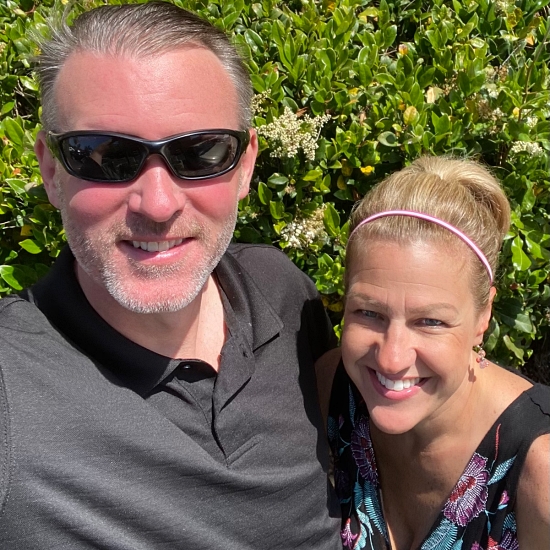

On April 4, 2022, Katie wrote a blog post about a “loved one” who decided to enter treatment for alcoholism. That loved one was my husband, Shawn (Katie’s brother-in-law). I have decided to share my part of the story because I am not alone and I hope my experience will in turn help someone else. I write this entirely with Shawn's blessing.

I will not go into the personal details of exactly what led up to Shawn entering treatment, but I can summarize that Shawn felt alcohol was negatively affecting his life and that he felt he no longer had control of his drinking.

I give an extraordinary amount of respect to Shawn for getting help BEFORE he hit rock bottom. He still had his job, his driver’s license, his wife, his house etc. Shawn showed that you don’t have to wait to lose all of those things or to hit "rock bottom" before getting treatment.

Shawn may decide to share his story with you, but I will summarize how he sought help (and I most certainly hope this gives someone else the courage to seek help as well). Shawn pursued help through his Employee Assistance Representative (EAP rep) at work. The EAP rep, "C", was phenomenal.

After hearing Shawn’s story, "C" helped determine what treatment program would be best for him and he met with both Shawn and me the next day to finalize a plan. We had a choice of three inpatient treatment facilities: one in our city in Illinois, one in Utah, and one in California. We ultimately decided on the one in California for a couple of reasons:

1) We felt strongly that Shawn should receive treatment away from our area. This would allow him to focus 100% on his recovery and there was no chance he would be in treatment with someone he knew from work (which was a concern if he went locally).  

2) Shawn's stepfather lives only 40 minutes from the rehab center and initially, I thought I would be able to attend in-person counseling with Shawn while staying with my father-in-law. (Unfortunately, we later learned that due to COVID restrictions, there was no in-person visitation.)

Regardless, once the decision was made for inpatient treatment (this means that patient stays at the facility and does not go home in the evenings) things moved very quickly. If he went locally, he would have been admitted the very next day. Unfortunately, he had a nine-day wait for a bed to open up at the center in California.  

In that time, we received a letter from the admissions coordinator containing a list of approved items Shawn would need during his stay: for example, you are not allowed aerosol items; all grooming items are not allowed to have alcohol (like mouthwash); which clothes to pack etc.  

We got everything together for his stay and when the day arrived, Shawn and I both flew out to California that morning.  The staff at the center was waiting for him at the airport. I tearfully said goodbye to him at baggage claim and then I literally ate lunch and had a manicure, then and got back on a plane back to Chicago just five hours later. It was very important to me that Shawn felt supported and there was no way I was going to have him fly out there by himself, so even the short trip was worth it.

The original timeline for his treatment was supposed to be 30 days inpatient. Shawn ended up being gone 45 days  (about 28 days inpatient, then switched to partial hospitalization which is still in the same building, but smaller groups for the remainder of the time). 

In this post, my goal has been to share what the experience was like for ME. I would like to share what was helpful TO ME.  Everyone who has battled an addiction or has a loved one who has or is currently battling addiction has a different story. This is just MY STORY. If you are in this situation, please take what you like from what I have to say and leave the rest. Maybe something I say will resonate with others as well.

I am very grateful Shawn chose to share his story with our family and a few close friends before he left. We did not have to lie and make up a story of why he was gone for six weeks. Being truthful allowed BOTH of us to receive support while he was gone. And let me tell you, we have some of the most supportive friends and family EVER! I received a ton of messages from family/friends justing checking in on me. A simple message like “Hey, just checking in. You ok?”  just let me know someone was thinking of me.

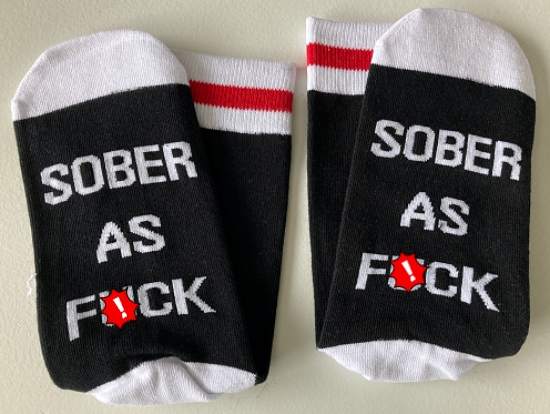
Shawn also received letters, emails and packages from friends and family. Here are some of the fun items we sent to add a little comic relief to a serious situation. As a side note, there are a lot of tears at rehab, but there is also a lot of laughter. Both are important. These gifts were not a mockery of the seriousness of addiction. It was to bring a smile to Shawn. 


Katie sent him these socks and Shawn's roommate loved them so much that I sent a pair to him as well.

I wanted Shawn to feel loved and supported while he made one of the most difficult and bravest decisions of his life. I asked friends and family if they wanted to participate in the 30-day Support Shawn challenge and share what they were going to do for 30 days with Shawn. For example, one relative gave up evening beer, one choose to climb the stairs 30x a day, I choose an extra 30 minutes of exercise a day, one chose reading a self-help book for 30 minutes, etc. Shawn loved this!

Before Shawn left, I bought a digital photo frame and downloaded 300 images of family/friends. He said this was his favorite thing and he would look through the pictures every evening.

There was a problem with Shawn accessing his email due to two-step verification and he did not have access to his phone. Katie quickly resolved that by setting up a new email account for him so he could receive/send mail. Shawn had limited access to email and phones during his stay but it allowed us to talk almost daily. There was a 72-hour “blackout” period when he first arrived where he could not use the phone/email, but after that, he was able to spend limited time on the computer and/or phone.

So that was stuff for him.  But I wanted to also address my needs while he was gone as well as increase my knowledge on addiction.

One of the steps to healing starts with an "impact letter"--a letter that a partner or loved one writes that goes through all of the ways they were hurt by their loved one's drinking. I started my impact letter shortly after he left for California.  This allowed me to reflect and revise my letter before I had a chance to read it to him in a zoom session with his counselor. This was a very important part of the healing process for me. I could write a whole post on that alone, but that zoom call will remain a highlight in my life. It ended with forgiveness and hope. 

I changed my own mental health therapist to someone who specializes in addiction/recovery. I am very lucky because my counselor "J" is very animated and just tells it like it is. He is has been amazingly helpful. I was hearing how much Shawn was learning and growing when I talked to him on the phone, and I felt so “behind” in the process.

Shawn knew what his end goal was and he was being taught a roadmap of how to get there.  I knew what my goals were but didn’t have a map. "J" is helping me with that map. During my first session with him, he asked why I was there. I said, “I need to learn to let go of things”; “I need to learn to stay in my lane in the role of spouse”; “I need to not obsess with the what if’s?”. 

"J" immediately told me that my goals were doable because I didn’t come in saying, “How to do I make sure my husband doesn’t relapse?” or something like that. I was there FOR ME. He is helping me learn I was doing just fine and I didn’t need to take on the world at that moment. 

I tried to take care of me. Although I was working my job as an occupational therapist, I walked three times a day for 30 minutes each time. I often listened to podcasts geared toward family/friends who have someone in recovery and there were several “breakthrough” moments listening to others' stories who were similar to mine and how they got through some challenging times.  . 

I got enough sleep and tried not to take on “huge projects” that would overwhelm me.

I made a “spring cleaning” list and worked on a little bit each day to keep me mentally/physically active.

My mom came to town and we did a bunch of shopping and made a ton of “freezer meals” for up north this summer.

Katie has been a huge support to not only me but to Shawn, also. I called her frequently and found her insight incredibly helpful.

I ASKED friends when I needed help. A very simple example is that I went to get my oil changed and they wanted to upsell me an air filter. I had no idea if I was being scammed so I called a friend and he was able to help me decide if I should buy it (I did).  I also had a house problem and a friend came right over and helped me though it.  These are things I didn’t share with Shawn when he was gone because there was NOTHING he could do about it while there so there was no sense worrying him about it.

I did join a facebook group for wives of recovering alcoholics. This page is great and very helpful. I also joined an al-anon group but left it but it just wasn't for me. (It didn't focus on helpful problem-solving or support, which is what I was looking for.)

I was surprised to learn that it is not always helpful to share detailed information with friends who cannot relate to my situation. Their intentions are usually excellent but some of the “feedback” they had for me was not very helpful. 

For example, a friend might ask, “How is Shawn?” and I would say, “Oh, he is doing great and learning so much!". Rather than replying with a positive response, they would respond with, “Well, you know he is in a controlled environment and when he gets out in the real world it will be different”.

Of course this has occurred to me! I fee like it would for anyone. However, I felt like they were saying, "Well, don’t be too happy because the other shoe is going to drop when he gets home". I spent some time processing this with "J" (my counselor) and Shawn gave me some great advice he learned at rehab: Worrying about the what if’s is something I don’t want to do anymore. It creates a ton of anxiety and the situation I am worrying about may never even happen.

I am choosing to be happy right now, right in this moment, and I will take things one day at a time. So, in sharing more detailed information, I will save that for “like-minded friends and family” who have been in my shoes and can truly relate.  

I also watched several videos that the rehab center sent to me (videos about addiction, codependancy, etc). At their request, I ordered and watched “Pleasure Unwoven”, which is a 70-minute video produced by a doctor who was treated for alcoholism. He makes the concept of understanding that addiction is a disease very clear.  I actually watched it 3 times over a week to deepen my understanding. This is available on Amazon for $30 or you can watch it in pieces on YouTube.

These last 45 days have been an amazing process of growth, greater understanding of addiction, and learning that I am able to forgive. I have learned there is no benefit to hanging onto resentment and anger. 

Reuniting with Shawn when I picked him up at the rehab center two days ago was amazing. I am so proud of him and his decision to make positive changes for his life and for us.

April 04, 2022

Let's Talk About Alcohol

Once again, this is going to be a very vulnerable post that I really have to post when I'm feeling brave and mentally stable (not depressed). I wasn't planning to ever write about this so candidly, but recently something happened and I feel compelled to write my thoughts. (This is a SUPER long post, by the way.)

Someone that I am close to (let's call this person "Charlie"--a gender-neutral name--to maintain privacy. I'll also use they/them pronouns for the same reason.) Charlie and I have always been close; we deal with a lot of the same issues surrounding mental health--particularly anxiety.

I've known for a long time that Charlie has had a problem with alcohol, but it wasn't to the point where most people would consider it "rock bottom"--things like DUI's, losing family, losing jobs, losing houses and cars and spending all available money on alcohol.

Charlie likes to drink in certain situations--downing drinks during the days/nights off work. I won't get into those details in order to keep Charlie anonymous. However, Charlie was also able to show some restraint--no drinking on work nights. In this sense, you wouldn't think of Charlie as a Frank Gallagher-type alcoholic (Frank Gallagher is a character on the show Shameless--a stereotypical "drunk"). Charlie is a functioning frequent-binge-drinker whose problem has been getting worse over the years by using alcohol to self-medicate.

(For clarity, "alcoholism" is no longer the preferred label; it is now called "alcohol use disorder"--AUD for short. And it is more of a spectrum--from occasional binge drinking to drinking all day and all night.)

Last week, Charlie shared with close friends and family what was going on and that they'd decided to go to a treatment center for 30 days. I expressed just how proud I was and I REALLY admired their vulnerability in sharing such a personal struggle. I never had the guts to be *that* open and detailed about my relationship with alcohol. It's because of Charlie that I decided to write this post, actually.

On Thursday, Charlie entered detox/rehab in California (far from home). The people who'd learned what was going on were surprised--they didn't realize how bad the drinking problem had gotten (or that it was a problem at all). I talk with Charlie frequently and I felt it was only a matter of time for them to seek help. (I quit drinking in February 2021, but I never pushed them to quit; they knew that alcohol was a problem and I knew that nothing I said was going to push them into quitting. I never judge anyone with an addiction.)

Problem drinking is more of a spectrum than a yes or no whether one has Alcohol Use Disorder. I would be willing to bet that a LOT of people fall into the spectrum and don't really realize it. The DSM-V (Diagnostic and Statistical Manual of Mental Disorders, fifth edition) that is used to diagnose mental illnesses considers these symptoms for Alcohol Use Disorder:

For AUD to be diagnosed in the U.S., the individual must meet the criteria laid out in the Diagnostic and Statistical Manual of Mental Disorders (DSM), published by the American Psychiatric Association (APS). 
The criteria include having a pattern of consumption that leads to considerable impairment or distress. 
At least three of the following criteria should have been present during the past 12 months:

  • Alcohol tolerance: The person needs a large quantity of alcohol to feel intoxicated. However, when the liver is damaged and cannot metabolize the alcohol so well, this tolerance may drop. Damage to the central nervous system may also reduce tolerance levels.
  • Withdrawal symptoms: When the individual abstains from alcohol or cuts down, they experience tremors, insomnia, nausea, or anxiety. They may drink more to avoid these symptoms.
  • Beyond intentions: The person drinks more alcohol, or over a longer period, than they intended.
  • Unsuccessful attempts to cut down: The person is continuously trying to cut down alcohol consumption but does not succeed. They may have a persistent desire to cut down.
  • Time consumed: The person spends a lot of time obtaining, using, or recovering from alcohol consumption.
  • Withdrawal: The individual withdraws from recreational, social, or occupational activities that they previously participated in.
  • Persistence: The person continues consuming alcohol, even though they know it is harming them physically and psychologically.

I'd written before that I felt the need to quit drinking. However, my life hadn't spiraled out of control from it: I wasn't losing my family or friends; I would never drink and drive; and I never became angry or mean when drinking alcohol. In fact, I was probably more pleasant! However, I knew that it was a problem, especially considering that I used alcohol to alleviate my anxiety (self-medicate). And I definitely downplayed it, including here on my blog.

I really started to worry about it in 2018 and in 2020. (If you may remember, I quit drinking for 2019 as an experiment to see if/how it would change my health/life.) In 2020, I thought maybe I could go back to having a small glass of wine now and then, or even a small glass of wine in the evenings like I did for many years (4-5 ounces of red wine) with no problem whatsoever. Well, that lasted all of a few days. Within a short period of time, it was right back to the 2018 problems with alcohol.

One glass turned into two, and then two into a whole bottle throughout the evening. When one bottle eventually turned into two, I was really concerned. I also hated waking up feeling like crap.

It's extremely common for people with bipolar disorder to have addiction issues--alcohol, drugs, food, gambling, sex, shopping, etc. Personally, alcohol was my way of coping with anxiety. I have generalized anxiety disorder and if you don't know what that feels like, it's horrible. This short video will make you feel the anxiety that people with generalized anxiety disorder feel pretty much all the time...

Hahaha! I laugh, but it's a good example of the knot in your stomach when anxiety takes over. (Which is exactly what is happening to me right now at the thought of actually publishing this post!)

Anyway, alcohol always eased my anxiety (at least temporarily). It made me a funner person, more social, more talkative, and generally happier! (I want to stress that these feelings were temporary; once the alcohol wore off, I felt terrible about myself.)

Luckily, I was able to quit drinking on my own. (I was afraid someone would recognize me if I did something in a group setting.)

I even remember my last time buying alcohol: I went to the party store (which is called a convenience store or liquor store or other things in different areas--in Michigan, a party store is basically a convenience store that sells snacks, alcohol, cigarettes, and a few essential groceries). The owner always kept "my" wine in the back cooler so when I walked into the store, I would head right into the back and get it. On that day--the day before I quit drinking--when I came out of the cooler, there was a man trying to pick out something his girlfriend would like to drink. I asked what kind of things she liked and then suggested a couple of things to him. He got into line to pay and I was in line behind him. He apologized to me and said he thought I worked there which is why he was asking me questions! Hahaha. He, the owner, and I all shared a laugh.

It was funny at the time, but later I realized how sad the whole situation was. Being on a first-name basis with the owner, the fact that he kept my wine in the back cooler for me, the fact that I was able to suggest drinks for someone's girlfriend and he thought I worked there... and I decided to quit. That day was Valentine's Day, so my first day of sobriety was February 15, 2021.


The last time I mentioned being "sober" on my blog, a couple of people commented that I shouldn't use that word because I quit drinking on my own without a support group and because my life hadn't fallen to pieces--a.k.a. "hit rock bottom"--and the comments kind of bothered me. It wasn't easy to quit! It was actually harder to quit drinking than it was to lose 125+ pounds.

When you lose weight, people compliment you and notice as you get smaller. They ask questions about how you're doing and praise you for a "good job". But when you quit drinking--for whatever reason--it's more internal. Once you make that decision, you have to do it without the external motivation. People certainly watch you at get-togethers, maybe to hope to catch you drinking, but nobody says anything about your abstinence in settings that may be triggering.


One thing I discovered that was really important was acknowledging sober milestones. To someone who quits drinking, a simple, "Hey, congrats on 90 days! That must be super challenging for you. I'm proud of you for sticking to it when I am sure it must not be easy," goes a long way.

I was very excited about milestones, but I only celebrated them in my head. Maybe people thought that because my life hadn't fallen to shit before I quit drinking, it didn't mean that much; or that it wasn't hard for me to quit. (I do have a friend who became sober on May 1st and I hope to share his story as he approaches the one-year anniversary. He made sure to text me for my own important milestones and it meant a lot to me! I did the same for him--and still do.)

If there is one piece of advice I can offer to loved ones of those with alcohol use disorder (AUD) who became sober (no matter how they did it) it's this: Acknowledge their efforts, even long after they quit drinking. Something that would go a long way is saying something like, "Hey, I know this must be so hard for you being around all these people who are drinking. I just want to let you know that *I notice* your effort and I am really proud of you." Sober people can make abstinence look really easy! But they may be struggling inside and a little acknowledgment could be just what they need to hear.

When people do something hard--take an important final exam for a class or a job, lose a lot of weight, run a marathon, pay off thousands in debt, etc, they usually get a lot of praise and/or congrats. When someone gets sober, they are much less likely to receive that because they weren't doing something "above and beyond" in life; they were "fixing a problem". I hope this makes sense.

I'm not exactly sure where I fell on the alcohol use disorder spectrum, but I know I was on there somewhere. Once I saw how brave Charlie was by being SO vulnerable--Charlie has terrible anxiety just like me--I started thinking about how maybe I should be more open about it. When my friend who became sober nearly a year ago admitted it to our group of friends, he learned that several other people we know have problems with alcohol as well. It just feels shameful to admit it, so people keep it to themselves. It would be so refreshing if everyone would talk about it!


By his speaking out, and Charlie speaking out, and now *me* speaking out, I'm hoping that others will be less ashamed of admitting it to themselves or others. I think it helps so much to have people around you who know what you're going through and they may be able to relate.

Well! Since Charlie will be in rehab for 30 days, I told Jerry that I'd like to give up something for 30 days in solidarity. My sister decided to do the same. I've chosen to quit snacking after dinner--which is when I tend to consume way too many calories in nuts or nut butter. For at least 30 days, I'll have tea or La Croix after dinner, but no snacks. That's a tough one for me! But when I find it hard, I know that Charlie is probably facing the most difficult challenge of their life. And theirs doesn't stop after 30 days.

Something I told Charlie before they left for rehab made a big impact in their mentality of quitting alcohol. So here is what I said:

When thinking of quitting, the first thing our minds go to is "forever". Rather than thinking of the good things that are bound to happen, we think of forever--we can never sit around a campfire and drink beer with friends; we can never get together for wine with our girlfriends; we can never have margaritas for a fun Cinco de Mayo party; we can never share a bottle of wine with our partner during a romantic dinner date; and so on. That's when a lot of people dismiss the idea of quitting drinking.

I told Charlie that those thoughts are "romanticizing" drinking alcohol. We romanticize those ideas in our minds and all we can focus on is that we can never do them again. I said that we shouldn't focus on "forever" and what we can "never do again"--we need to stop romanticizing the drinking because how often do those situations actually give you those feelings you imagine? And it's not that we can never do them again--it's just that we have to adapt to doing them without alcohol.

A lot of people quit before they even start simply because they think of all the things they can never do again. But since I quit drinking, I've done several things where I normally would have had drinks: sitting around a campfire, flying on an airplane (flying sober was terrifying), parties/get-togethers, dealing with stress after a long/exhausting day, etc.

This photo below was shortly after I got off of my first sober flight. (This was in 2019 when I quit drinking for a year; I haven't flown anywhere since!) Flying is a huge trigger for me because I have SO MUCH ANXIETY around it, and alcohol calmed my nerves. I "celebrated" by getting some overpriced frou-frou coffee drink from Starbucks. I just remember feeling so relaxed and GOOD in this photo. I took the selfie to capture that moment.


My dad had a drinking problem (I was too young to really remember) but he went to rehab and got sober when he was about my age. And he hasn't had a drink in over 40 years! There are a couple of other important people in my life that I really hope will make the decision to quit drinking someday soon--I really worry about them.

If I wasn't sober, I'd think I was drunk while writing this post because I feel like I'm totally spilling my guts here and it's something that I feel like I will be very judged for! But Charlie's honesty really inspired me. And if I'm judged harshly, so what? I am continually growing and learning and changing to hopefully be a better version of myself. :)

Thanks for reading, Friends. xo

Featured Posts

Blog Archive