Showing posts with label COVID diaries. Show all posts

December 29, 2021

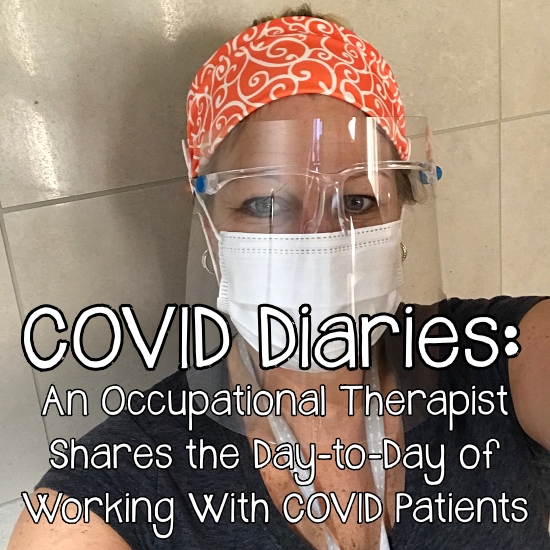
COVID Diaries - An Occupational Therapist Shares the Day-to-Day of Working With COVID-19 Patients (a guest post by my sister!)


(Note: This is one of the longest posts on my blog, but I promise you it is worth reading the entire thing through. I didn't want to edit it down at all because I find it fascinating. So wait to read it until you have 15 minutes or so.)

I am SO excited to share this guest post today! For the last year and a half, COVID has obviously been the most talked about topic pretty much everywhere. We have all heard of the numbers--how many have tested positive that day or which country is being hit the hardest, or what the death toll is. I feel very fortunate that nobody very close to me has had to be hospitalized due to COVID.

Something I've realized, though, is that because I don't see the effects with my own eyes, it's hard to truly understand the devastation it has caused--not just in the people who have survived COVID, but in the families who have lost people, the people who will have long-term complications, and especially the mental health of the front-line workers.

I haven't been inside of a hospital since before the pandemic so I have no idea just what it looks like and how it's changed. When I started this COVID Diaries series, I really hoped I'd be able to hear from someone that works closely with COVID patients. I wanted to hear the "realness" of what is happening and not just see the numbers on the news. I wanted to be able to know what it actually involves and what the full process is.

Interestingly, the guest post that answers a lot of my questions is written by none other than my very own sister! She lives in Illinois, so I don't see her nearly as often as I'd like, but I was thrilled when she said she'd like to write this post.

There are a couple of things I want to point out before I turn it over to her:

1) This is not a political post and I do not want to bring politics into it at all. Nor do I want to turn this into a debate about whether to vaccinate or not. Normally, I publish every comment that is written on my blog (minus the spam) but I won't be publishing political comments here. This is just a post of my sister's experience of what she sees and deals with every workday and I'm grateful to her for sharing her thoughts.

2) This is written following all HIPAA laws--my sister doesn't use any identifying information or photos. She takes that very seriously. (The photos that show the different types of oxygen masks can be found online; I've linked to the sources. They are not my sister's photos).

Okay, enough from me. Introducing my sister, Jeanie...


My name Jeanie and I am Katie’s sister. I work as an occupational therapist at a level 1 trauma hospital. I am writing this guest post in the hope of giving insight as to what it is like to work in a hospital during the COVID-19 pandemic. As a disclaimer, nothing I am writing has anything to do with politics or my own personal beliefs. Everything I will include in this post is what I see with my own eyes in this occupation.

I am confident in saying that many healthcare workers are completely fed-up with reading inaccurate information on social media from people who have no affiliation with the medical or science field but continue to re-post this misleading information. (I could make that into a whole post by itself, but I will stop there).

If you are not familiar with an occupational therapist, an OT can work in several different settings: homes, schools, outpatient clinics, mental health centers, hospitals, etc). Personally, I think the word ‘occupational’ should be changed to ‘functional’. We should be called Functional Therapists because our goal is to help patients return to their daily lives: dressing and feeding themselves, writing their names, dialing a phone, opening medication bottles, managing their oxygen cords while walking, etc.

As an OT in the hospital, the job details can change drastically depending on which unit I am working. Occupational therapists and physical therapists work together with patients in a lot of situations. If I am in the intensive care unit (ICU) and the patient is on a ventilator, we (the PT and I) may just be working with a patient on balance/tolerance to sit upright—the eventual goal being that the patient will be able to sit up and wash their face, for example.

Or if I am working on the orthopedic floor, then I may be teaching someone how to use long-handled tools so they can dress themselves without bending over after having a hip replacement.  

A big part of my job at the hospital is to help determine where the patient should go once they are ready to the leave the hospital. Are they safe to go home? Do they need home care? Do they need intensive rehab at a facility? Do they need long term care? The rest of the medical team relies on the therapists for the appropriate recommendations. (This causes a lot of stress because you want to make the correct decisions.)

For COVID-19 patients there is a spectrum of care:

The most critical is the ICU (intensive care unit). From there, it goes down to step-down ICU (SDICU). Then there is the cardiac floor or general floor (depending on the severity of the illness).  

General Floor

From what I have seen, patients on the general floor may or may not have been vaccinated for COVID-19 (most are unvaccinated; some are vaccinated but are overdue for a booster shot). The patients on the general floor are on a low amount of supplemental oxygen, usually no more than 6L (liters).

These patients can typically tolerate some daily activities. (As a frame of reference, people on oxygen at home are usually on 2-4L.) When I work with these patients, I usually teach them energy conservation strategies (moving slowly, pacing oneself, pursed-lip breathing techniques) and how to incorporate those into daily tasks.

For example, I may educate the patient on how to take a shower without becoming completing exhausted: using a shower chair; keeping the bathroom door open and overhead fan on to circulate air; keep the oxygen flowing during the shower; cross legs to wash feet or use a long handled sponge to avoid bending forward; and other things like that.

Once the patient is educated, I will have them complete the task while I monitor their incorporation of what was taught. I also keep an eye on their vital signs before and after the shower and monitor them for any signs of inability to tolerate the activity. Many patients are VERY happy to finally take a shower but also are grateful for strategies that will help them at home.   

Cardiac floor

Covid patients on the cardiac floor are typically more ill and have increased oxygen needs due to COVID pneumonia (this is where sacs in the lungs fill with fluid, limiting the ability to take in oxygen).

Many of these patients also develop additional medical issues. It is not uncommon for COVID patients to develop blood clots or pulmonary embolisms (PE) or even to have a stroke. So these patients present with COVID and now also have a PE; or have COVID and now have a new stroke. 

The therapy for these patients varies greatly. Some can only tolerate seated exercises in a chair; some work on energy conservation techniques with daily activities; some learn to manage an oxygen cord while walking with a walker (these patients will likely be able to go home now with oxygen).

It is more challenging to treat patients who have COVID and subsequently had a stroke. The amount of personal protective equipment the staff wears in the room becomes very warm, very quickly. Physically assisting patients to sit up on the edge of the bed or transfer to a chair will leave the therapist(s) sweating. A lot of times, these patients are on a blood thinner medication and want the thermostat all the way up, making it even warmer in the room.

Step-Down Intensive Care Unit (SDICU)

Most of our patients on step-down intensive care unit (SDICU) have severe COVID pneumonia and are on heated high flow oxygen (HHF) or on a BiPap machine to help them breathe.

While the patients on the general floor are on 6L or less of oxygen, the patients on SDICU are on typically anywhere from 8L to 40-60L of oxygen, depending on the oxygen levels in their blood. The oxygen meter hooked up to the wall (like you see in a doctors office) goes up to 15L.

If the patient requires more oxygen than that, they go on the HHF or BiPap. These machines allow a higher liter-per-minute delivery rate as well as the ability to change the percentage of oxygen delivered. I will try and keep this simple but the lowest level to highest level of oxygen looks like this: (Note: these are not photos of my sister's patients; I've linked the sources to the photos below them)

1. Room air (no oxygen required)

2. On a regular nasal cannula hooked up to the wall (up to 15L). This is just the tube that you see people at home with—where it delivers oxygen into your nostrils.
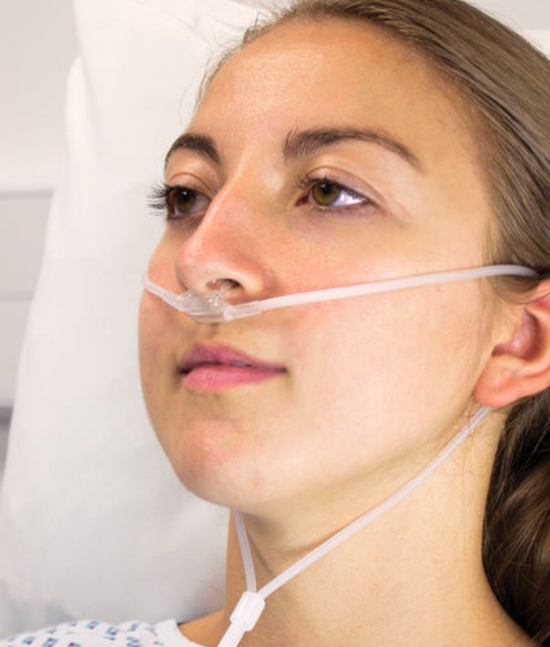
Photo of a nasal cannula - source


3. On heated high flow (up to 60L, 100% oxygen) given through a special high-flow machine and special nasal cannula that can deliver that amount of oxygen. These patients are in the SDICU.

Photo of a heated high-flow oxygen machine - photo source

4. BiPap. This is a mask that has velcro straps that tightens the mask over the nose and mouth and uses high pressure to force the air into the lungs. Patients find it to be very uncomfortable because the amount of pressure needed feels extreme. These patients are in the SDICU.
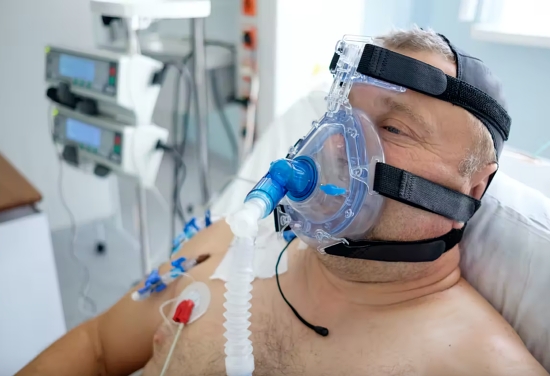
Photo of a BiPap machine - source


5. If the patient can’t keep the oxygen levels up with BiPap, the only step left is to be on a ventilator. This is a machine that does the breathing for the patient. These patients are in the ICU where the main goal is survival.
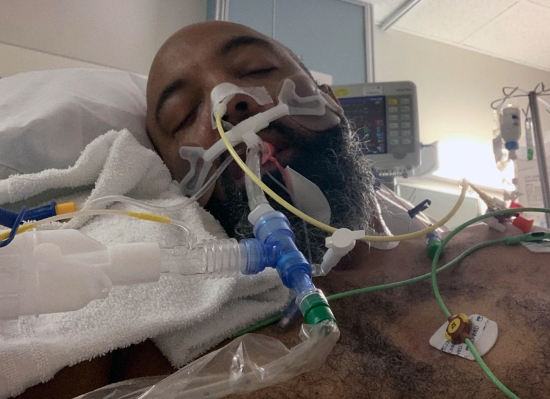
Ventilator - photo source (this is a great article to read!)


Tracheostomy (a surgical hole in the throat) for a ventilator; used for long-term vents

Treating patients in the SDICU is extremely tricky. The main goal is to keep their blood oxygen levels up. (For reference, a healthy oxygen is about 95-100%.) These patients’ oxygen levels tend to drop very quickly with any movement.

It is not uncommon to go into a room and the patient has oxygen levels of 92% when they are on their stomach. Lying on their belly (called ‘proning’) is encouraged because it has been shown to help improve oxygen levels. But if they roll over, stand up, or get onto the commode, etc. their oxygen may drop into the 70s (or even 60s) very quickly. This is scary because it tends to take a long time for COVID patients’ oxygen levels to come back up.

This is why we encourage patients to use pursed-lip breathing (breathe in through the nose and blow out the mouth), move very slowly, and take rest breaks instead of rushing though the activity (which may just be getting up from the chair). If the patients’ oxygen levels do not come back up into the high 80s or low 90s, then we usually have to give the patient more oxygen to help with that.  

I treated a woman who was in the SDICU and was on 8L of oxygen. Her oxygen levels were 94% in bed. She needed to use the toilet, and just by getting up to the commode, her oxygen levels dropped to the 70s. Over the course of 13 minutes, I gradually increased her oxygen to 15L. Her oxygen level was still only in the mid 80s. At this point, she had to go back on the heated high flow machine or prone in bed to get the numbers back up. (This patient laid face-down and the numbers did come back up).  

These patients are usually (and understandably) anxious—some say they feel like they are drowning, or that they can’t get a good breath. They either want to see the monitor so they can see what their numbers are, or some ask that the monitor be turned away and alarms turned off because knowing the numbers increases their anxiety.

As a therapist, we are trying to prevent the patient’s body from becoming de-conditioned during long-term hospitalization (when your body is lying in a bed for so long, it becomes difficult to move and function as you did previously); prevent bed sores by having them change positions; improve digestion and prevent constipation by having them sit up for meals; and help improve circulation to prevent blood clots.

However, we also know these patients have a hard time maintaining good oxygen saturations (like I said, it can change very quickly) and we don’t want to “push” the patient because if their numbers stay low, they may have to change from nasal cannula to high-flow or high-flow to BiPap. We use extreme caution when a patient is on BiPap because the only step left is intubation if the oxygen levels don’t stay up.

These patients cannot tolerate much activity and even if the patient is physically able to walk in the room, the machines (HHF and BiPap) have limited cords/tubing; this prevents us from helping the patient walk any distance. They can usually walk a few feet forward/back within the range of tubing.

As the OT, I may work on simple arm/leg exercises; or bathing/grooming in attempts to get the patient to improve their endurance by participating in simple tasks.

Intensive Care Unit

When worse comes to worst, if patients are not able to maintain their oxygen levels on BiPap, then the only step left is being put on a ventilator. Some patients (or family members who have power of attorney) choose to refuse the ventilator, even though they know the outcome will be death.

This is a horrible horrible situation for families and is a strong reason why people should have a discussion with loved ones about what their wishes are if they are ever in this situation (not just with COVID, but with any situation that may arise).

It is not uncommon for many of the vented patients to end up needing a feeding tube and a tracheostomy (a hole in the throat) which is then hooked up to the ventilator. Many vented patients go into multiple organ failure and may require continuous dialysis at the bedside. 

Once a COVID patient is in ICU on a ventilator, I don’t see them for therapy. They are usually prone for up to 18 hours a day and the goals of care are focused on patient survival.

Occasionally, I will help the medical team “prone someone”. This usually requires 4-5 staff members at once—one needs to be the respiratory therapist, who manages the ventilator tubing coming from the patient’s mouth, and rest of the team forms a type of “cocoon” around the patient with two bedsheets.  On a specific count, everyone works in synchrony to roll the patient onto or off of their belly.

It sounds simple, but remember… you are managing multiple IVs, a central line, a foley catheter, vent tubing etc. Also, some of the patients are very heavy, which further complicates the process.  

If the patient continues to decline once they are on the ventilator, the palliative team will usually talk to the family to give them insight into what the prognosis is and what the options are moving forward (tracheostomy for ventilation, feeding tube, dialysis).

Many families chose to withdraw care from their loved one when they realize survival is unlikely and it will cause undo suffering if they continue aggressive care. Withdrawal of care is common if a patient is on BiPap but still unable to keep the oxygen levels up and has noticeable labored breathing, agitation, etc., and it has been determined through the patient and/or family that they do not want intubation.

At my hospital, families are allowed to visit for end of life (some are allowed in the room and some are not, depending on various factors). The nurse explains to the family what to expect when they withdraw care, and when the family is ready, the nurse will administer medications to help keep the patient comfortable before withdrawing the BiPap (or ventilator). At that point, most COVID patients pass away very quickly because their body has been fighting shutting down for some time.  

I had a patient who did not want to be intubated but was agreeable to BiPap (this is not uncommon). The patient “fought” for his life and I remember hearing him beg his nurse “please don’t let me die”. The nurse responded, “I am going to do everything I can to help you survive”.

Days later, the patient was in obvious respiratory distress and the family came up to the hospital. I brought them chairs so they could sit outside of his room (which had a glass wall) to see him before the nurse withdrew care (per family request). He passed away within 10 minutes.

My heart was broken for the patient and his family, but also broken for the nurses who do this day-in and day-out. For an ICU nurse, withdrawing care is not unheard of; however, I am sure they never expected to have to withdraw care on so many patients in such a short period of time.

When a patient is able to maintain a good oxygen level, and they are able to come off of the ventilator, then therapy will start again. These patients are extremely weak and usually require 2-3 people just to sit up on the edge of the bed.

They typically now go in reverse order for oxygen (they were on the vent, then move to BiPap, then to HHF, then nasal cannula). The physical therapist and occupational therapist work together with these patients as treatment is directed by what the patient can handle without overdoing it.

These patients usually will not go directly home from the hospital, but will go to a long-term care facility that works on lowering their oxygen needs (patients are not discharged home when they are on BiPap or heated high flow). If the patient improves at long-term care and has lower oxygen needs, they may then go to a different facility where the focus is more on getting stronger.  

All of this is a very long process. It is not uncommon to have patients in SDICU and/or ICU for 4-8 weeks.  

A few other things… All patients entering the emergency room have a rapid COVID test done and then have a PCR test (which is more accurate but takes longer) performed as well. If the rapid test is negative, then the patient is not put into COVID isolation, unless COVID is still suspected based on patients’ symptoms. If the rapid test is positive, then the patient is put in COVID isolation. Occasionally, we have someone who has a negative rapid test only to find out the PCR test is positive. PCR tests take about 24 hours to get back (much better than the 10-11 day wait time when COVID first started).  

COVID isolation requires staff to wear a gown, gloves, an N95 respirator (or CAPR) with a surgical mask over it, and a face shield.
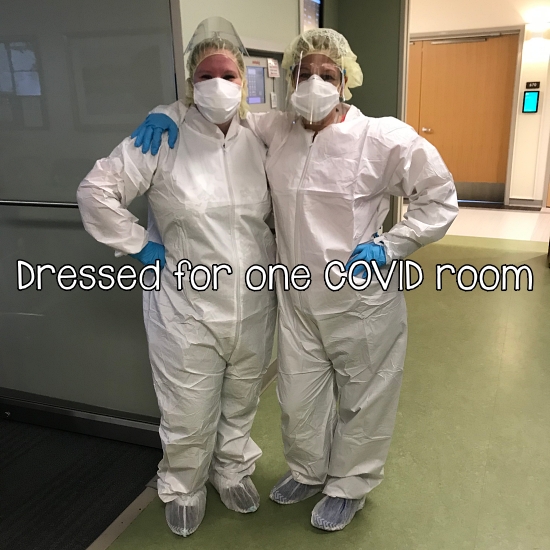
Kelly (the physical therapist) and Jeanie dressed to help a COVID patient sit up

One significant challenge is that patients cannot hear you through the masks, especially if the patient is elderly and/or relies on reading lips.  If a non-COVID patient is hard of hearing, I typically bring my phone into the room and use “voice to text” in my phone’s note pad to allow easy/fast communication without having to write everything down. So I can say into my phone “My name is Jeanie and I am from therapy. I am here to help you get stronger. Would you like to get up to the chair this morning?” 

Then the patient can read it and we can get moving.  However, I can’t bring my phone into a COVID patient’s room, so communication is huge barrier, especially if the patient does not speak English. We have a speaker phone in the room to allow access to an interpreter. But the interpreter also has difficulty understanding us through the masks and the whole process is a shit show. (Just FYI, I NEVER use my phone for ANY personal medical information about a patient; it is just for general directions and communication).

Another big challenge is making sure you bring everything you are going to need for your treatment in the COVID room the first time you enter. I usually put on my N95, surgical mask and face shield, then I crack the door and ask the patient if there is anything they need (water, Kleenex, etc) before I come in. If the patient can hear me, I gather whatever they request.

Once I am in the room, it is quite the ordeal if I forgot something. I can either press the call light and wait for someone to bring me what I need or I can take all of my personal protective equipment off, go get the supplies, put all the PPE on again and then finish my treatment.

The easiest way is obviously to use the call light; but many of the staff members who answer call lights are also in isolation rooms. (We had 14 COVID patients out of 26 in one unit last Sunday). And some patients “add on” what they want once I get into the room. I had to have a nurse aide come to the room I was in three times on Sunday because the patient asked for water, which was brought to the room. Once it was there, they decided they did not want ice water but plain water. Then they wanted extra Kleenex. And then they wanted a brush, not a comb.  

Now, I do understand these are all normal requests. In a non-isolation room this is no big deal. In a COVID room, all of this takes time.  

I bring up time because this is also a factor I wish more people understood. It is not uncommon to go into a room and someone is talking on their phone. To me, the appropriate response from the patient should be to tell their caller “A staff member just came in, let me call you back shortly”.

It’s extremely frustrating to the staff just how many patients (not just COVID patients) continue their conversation as if you never walked in the room. The younger generation likes to FaceTime and some will stay on FaceTime even while you are trying to talk to them. Some patients will answer the phone in the middle of the session and begin a long-winded conversation with someone.

This is taking up a staff member’s time that could be spent with another patient. Yes, we can take off all the PPE, leave the room, go see someone else and come back (and we do at times). But this is a general waste of time and PPE. (I do understand there are occasional important calls; I am not referring to those).

Some of these patients who were on their phones then complain that it took “…20 minutes to get some water” or “I waited a long time for someone to answer my call light” don’t see the irony that they are a contributing factor as to why there is a delay in “instant” service. 

A big issue that came along with the COVID pandemic is bed availability. Working at a level 1 trauma hospital means that we treat acute strokes, multiple traumas from accidents, spinal cord injuries, brain injuries, victims of violent crime, open-heart surgery patients, etc. I say this because most of these patients need an ICU bed.

However, many of ICU beds are occupied by COVID patients on ventilators, which means the turn-over time for a bed can be weeks.  It can be difficult to find a long-term care facility to take a COVID patient once they are medically stable for discharge because the long-term care facilities are also full of “long COVID” patients (whose symptoms last for months after acute COVID) and do not have bed availability.  

Patients become frustrated that they have to wait in the “overflow” area of the emergency room for a few days waiting for a room upstairs. (Just to clarify, the patient is NOT in the waiting room of the ER; they have a regular hospital bed, but they are just not on the medical floor).

Well, the reason for the slow bed turnover is because long-term care facilities are likely full; and rehab facilities, if they aren’t full already, want a patient to wait 10-14 days after a positive test before transferring. There are also family members who do not want to or cannot provide increased care for their loved one after discharge so those patients are also waiting on placement.

Medical insurance is another frustrating component—many insurances do not approve rehab when it is needed and this can take days and days to resolve. So at any given time, there are multiple patients ready for discharge but there is no where to send them and this creates a back up.

The Mental and Emotional Toll

I have seen more than I have ever cared to in the past two years.

I have seen multiple family members hospitalized at once…all with COVID.

I have met patients who performed CPR on their spouse (unsuccessfully) while they were both sick at home with COVID.

I have met families who buried both their mom and dad within days of each other.

I have met new moms who had their baby delivered in ICU while they were intubated due to COVID.

I have met patients who “just went to a small family get together” and got COVID from their grandchild. One grandparent survived, one did not.

I have met spouses that were both hospitalized—one survived, one did not.  

I have met a patient who continued to say “COVID is not real” despite the fact that he was on BiPap due to COVID. He did not survive. 

I have met patients who came to the hospital for help but declined the medications being offered (which they have a right to do). They did not survive. 

I have met a patient who was unvaccinated and both she and her spouse were hospitalized. The first thing she asked me was, “When can I get vaccinated?” She told me her spouse was “down the hall” and they “both had COVID”. Her spouse declined overnight and was not down the hall, but in SDICU. He did not survive. They had been enjoying retirement while traveling south in the winter, north in the summer. She is alone now. 

The crazy thing is that so many of these patients were not anywhere near dying when they got COVID. They were working, productive members of society. Or they were enjoying retirement with their spouse and their grandchildren. They may been otherwise healthy, or they may have had some minor medical issues (like everyone does when they get older—but certainly not something that put that patient near death before getting sick.).  

I treated a younger lady who lost her spouse to COVID after she herself was hospitalized with COVID. This woman was so put together—she wore nice nail polish and had a very friendly demeanor (she reminded me of my cousin). I remember getting her up to the chair and she wanted her picture taken to send to her children. She gave a thumbs up and I snapped a photo with her camera. She immediately sent it to her children.

Her health declined rapidly. And when it came to it, she declined intubation. I often think of her and her spouse together again in eternity; her children left parentless over just a few days.

Those are cases you just can’t forget.    

Being unvaccinated definitely puts someone in a higher risk category (I can say with confidence that probably 90% of our SDICU and ICU patients are unvaccinated). Also, obesity puts people at a higher risk.

Not all of these patients die. Some go on to long-term care. Some eventually make it to a rehab facility. I also work at a rehab facility a few days a month, and I see these COVID patients months after their original hospitalization. These are patients who are in the “survived” COVID category, but most people never realize the road that patient has traveled to get to that point in rehab, or that they may never go back to their pre-COVID life due to the long-term side effects from COVID.

But that is a whole different post… “long covid”. I had a patient who was hospitalized in the spring 2021 for 7 weeks with COVID. She made it to a long-term care facility and got off the vent. I saw her back at our hospital in the fall for complications. She has been back and forth from LTC to the hospital for seven months; she has still not been home and requires assistance for every daily task.

It’s not just about the death numbers in reference to COVID—there is a huge area in between the “recovered or died” categories that nobody talks about.

Like most healthcare workers, I am grateful for the opportunity to help these patients. But to say we are tired is an understatement. Pray for your medical team—not only for their physical health but for the mental strain they are under. Be kind. Be patient if you go to the hospital. They are doing their best.  

I will leave you with a personal thought that I have often shared with patients (even before COVID). At some point, patients are responsible for their own health. You cannot rely on the doctors and hospital staff to “fix” things if you are not doing your part.

For example, if you have diabetes and have been educated on eating habits, exercise habits, checking your blood sugar daily, and taking your insulin as prescribed but you still choose to not do these things, that is on you. Yes, the doctors can help you out of a critical situation, but you also have a responsibility to take care of yourself. 

It’s similar with being overweight. Or with smoking. Or using drugs. Et cetera. We all have some control over our health. There are factors we can’t control (our age, sex, genetics) but there are factors we CAN control. I encourage everyone to do what they can to take control of their own health!

(This is a guest post as part of my COVID Diaries series. You can read more about that and what I'm looking for here. If COVID has affected your life/job in a huge way, I'd love to hear from you!)

May 31, 2021

COVID Diaries : From two incomes to zero in only two hours


I have another heartfelt perspective to share of how COVID-19 lockdown has affected people. This guest post is written by a woman named Anna who lives in Philadelphia with her husband and two children. Both she and her husband have demanding customer service jobs: Anna is a hair stylist and her husband is a server at a busy restaurant.

During the lockdown last summer, I kept thinking about how lucky Jerry and I were not to have lost our income. There were so many people getting furloughed (including people that Jerry worked with), it was scary at first. While we were lucky, I know that many people were not--especially people who work such jobs as hair stylists and restaurant servers. Every time I drove past a closed restaurant, I would think about the the people who worked there and how scary it must have been to have lost their jobs indefinitely without even a moment's notice.

This is wonderfully written, and I'm grateful that Anna is sharing her experience. Here it is, in her words...


I can’t remember when I first heard people talking about coronavirus, but I remember the last day I cut and colored hair at my salon before the national shutdown. My coworkers and I talked in the break room about changing our cleaning procedures. We wiped down every single surface in the place. Once our clients started coming in, the worried conversations started. No one knew what was going to happen. We got through our day and went home to our families.

I walked back to the home my husband and I had bought just four months prior. We had been living in Philadelphia together for nine years and were so grateful we’d been able to purchase a home in which to raise our two young sons. The two of us probably discussed our concerns and just went about our weekend.

My husband was scheduled to work the dinner shift on Monday evening. He had been waiting tables at a busy restaurant in Center City for over ten years. Sometime in the late morning, he got a call that the restaurant would be closed until further notice. The salon owners called me with the same news soon after. In the space of two hours, we went from both being employed to having no source of income whatsoever.

We went to a nearby park with our kids. They ran around, being silly and chasing each other with sticks. We watched them, wondering what our future would hold.


Thankfully, the federal government quickly offered aid to those whose industries were affected by COVID-19. I spent time each day searching for any form of assistance that was available. It was emotionally tough to take money from the government, knowing that some people were in much greater financial straits than we were. However, I think most readers of this blog can relate to the feeling of wanting to hold onto whatever savings you have in case things get even worse.

As the shutdown continued, I tried to find ways to occupy my mind. I tried guided meditation and creative visualization. Like many others, I baked bread and cooked some elaborate meals. I finally picked up reading novels again after a long dry spell. My kids watched screens much more than they ever had before. Our plans to send my older son to kindergarten were put on hold for a year.

I realize others might envy our position of not having to work from home while managing virtual school with our children. But the most important thing I learned during this time is that we all sacrificed something. We all suffered in one way or another. Talking about our struggles doesn’t minimize others’ difficulties. It unites us and allows us to support each other.


Did anyone else reading this watch the news each night with a sense of sadness and doom? That’s what we did for a while. We couldn’t believe the numbers of hospitalizations and deaths in Philadelphia. All of the stress of the shutdown started a wave of shooting deaths in the city. The mounting cases of police brutality across the nation sparked protesters to gather all over Philadelphia. Seeing the businesses in Center City (just two miles from our house) looted and destroyed live on CNN was probably the most surreal thing I’ve experienced. I love Philadelphia and want more integration and equality for our city.

Our salon reopened at the end of June. My furlough of nearly four months was the longest break I’ve had from work since I was 16. I didn’t miss doing hair as much as I missed talking with my clients and sharing their triumphs and losses. When we got word that salons would be able to open, I was both happy and concerned.

My coworkers and I went back to work with fearful hearts. We diligently disinfected, sanitized, socially distanced, and spaced out our appointments to keep everyone safe. It felt like working on an alien planet. I took longer to complete services and it was tiring doing all of the extra cleaning. All of the anecdotal evidence pointed to salons being safe, but it didn’t feel good to put myself and my clients at risk in order to pay my bills.

Restaurants reopened later that summer and my husband’s work environment was pretty stressful. The guidelines changed almost weekly, with everyone scrambling to keep up. The restaurant’s staff was decimated, first when many servers didn’t feel safe coming back, next when many employees were let go to keep costs down. My husband worked in a mask and face shield, waiting on some understanding guests and some people who were less than pleasant. 

Business all over the city closed for good. Restaurants tried to pivot to take out and delivery only. Salon traffic was down because many clients were not comfortable getting their hair done. We tried to work hard and be grateful for everything we have.

The real turning point came when we were able to be vaccinated. FEMA set up a mass vaccination site here and we both met the guidelines to go in March. It took a huge weight off of me to know that my husband would be protected while serving unmasked guests and that I wouldn’t infect any of my clients.

The restrictions are now lifting and numbers are going down here. Everyone can’t wait to get back to normal, but this has changed us all. While my experience was hard, others have lost so much more than I ever will. 

The other lesson I learned is that tomorrow isn’t guaranteed. That’s what we talked about that day at the park. Today might be your last, so make the most of it. Planning for the future is important, but being present in the moment is essential. I try to extend more kindness to everyone, including myself.


Thank you so much, Anna, for sharing! I'm so glad that everything has been working out for you--you've seemed to have maintained a great balance between keeping a positive attitude, but also being realistic and acting with caution. I'm so glad you and your husband were able to get vaccinated--my family is now vaccinated and the peace of mind alone is amazing.

Your boys are adorable, by the way! I miss when mine were that age.

If any of you have a unique experience in which COVID-19 has made a very big impact on your job and/or way of life and are interested in possibly sharing, please send me an email! Katie (at) runsforcookies (dot) com. 

May 06, 2021

COVID Diaries - Immunocompromised and COVID-19 Positive


COVID Diaries is a series that I started in order to hear from people in their own words about how COVID-19 has had a huge impact on them, whether it's from working closely with COVID-19 patients, or extremely different work protocols, or having been a patient who was gravely ill, or something else. I think it helps to keep it "real"--for those of us who haven't experienced something like this, it's hard to imagine.

That said, if COVID-19 has somehow had a huge impact on your life, and you'd be interested in sharing your experience in a guest post, I'd love to hear from you! Just send me an email at: katie (at) runsforcookies (dot) com. I'm really hoping to hear from someone that works closely with COVID-19 patients--a nurse would be great!--so if you feel comfortable sharing, please do. 

Today's COVID Diaries story is from a woman named Bridgette. When I read her email, my jaw dropped (I won't spoil it, so you'll have to read it in her words). I imagine she is one of very few people who dealt with this particular situation. Bridgette said this is more of a cautionary tale and "certainly not meant to scare anyone, but I think people need to hear about what I've experienced."

So, here is Bridgette's story...

First, I’m a 48-year old single momma to two adult kids (my daughter is getting married in October!) and I live with my 70-year old mother. I had a kidney transplant in January of 2008 and am currently on dialysis while I wait for a kidney to be available. [Donated kidneys last an average 15 years - source]

With my children--Rob and Becca

My immune system is compromised for that reason, as well as from the medication I take to suppress my immune system. With my being immune-suppressed and my mother being age 70, she and I have been insanely careful since we first learned about COVID-19. We actually moved in November and by December, we felt like things were settling down.

We had family over both on Christmas Day and the day after--with never more than eight people in our house at a time. I woke up on Dec 27th with a really bad sore throat but didn’t think anything of it. Monday I had a video call with my primary care doctor who said she didn’t like that I got a sore throat out of nowhere and that I need to get tested for COVID-19.

I got a text from MyChart at 1:04 AM that I was, indeed, positive for COVID-19. Again, I was scared for my mom but also for ALL of the people (in total it was 12 people split over 2 days) that I'd come into proximity with.

Everybody got tested and I isolated in my bedroom. (Thankfully, nobody tested positive.) My mom, who wasn’t feeling great either, would bring food to me three times a day and would leave it outside of my door. I never had breathing issues but was really congested; I lost my voice; I had high fevers at night with some of the worst body aches; and on day three, I lost my senses of taste and smell. 

We got through it and were SO excited in February when my dialysis center had the vaccine available if we wanted it. Hell yes, please!! I didn’t ever want to go through having COVID-19 again. While I got really sick with BOTH the initial vaccine and the booster, it was still totally worth it; I will do it again if needed. 

About two weeks ago, I told my team of doctors that I had been feeling extremely tired, had some gastrointestinal issues and was getting kind of short of breath. All of these things could be contributed to being on dialysis because I’ve experienced them before but she told me to go to the emergency department to get labs done. She wanted to make sure I didn’t have a blood infection or that my dialysis catheter wasn't infected (the tip goes right up to the heart, so an infection in my line would be scary). 

Luckily everything was okay. Well, everything except being positive for COVID-19... AGAIN! I told the emergency department doctors that I had it in January and had the vaccine, so could it be a false positive? They said normally that's exactly what they would think, too, but because I had a negative test in February and two negative tests in March they classify it as a “re-infection”.

He said it’s not common but they’d seen several cases like mine in our area over the last month or so. He said they were sending my test to Albany to be tested for which strain I have because that's most likely why I got it again. It's probably a different strain than the first time and the vaccine may not be as effective against the other strains (the U.K., Brazil and South Africa) as they suspected.

For the record, we were so good at being careful--washing hands, wearing masks, etc., so it came as a total shock that I had it again. Luckily, my mom tested negative after both of my bouts with COVID-19. Also, all of the people who were at our home over the holiday tested negative. Thank God. I was so scared because the people who came were over age 70, with the exception of my 25-year old daughter, my 41-year old sister, and her 2 kids. As soon as I tested positive the second time, I went back into isolation in my room and mom has been leaving food for me three times a day. 

Please, even if you've had COVID-19 and/or have been vaccinated, if you get any symptoms (respiratory, congestion, gastrointestinal issues, etc), do not hesitate to go get tested. Do not feel “silly” or like you’re putting anyone out by getting tested. It’s a lot better to know you have it than to potentially infect others. I just really want people to learn from me because had my doctor not instructed me go to the emergency department, I might never have known--and could have infected a lot of other people.


I am shocked--not only that Bridgette got it twice, but that she got it the second time after being vaccinated! Bridgette, I am so glad that your mom is doing good--and I hope that you are recovering well, too. Thank you so much for sharing your story!

Here are the previous COVID Diaries guest posts, in case you missed them.

April 29, 2021

COVID Diaries: A Blessing in Disguise

I have an interesting guest post to share today as part of the COVID Diaries series. This series is to get a glimpse into people's lives over the past year and how the virus has had a drastic effect on them.

This one is a little different from the previous ones I've shared--it was actually a COVID-19 diagnosis that ultimately saved a woman's life. As horrible as the virus is, it's nice to read a positive outcome. This post is written by Anita, with her mom's and sisters' permission.


My mother has always been very healthy despite not keeping up with regular screenings like mammograms and pap tests. She was 70 years old before she ever had a colonoscopy, and even then, she only did so because my sisters and I pestered her about it. The colonoscopy came back clear with no issues.

This is my mom preparing food for my brother's wedding

In October of 2020, she was diagnosed with COVID-19, displaying very mild symptoms other than some digestive issues. We heard that this was unusual but not unheard of with COVID-19. She began to get a lot of pain in her abdomen and finally went to Urgent Care where they sent her to the hospital with a suspected bowel obstruction.

After being sent home, she returned because she was still experiencing intense pain. The doctors ended up performing emergency surgery for a bowel obstruction--and she was given a startling diagnosis of colon cancer and subsequently had a colostomy!

We were all understandably shocked and scared. After the surgery, Mom spent many days in the ICU where only one of my sisters could visit (she had already had COVID-19 previously, so had a natural immunity). Prior to getting COVID-19, my mother had no issues that would have caused her to suspect she had colon cancer and her colonoscopy was clear only eight years before. [Guidelines specify that people who aren't at high risk for colon cancer should have a screening every 10 years.]

Because of her cancer diagnosis, she decided to get genetic testing done--and found out that she carries the BRCA gene mutation. This mutation carries a higher risk of developing breast and ovarian cancers. She learned that because she carries it, her four daughters have a 50% change of carrying the gene mutation as well.

My three sisters and I decided to have genetic testing done. My youngest sister tested positive for the BRCA gene mutation so she chose to have her ovaries and fallopian tubes removed to lessen her chances of getting ovarian cancer. She and our mother are also having more frequent mammograms and breast MRI's to keep tabs on their breast health.

Sisters--I'm driving; my youngest sister is the one taking the selfie

My genetic test results came back negative for the BRCA mutation and my other two sisters are still awaiting their results. Mom is doing very well now and will soon finish her chemotherapy treatments; she has another surgery scheduled in June to reverse the colostomy and have her ovaries and tubes removed.

Mom admitted to me that she did not plan to ever get another colonoscopy since her first and only one was clear and she enjoys great health. Had she not gotten COVID-19 and developed digestive issues from it, it's very likely the colon cancer would have gone undiagnosed until possibly too late for treatment.

She also would not have gotten the genetic testing. In that case, my youngest sister would not have known she carries the BRCA gene mutation, which allowed her to take steps to greatly lesson her cancer risk. We all have daughters and feel it's also important to their health to be aware of any genetic issues they could inherit. 

As terrible as COVID-19 can be, I am actually thankful that my mother contracted it so these underlying conditions could be found and dealt with. I am a firm believer that "all things work together for good" and that God had his hand on my family through this pandemic. None of us will be skipping future colonoscopies or mammograms. These are simple procedures with minimal discomfort that can save lives.  

My sisters and I are very close and have many fun adventures together and with our mother.  I'm so grateful that we are taking care of our health so we can continue sharing our lives for many years to come.

My sisters and me with our parents


If any of you have been affected by COVID-19 in some way (whether you work with COVID patients or became severely ill, or your job has suffered significantly because of it, etc.) and you're interested in sharing your story, please send me an email! I think reading these stories is eye-opening and it allows us to see how this virus has affected people all over the world. You can email me at: katie (at) runsforcookies (dot) com for a possible guest post.

Anita, thanks so much for sharing--I'm so happy that your mom is doing well! It's great that your family was able to discover all of this early-on.

April 21, 2021

COVID Diaries - Inside Prison: A Psychotherapist's Perspective

This is a fascinating guest post! As I've mentioned, I'm very interested to hear from people working the "front lines" during the pandemic. I think seeing things from their perspective is very impactful and can help the rest of us understand a bit more about how COVID-19 has changed the day-to-day lives of millions of people.

This guest post I'm sharing was written by a woman in the New England area, and she would like her name to remain anonymous due to the nature of her job. When thinking about the front line workers, prison staff didn't even occur to me--so I was very excited to hear from her when she emailed me. I'm grateful that she's willing to share her experience! Here is her story...


How many times have you been out in public and seen someone you thought you knew, only to realize it wasn’t actually them? How much more often has that happened over the last year, now that half of our faces are covered any time we're in public? How many of those times has that person been a violent sex offender, bank robber, or murderer?

It was about a year ago that "lockdown" became a regular part of the general public's vocabulary and wearing masks was the new normal. I began wearing a mask to work. See, stay-at-home orders don't quite apply to my jobs--I work full-time in a men's prison and part-time as a firefighter.

When people ask what my job is like, I usually just tell them "there's never a dull day!". It's easier than trying to explain the intricacies of working as a psychotherapist in a prison treatment program for high-risk offenders--and on a tactical response team at that!

That being said, my job can be pretty mundane on a day-to-day basis. There's always the possibility of an emergency that could derail my entire day (or week), but "normal" days for me typically include: time spent writing reports (some of which are upwards of 30 pages long); individual and/or group therapy sessions; and teaching psycho-educational classes.

The population I work with is particularly difficult, and I'm fortunate to be very good friends with another woman in my department. Given the disturbing nature of some of the things I hear on a daily basis, it's really helpful to have someone who has heard it all--someone I can vent to without vicariously traumatizing them!

Every once in a while, members of the tactical team I'm on are called to "suit up" for what's called a "calculated use of force". Typically, that means an inmate is refusing to do what they're being told to do, so a team of five goes into the cell and restrains him in order to accomplish whatever he was refusing to do.

However, a lot of times the inmate gives in before the team gets suited up. It may be a scare tactic, but it's pretty effective! Under normal circumstances, the team would train on a regular (monthly) basis, but with the arrival of COVID, all training has been put on hold.

Our last training as a team took place at the end of February of 2020--that training was my first one, so I got pepper-sprayed for the first time (a "rite of passage" for team members). We train in the use of less-than-lethal munitions, which can be used in a variety of situations (whether it be one unruly inmate in a cell, or 100 inmates with weapons on the recreation yard). We train for the worst-case scenarios, and hope we never actually see them.

I joined the fire department in the end of 2019. I knew after my first day at there that I was going to drink the kool-aid. I was OBSESSED with the job, right off the bat. I can't pinpoint exactly what it is about it, but the adrenaline is an experience like no other.

My department is what's known as a "call" department--our station is not staffed 24/7, but all the firefighters have pagers and when a call comes in, we respond to the station from home (or wherever we are... I can't tell you how many times I've left a half-full carriage in the middle of the grocery store!) and then head to the call.

There are certain times of the day that call departments may struggle to get a decent response (i.e. during the work day, in the middle of the night, etc.) but my department is pretty strong. I like to say that if I knew at 18 what I know now, I would have made being a firefighter my career path. However, I really do enjoy my job at the prison and it's nice to still be able to be a part of the fire department in my "spare time". 

While my husband, friends, and family members hunkered down under the state's emergency orders last spring, I continued going to work each day. While I was grateful for the opportunity to get out of the house and interact with other people each day (I’m a bit of an extrovert!), it also meant that because I was at much higher risk of contracting the virus, I wasn’t able to see my parents (both of whom were sick with cancer).

The pandemic altered my days slowly at first--prison visitation was cancelled, staff began wearing masks, housing units were segregated… and eventually inmates began wearing masks.

While that seems like an obvious policy to enact, I remember being vehemently opposed to allowing the inmates to wear masks initially. The thought of them being allowed to cover half their faces seemed like a huge security risk to me, and truly made me feel even more vulnerable in an already dangerous job. After all, it’s difficult enough to identify an inmate on a surveillance video even when his whole face is visible! 

Looking back, there is no doubt in my mind that masking-up the inmates was the right thing to do. However, living and working in suburban New England during the early days of COVID, I was somewhat isolated from the true impacts it was having elsewhere in the country. That is, until April 20th, 2020. 

While my regular job is a psychotherapist, I’m also a member of a tactical response team at the prison. On April 20th, I got 23-hours' notice that the following day, along with three of my team members, I was expected to report to another detention center--four hours away in New York City. 

Details were scarce--we were told we would be there for at least two weeks, and that we would be given two weeks to quarantine when we returned. We didn’t know what we would be doing at the detention center, or even what days or hours we would be working. We were simply told to pack our things and report for duty.

That morning, I stopped at my parents' house on my way to work, told them I loved them, and "see you soon" from their porch. At that point, COVID-19 had not worked its way into the prison where I worked--we had zero cases among inmates or staff.

New York, on the other hand? They were overrun. It seemed like every staff member I interacted with while I was there had already had the virus.

"Empty" New York City


The days in New York were long. The inmates were struggling with lockdown fatigue and were acting out as a result: insolence toward staff, inmates refusing to lock-in to their cells, and flooding their cells will water were an every-day occurrence.

I was so grateful that I had been sent to the city with three other staff members that I was friends with from my institution--we made the best of our time there during our off-hours by getting takeout and playing card games as a group nearly every night. We spent our days off wandering around the city--a place that would normally be bustling with tourists in the springtime.

One weekend, we drove out to Montauk, a place I had always wanted to visit (Eternal Sunshine of the Spotless Mind is my favorite movie!) and I was able to put my feet in the ocean--something that made me feel at home.


By the time I left New York and returned to my regular duty station, COVID-19 had hit my institution. Not just my institution, but specifically the housing unit where my office is located. I was relocated to a different office outside of that unit, and my job duties shriveled up. I spent the majority of my day monitoring inmate phone calls and emails.

As I mentioned, both of my parents were battling cancer--my Mom was diagnosed in July of 2017 with glioblastoma, and my Dad in May of 2019 with oral cancer. During the time I was in New York, my Mom's condition worsened and her doctors discontinued treatment (it was not working, and having her come to the hospital for it, exposing her to COVID, was more risk than reward) and she was given six months to live. 

Additionally, my Dad's condition worsened and while I was on quarantine. He was hospitalized and it was found that his cancer had run rampant throughout his body--treatment was not working. His doctors told us there was no more they could do. He went home on May 21, the day before my post-New York quarantine ended. My siblings and I went to stay with him and my Mom and we cared for both of them around the clock from that point until their deaths on May 29th and July 3rd. Yes, I lost both of my parents during a pandemic in a matter of five weeks.

Because of this, I was on leave from work throughout most of the summer and when I returned in September, it appeared the institution had the COVID-19 situation under control.

Below is a picture of the room I stayed in at a COVID Recovery and Isolation Center for first responders when I returned from New York (so I didn't have to risk exposing my family to COVID-19). It had been a county jail pre-release center and was converted into a four-wing recovery center for this purpose. They provided all of our meals and services. It was an incredible resource and I’m so grateful to have been able to use it!


Fast-forward to December when the majority of the country got their “second wave”, the institution did, too. Except this time it was worse--much worse. 

I got a phone call the day after Christmas letting me know that my team had been activated a second time, but this time we weren’t traveling anywhere. The COVID-19 outbreak at my institution had gotten so severe that we had nearly ten times the “normal” number of inmates admitted to hospitals in the community.

As one would likely imagine, there are several security factors that come into play when an inmate is admitted to a community hospital. Normally, this level of security can be managed by the Correctional Services staff (those who work as correctional officers on a daily basis). However, the high number of inmates admitted to hospitals, paired with the high number of staff who were out sick with the virus, left the institution in quite the predicament.

We were being augmented from our regular duties and schedules and being sent to work in the local hospitals for as long as deemed necessary--working 12-hour shifts with no scheduled days off. Due to personal and family circumstances that were (still/again) occurring for me at the time, I was taken off the roster for this activation after about two weeks.

However, when I returned to the institution, many of the housing units were on lockdown status, with the inmates only being allowed out of their cells for short, designated time periods. It took the better part of six weeks to get the situation at the institution “under control”.

It seemed like every time my unit was cleared from quarantine status, another inmate would test positive for COVID-19 and everything would shut down again. The institution staff did everything they could to contain the virus, but the circumstances that come along with a prison setting are a dream for disease transmission. Fortunately for me (and the rest of the staff members who accepted it), I was fully vaccinated by Mid-January, receiving my first dose only a few days after the vaccine was approved for use.

The last three months at my job have been a blur, if I’m being honest. The psychology treatment program I work in recently resumed operations and things are starting to get back into the realm of “normal”. Units are still segregated, which complicates the daily operations of ancillary services: medical appointments; psychology, education, and food service; and recreation time.

The simple day-to-day tasks that would normally take no time at all to accomplish now take lots of advance planning. And then there are the personality traits and emotional reactions of the inmates, many of whom feel as though their rights have been infringed upon…

I’ve worked in the prison system for six and a half years. I’ve seen and heard a LOT. I’ve experienced two government shutdowns--one of which lasted 35 days--in which I continued going to work each day, knowing I wasn’t getting paid until the government reopened. I've also been afforded a number of really great opportunities for development.

But this virus? This virus has changed my job and my life to the core. I look forward to the day we return to “normal”, although I don’t know if we’ll ever get there.


If your life has been majorly impacted by the COVID-19 pandemic and you are interested in sharing your story in a guest post, I'd love to hear from you! Just send me an email at: katie (at) runsforcookies (dot) com.

April 14, 2021

COVID Diaries - School During COVID: A Teacher’s Perspective (guest post)

Last month, I asked if any "front line" workers would be interested in sharing their experience during the pandemic. I wanted to read about the experiences from doctors, nurses, teachers, physical/occupational therapists, mental care workers, stay-at-home moms, funeral directors, paramedics, people who had COVID-19 and were hospitalized, and other people whose lives have been turned upside-down during the pandemic.

After reading and sharing the results of the poll I'd posted, I was stunned at the reality of what some people are going through, and I wanted to hear all about it. I only heard from a couple of people, so I'm hoping that after reading this post, some of you may come out of lurking and be interested in sharing as well! I'd love to make this "COVID Diaries" a series on the blog.

I'm thrilled to share this post by a teacher who reads my blog. Here, Amy Burkitt shares her experience as a 7th and 9th grade teacher during the COVID-19 pandemic. If nothing else, this will give you a whole new level of respect for our amazing teachers!


“Pull your mask up!” “Pull your mask up!” “Pull your mask up!”—a phrase I never DREAMED I would be saying at school as a teacher, but here we are.

Let’s backtrack to the very beginning: on Friday, March 13, 2020, my fellow teachers and I were instructed to send home 2 weeks’ worth of take-home paper assignments with our students (because being a rural school district, internet access is sketchy in some areas so even though my classes are keyboarding on a computer keyboard, I had to send paper keyboards with typing assignments for practice).

Our Governor, Mike DeWine, announced a statewide school shutdown for Ohio at that time. Little did we know then with that first 2-week shutdown, that March 13 would be the LAST TIME we would see our 2019-2020 students in person for the school year☹. 

The school shutdown continued to be extended by weeks until eventually, it became summer break. During the shutdown, our district (on a volunteer basis) delivered meals to students and also had pickup locations. Having an elderly mother with various medical issues which made her at-risk, I did not participate in meal distribution, but am so thankful for my colleagues, administrators, kitchen staff and bus drivers who did. We are a southern Ohio rural school district, and we have kiddos who NEED those meals.

On the teaching side, we were not required to come in to school on a daily basis (Ohio ultimately went on a stay-at-home order); but we did have to provide weekly take-home packets for the remainder of the year, which were mailed home to students. Large tubs for each grade level were placed at our lobby doors for students to return their packets.

Was it the greatest system in the world? Nope, BUT these were unprecedented times… NONE OF US (not teachers, admin, support staff, students, parents, etc.) had ever experienced a global pandemic during our lifetimes, nor had we ever planned for accommodating “school” during one (again, I refer to the “never dreamed” part from my first paragraph).


As summer progressed and COVID-19 cases increased, we all wondered what would happen for the 2020-2021 school year? Would we continue the paper packets? Would we have in-person school? Would we go virtual? Dun, dun, DUNNNNNN…no one really knew for quite a while (at no one’s fault because there was no way to know), and the NOT KNOWING part was really hard on many of us teachers because we are usually a pretty structured/planner bunch. It was very much a “wait and see” situation in regards to COVID-19 cases and numbers throughout Ohio and the world.

As back-to-school time neared, our district released its start-up plan: the first two weeks would be “teachers-only” in order to train, prep, clean, etc. for having students; then we would begin with a hybrid schedule of…

Mondays: Teachers only for planning/virtual assignments/deep cleaning; 
Tuesdays + Wednesdays: in-person for students with last names A to L/virtual for others; 
Thursdays + Fridays: in-person for students with last names M to Z/virtual for others.
 
From there, our schedule would be dictated weekly based on our county’s color, which had four levels (yellow, orange, red, purple) on the COVID-19 state map released by Governor Dewine on Thursdays:

Yellow - full attendance all days
Orange - 50% attendance hybrid schedule
Red - 25% attendance hybrid schedule
Purple - fully virtual/stay-at-home.

I appreciated that we had a plan in place, but it was hard to look any further ahead than a week at a time because we were always waiting with bated breath to see what color the county was for planning the next week.

Jumping back to the two weeks of training at the start of the school year, this old-dog teacher on her 24th year had to learn many, many NEW TRICKS! First up: our junior high students were going to be provided individual Chromebooks for the 2020-2021 school year. At first, they were to use them at school only/leave them in charging carts at the end of the day, but then it was decided to allow them to take them home for use as well.

My classroom is a computer lab because I teach keyboarding so I moved all of the classroom computers across the hall to the storage room so students would have table space for their Chromebooks instead. This allowed for no sharing of keyboards, which is great germ-wise, but hard for this keyboard-lovin’ teacher’s heart because a real keyboard feels so different (and BETTER) from a Chromebook keyboard. 

I also opted to transfer all of my lessons to Google Classroom—this allows for online access at home AND eliminates paper/pencils (we were trying to eliminate shared supplies, areas being touched, etc.). 

Learning a new format for lessons was HARD at first, but with support from other colleagues, I got the hang of it and am a total Classroom/Drive enthusiast now. Being an electives teacher, I was also adding in some Social-Emotional Learning to my curricula for the year since we were concerned for our students’ emotional health during a scary time—things like stress management and weekly check-ins. 

The start of the 2020-2021 school year was DEFINITELY more stressful for me—it’s always somewhat stressful, but a global pandemic will up that to DEFCON 1. I am super grateful that our district acknowledged our needs and allowed for the 2 weeks of training and planning. Our beloved school nurse went over many, many new protocols; the main ones being added to our daily schedule were the following:
  • Take student temperatures at our classroom door before homeroom begins; 100.0 or higher = trip to COVID-19 care room for further evaluation
  • Breakfasts would be individual bags at carts in the hallway distributed by kitchen staff and eaten in homeroom
  • Wear masks at all times (all students and adults except when eating)
  • Social distance of at least 3+ feet in hallways and classrooms
  • Sanitize via wipes all student stations at the end of every class period each day
  • Stagger grade level dismissals so that alternating classes are in the hallways three minutes apart
  • Plexi-glass dividers at each work station/desk (I nicknamed them 'COVID cages' in my room, but they are NOT cages at all—I just liked the alliteration—see pic below)
  • Staggered lunches plus extra seating in the gymnasium
  • No more than four students in bathrooms at one time
  • Bottled water supplied all year (no water fountain use)
  • No homemade treats brought in (our teacher lunch bunch couldn’t eat together in the lounge either—not enough space for proper social distancing)


Bless our school nurse’s heart because she’s the sole nurse for the entire district. She has attendants/aides, but much of the return-to-school checks for students who had been quarantined or COVID-19-positive had to be completed by her alone.

My memory of the weeks is a little mottled, but we ended up on 'red' fairly quickly (red meant 25% attendance hybrid schedule). Our district realized that 25% was a struggle given bussing, lunches, etc. so we ended up staying at 50% hybrid when we were on orange OR red.

We completed some fully virtual weeks also as cases surged (like around Thanksgiving, Christmas and New Year’s). Beginning on March 15, 2021 (nearly a full year to the day), we returned to a full attendance, five-day per week schedule for students. We remain masked, COVID-caged, staggered in the hallway, and constantly sanitized (both tabletops and ourselves), BUT we are HERE!


Honestly, I am so impressed with our students’ acceptance of the changes this year; they have really adjusted and adapted to a lot of unknowns amidst their own fears and worries. Some did well on fully virtual weeks, but some did not. It’s hard to be at home, yet make yourself do school work--I totally get that—I have a workout room in our basement, just down a few steps, but I struggle to go down there. 

Plus, virtual is simply not the same as being IN a room WITH the teacher AND your classmates right there during a lesson to help and answer questions—I know Zoom is great (and I’m thankful for it), but still: NOT THE SAME. Also, the hybrid schedule separated some kiddos from their buddies—that’s hard, too. COVID-19 literally took away socializing as they were accustomed; that’s especially tough on a teen/pre-teen. AND I sincerely don’t know exactly what my students look like this year! I mostly see them masked; occasionally, when they take down their masks to take a drink, I’m thinking in my head “WHOA! Braces? I never guessed!”

Personally, my husband tested positive for COVID-19 on New Year’s Eve (thanks, 2020); it remained mild (thankfully), and I never developed symptoms or tested positive, but had to quarantine and miss some school. I know that is not the case for many in the world—even with my hubby’s mild case, I was scared for him/us… it’s just so much unknown (UGH!).

My heart goes out to folks who have lost loved ones, to our health care workers who have fought endlessly against this virus, and to those who are still suffering from symptoms or hospitalized. I chose to be vaccinated via our health department’s drive-thru option when offered to our school district. I know this is a personal choice; I received the Pfizer shots and had no symptoms (other than some tenderness at the injection site). I also know this is not the case for everyone; just sharing my experience. 

So now, we’re in our final quarter of school—our high school is getting to have a prom this weekend (with lots of COVID rules and no after-prom event, but at least they’re having the pictures/dance). Graduation plans haven’t been announced yet, but I’m sure that’s coming soon.

My masked marauders (aka students) are finishing up our keyboarding lessons and recently took home some beautiful poetry projects; I’m looking ahead to my 25th year of teaching; and I saved all my holiday/themed face masks from this year JUST IN CASE ‘Rona rules are still hanging around next year…hope not, but we shall see.


Thank you so much for sharing this, Amy! I am in awe and admiration of how adaptive you've had to be over this past year.

If any of you are interested in sharing your experience with how the pandemic has has a big impact on your life, please just send me an email at: Katie (at) runsforcookies (dot) com. 

Featured Posts

Blog Archive